



Most conversations about crowdfunding campaigns that failed stay vague. Poor planning. Bad promotion. Unrealistic goals. These explanations appear in every post-mortem, and while none of them are wrong, they’re not specific enough to act on.
The useful question is what specifically went wrong. Not in general terms, but at each individual decision point in each individual campaign. What was the thing that turned a funded campaign into a failure?
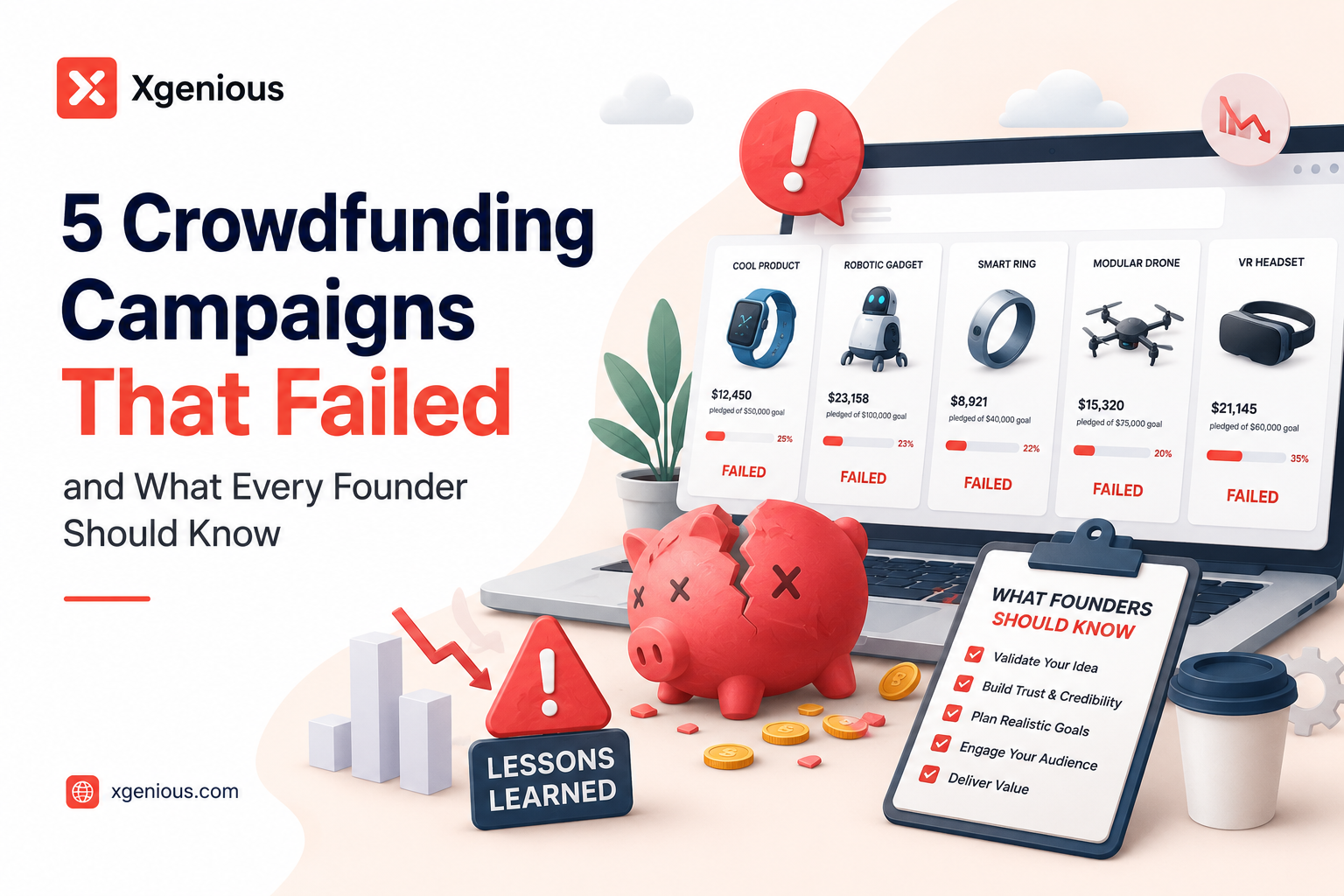
This post examines five crowdfunding campaigns that failed despite raising real money from real backers. Combined, these five campaigns collected over $1.5 million from thousands of people. None of them delivered what they promised.
Studying crowdfunding campaigns that failed teaches you things that success stories can’t. Success has too many variables, including luck and timing. Failure is usually more specific. A campaign that collapses almost always does so for identifiable, avoidable reasons.
One number worth knowing before getting into these crowdfunding campaigns that failed: according to Kickstarter’s own published statistics, roughly 60% of campaigns on the platform never reach their funding goal.That only counts campaigns that didn’t fund. It doesn’t capture funded campaigns that then failed to deliver, which is an entirely separate and equally costly category.
The five cases below cover both types.
Table of Contents
Why funded crowdfunding campaigns that failed still matter
Getting to your funding goal feels like the hard part. Most people treat it that way. It isn’t.
Kickstarter’s all-or-nothing model means backers are only charged if the campaign funds. Reaching the goal just unlocks the harder part: building the product, manufacturing it at scale, shipping to potentially thousands of backers, and managing all the communication in between.
The crowdfunding campaigns that failed most publicly weren’t ones that fell short of their targets. They were campaigns that hit their targets and then collapsed under the weight of commitments they couldn’t fulfill. That’s a more expensive failure for everyone involved.
Backers lose money. Founders lose their reputation. And in some cases, they lose their legal freedom.
5 crowdfunding campaigns that failed
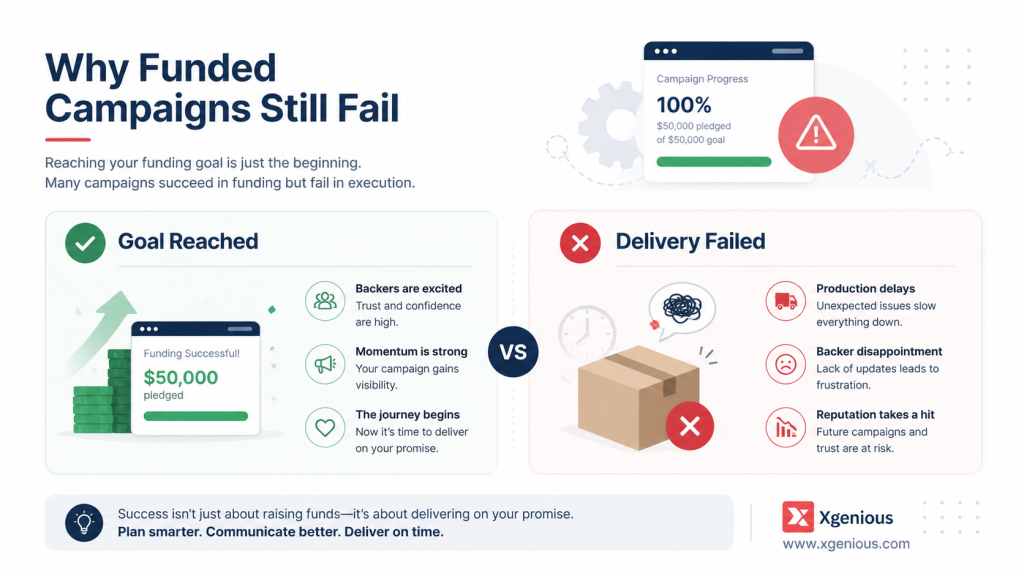
1. Montrex Watch Project
Platform: Kickstarter | Year: 2013 | Raised: $61,504
Montrex was positioned as a premium accessible watch brand, built around sapphire crystal glass on both the front and back of the case. The campaign ran on Kickstarter, funded at $61,504, and backers expected a well-built product at a reasonable price.
Then the production problems began, and Montrex became one of the crowdfunding campaigns that failed not due to dishonesty but through poor crisis management.
The watches didn’t ship on the promised timeline. Delays built up. Communication from the campaign team became sparse. Backers who followed up received limited explanation of what was causing the holdups or when delivery could realistically happen.
When backer frustration became public, the founder’s response made everything worse. Rather than acknowledging the production delays and presenting a revised plan, the founder publicly blamed backers, which is a pattern repeated across crowdfunding campaigns that failed at this stage. It kills goodwill instantly. The stated position was that negative backer feedback online, rather than any production failure, had caused the campaign to collapse.
This kind of response comes from founders who feel personally attacked, but it’s wrong in almost every situation. Backers who contributed money before the product existed extended real trust. They didn’t cause a production delay. Telling them publicly that they did destroys the remaining goodwill and makes any future recovery impossible.
The Montrex case doesn’t involve fraud. The founder appears to have had genuine intentions. The failure came from two things: a production process that wasn’t ready for the commitments the campaign made, and a complete inability to manage the backer relationship when things went sideways.
There’s a useful contrast available in the crowdfunding success stories of campaigns that hit delays and survived them, specifically because founders communicated honestly and continuously.
Core lesson: Build your post-funding communication plan before you launch, not after problems emerge. When production delays happen, the founders who communicate early and honestly keep backers patient. The ones who go quiet or shift blame lose everything.
2. Yogventures
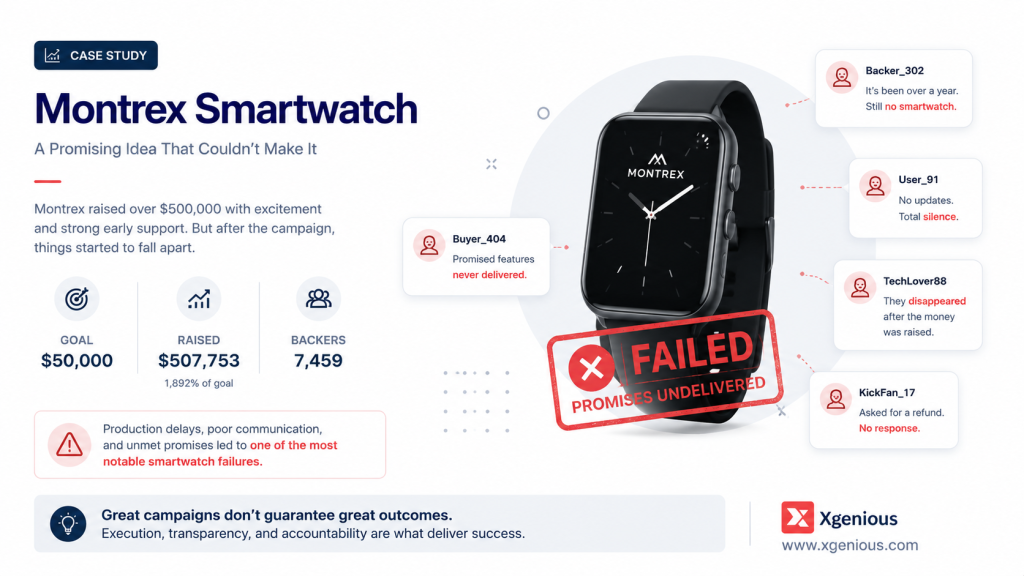
Platform: Kickstarter | Year: 2012 | Raised: $567,665
Yogventures was backed by the Yogscast, a British YouTube gaming channel with millions of subscribers. That built-in audience translated directly into one of the higher-profile gaming crowdfunding campaigns that failed: $567,665 raised from thousands of backers expecting an open-world multiplayer sandbox game.
The Yogscast partnered with a small studio called Winterkewl Games to build the project. Winterkewl had never shipped a game before. That fact wasn’t highlighted in the campaign materials. It should have been the first question anyone asked before the development agreement was signed.
Winterkewl burned through the campaign budget over more than two years without producing a finished game. By 2014 the project was clearly in serious trouble. The Yogscast stepped in personally to cover additional costs, and they provided backers with Steam keys to an unrelated game called TUG as partial compensation. It wasn’t what backers had funded. It was the best available option once the original project collapsed.
The Yogscast weren’t acting in bad faith. In many ways they were victims of the same decision their backers were. But that doesn’t change what happened: over half a million dollars went to a studio with no track record and the game never shipped.
This is the version of crowdfunding failure that’s easiest to prevent in theory and hardest to see in the moment. The warning signs were available. No shipped products. No comparable experience. No evidence that Winterkewl could execute a project at this scale or budget. A short conversation with anyone who had worked with the studio previously would have revealed the gap.
Core lesson: Before you hand any execution partner real money from real backers, ask for a list of completed projects comparable to yours. Then talk to someone who funded one of them. Past delivery is the only meaningful predictor of future delivery.
3. FND Films
Platform: Indiegogo | Year: 2014 | Raised: $75,000
FND Films was a comedy group that launched an Indiegogo campaign to fund a feature film called “The Gambler’s Guide to Dying.” The campaign raised $75,000 from fans who followed the group’s work.
The campaign description left major questions unanswered: what exactly the film would contain, who would appear in it, what the realistic production timeline was, and how the $75,000 would be specifically used. Backers who wanted answers had to infer them.
Production started. Then it stretched from months into years beyond the original timeline. Communication with backers was infrequent and inconsistent. When the film was eventually completed and released, the final product didn’t match what many backers believed they had funded based on how the campaign was described.
This is a different category of failure from Montrex or Yogventures. FND Films involved neither a founder who blamed backers nor an unqualified development partner. The failure was in the campaign promise itself.
When a campaign description leaves large questions open, every backer answers those questions with their own assumptions. If you have 500 backers and an unclear campaign page, you effectively have 500 different versions of your campaign in their heads. Most of those versions won’t match your actual plan, and when they don’t, you’ve failed to deliver for most of your backers even if you technically produced something.
Vagueness isn’t a way to protect yourself as a creator. It’s a way to create future disagreements with everyone who contributed.
The elements of a good crowdfunding campaign page matter precisely because of this. Specific promises are what give backers clear expectations, and clear expectations are what you need when you have to go back to those backers with an update that doesn’t match the original plan.
FND Films remains one of the few crowdfunding campaigns that failed not through dishonesty but through a campaign page that was too vague to hold up under delivery pressure.
Core lesson: Define exactly what backers are getting, when, and under what conditions. Specificity protects you far more than vagueness does.
4. Triton Scuba Mask
Platform: Indiegogo | Year: 2016 | Raised: $800,000+
The Triton Scuba Mask campaign claimed to have built a device that extracted breathable oxygen directly from water, the way fish do. Users could strap it on and breathe underwater indefinitely without an oxygen tank.
The campaign raised over $800,000 on the strength of that claim.
Within days of launch, physicists and engineers began publicly explaining why the claim was physically impossible. Extracting dissolved oxygen from water fast enough to support human respiration requires equipment operating at a scale the Triton device couldn’t achieve. The “gill” technology as described violated basic physics.
What Triton actually had was a small compressed liquid oxygen canister. Useful for roughly 45 seconds underwater. Nothing like the indefinite underwater breathing the campaign advertised.
Indiegogo took the campaign down after the scientific objections became impossible to ignore. Triton refunded most backers, close to $900,000 in total, but the product as advertised never existed and never could have.
This is the clearest example in this list of technology misrepresentation used to drive a campaign. The founders built their entire pitch around a scientific impossibility. It worked because most backers didn’t have the physics background to evaluate the core claim. When people who did have that background looked at it publicly, the campaign collapsed immediately.
The FTC’s consumer protection resources on crowdfunding document how regulators approach this category of misleading campaign claims.
Core lesson: Triton is the clearest example among these crowdfunding campaigns that failed because of a claim that couldn’t survive basic expert review. Have your technology independently verified before launch, not after.
5. iBackPack 2.0
Platform: Kickstarter | Year: 2016 | Raised: $76,694
The iBackPack 2.0 was a smart backpack with an extensive feature list: USB charging ports, Bluetooth audio, 4G WiFi, built-in batteries, and bulletproof Kevlar panels. The features sounded compelling. The delivery record told a different story.
Douglas Monahan, the founder, had run multiple crowdfunding campaigns before iBackPack 2.0. Across those earlier campaigns he raised over $720,000. None of those products were ever delivered to backers.
After raising $76,694 with iBackPack 2.0, no backpacks shipped. Backers who followed up received excuses and eventually silence. The Federal Trade Commission investigated and in 2020 charged Monahan with fraud, finding he used campaign funds for personal expenses rather than product development. A federal court banned him from future crowdfunding activities.
This is outright fraud. Not poor execution, not an underqualified partner, not a vague campaign promise. Monahan had no intention of delivering the product. The crowdfunding platform was the mechanism for collecting money, not the vehicle for building a business.
What makes the iBackPack case particularly relevant to backers is that the information to avoid it was publicly available before anyone contributed a dollar. Monahan’s previous campaigns were searchable. The non-delivery records were documented in backer comments and platform update histories. Ten minutes of research before backing would have revealed a clear and repeated pattern.
This is a practical point worth underlining: due diligence on a campaign founder costs almost nothing and protects backers from the worst category of crowdfunding failure.
Core lesson: Research the founder before you back any campaign. A founder’s history of delivery, or non-delivery, is the most reliable signal available before a new campaign.
What these crowdfunding campaigns that failed have in common
Five different campaigns, five different platforms, five different product categories. Yet crowdfunding campaigns that failed at this scale consistently follow the same recognizable patterns.
Accountability gaps run through most of them. Montrex blamed backers. iBackPack disappeared. FND Films went quiet for extended periods. The founders who handle setbacks well communicate honestly, early, and continuously. Maintaining crowdfunding momentum through problems comes down almost entirely to this: backers who hear from you regularly, even with bad news, stay far more patient than backers who discover problems through silence.
Unvetted execution partners are the Yogventures lesson. Winterkewl had no track record and received a large budget anyway. This same mistake happens constantly across hardware campaigns, film projects, and app campaigns. The question to ask before signing anything: what comparable project has this partner shipped, and can you talk to the person who funded it?
Vague campaign promises set up conflicts before a single unit is produced. FND Films is the clearest case. When backers fill in gaps with their own expectations, the campaign has effectively made promises it never actually specified. That gap becomes a dispute when reality doesn’t match what each backer imagined.
Unverifiable technology claims invite expert scrutiny. Triton’s claim survived long enough to raise $800,000 before physicists explained publicly why it couldn’t work. Any campaign built on a technology claim that hasn’t been independently verified is one public expert comment away from collapse.
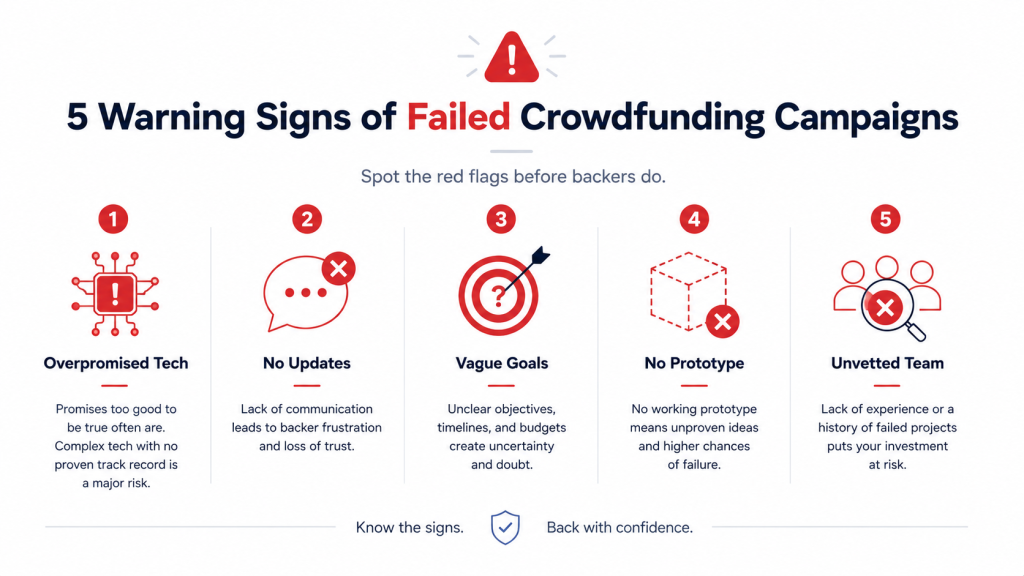
How to avoid running one of the crowdfunding campaigns that failed
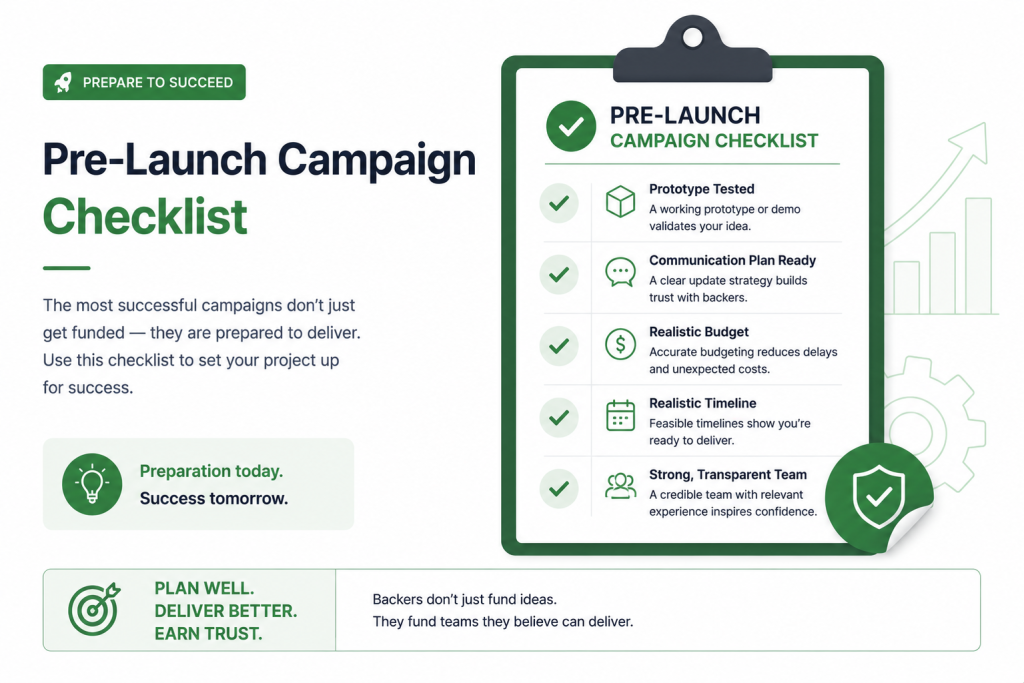
The practical steps these cases point to are specific.
Write a campaign page that commits to exact deliverables, timelines, and what the money covers. How to create a crowdfunding pitch that converts also covers what promises need to look like to protect you when execution gets difficult. Specificity protects you far more than keeping things general.
Set your funding goal based on what you actually need to deliver, not the minimum that looks achievable. Setting realistic crowdfunding goals works backward from real production and fulfillment costs to a number that lets you actually follow through.
Build your audience before you launch. Campaigns that fund quickly and hit the momentum the platform algorithms reward are the ones with an email list ready to back on day one. Crowdfunding marketing tactics that work in the pre-launch window are different from the ones that work during a live campaign, and both matter.
Invest in your pitch video. Most backers watch it before reading anything else. Making an effective crowdfunding pitch video that builds credibility is one of the highest-leverage pre-launch tasks available.
Plan your backer communication schedule the same way you plan your production timeline. How often will you update backers? Through what channel? What happens when production runs late? Having these answers before launch keeps you from scrambling when reality diverges from your plan.
Anyone studying crowdfunding campaigns that failed consistently finds the same thing: the problems were visible before launch day, not after.
Final thoughts
These five crowdfunding campaigns that failed raised over $1.5 million combined from backers who believed in what they were supporting. Some of the failures were honest mistakes by founders who were genuinely in over their heads. One was outright fraud. Most fell somewhere between those two points.
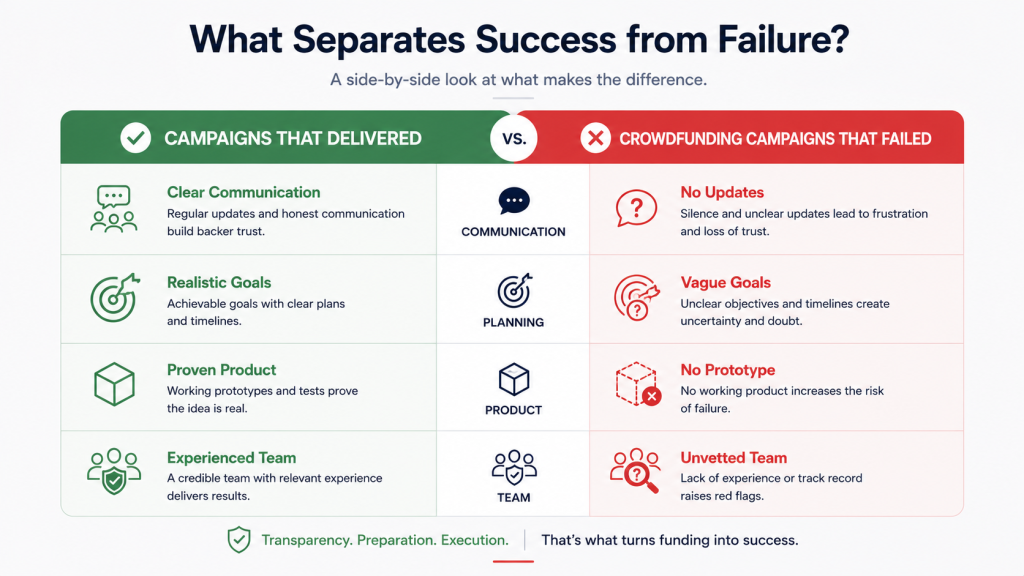
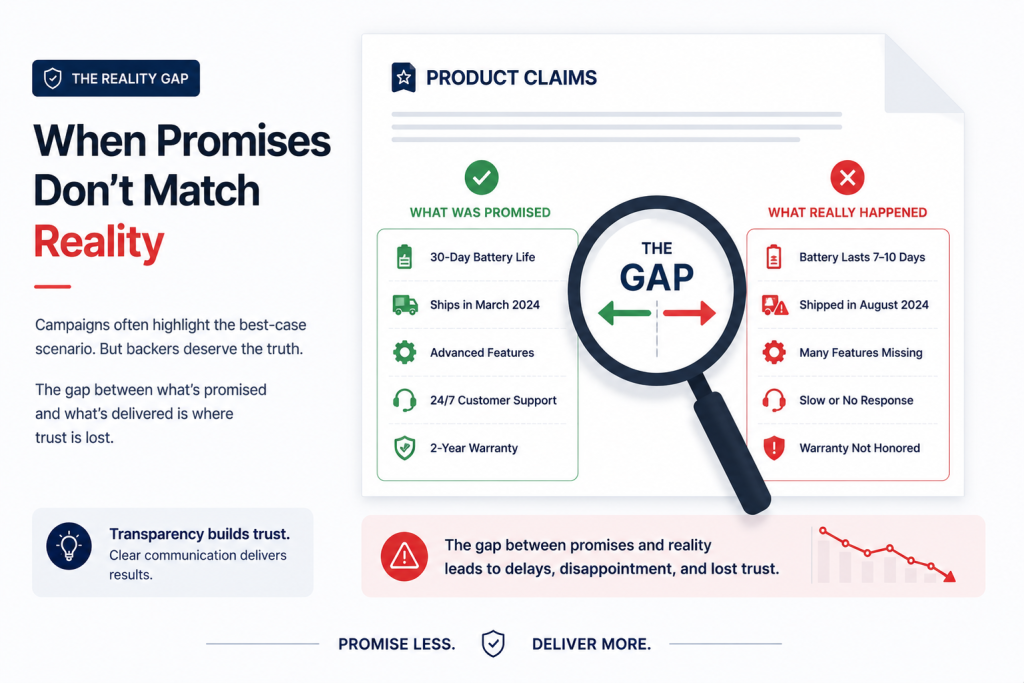
What they share is a gap between what was promised on the campaign page and what the execution could actually deliver. What all crowdfunding campaigns that failed at this level share is a gap between what was promised on the campaign page and what the execution could actually deliver.
Closing that gap before launch day is the most productive work a campaign founder can do. Define specifically what backers are getting. Know who is building it and what they have built before. Set a goal that reflects what you actually need. Plan how you will communicate when things don’t go as expected, because they rarely do.
If you’re thinking about crowdfunding from the other side — building the platform rather than running campaigns on someone else’s — Fundorex is the self-hosted software for that. Instead of paying Kickstarter’s 5% fee, you own the platform, set your own commission, and keep the data. The full picture of what’s involved in building your own crowdfunding platform covers what that looks like practically.
A consistent pattern across crowdfunding campaigns that failed is that the problems were visible before launch day, not after.
Frequently asked questions
What percentage of crowdfunding campaigns fail?
Roughly 60% of Kickstarter campaigns never reach their funding goal based on data Kickstarter publishes. That figure only counts unfunded campaigns. Campaigns that funded successfully but then failed to deliver the product represent a separate and additional failure category. The real failure rate across all crowdfunding activity is higher than most people expect when they start planning a launch. Most crowdfunding campaigns that failed to deliver were fully funded campaigns, not ones that missed their goal.
Can you get a refund if a crowdfunding campaign doesn’t deliver?
On Kickstarter’s all-or-nothing model, you’re only charged if the campaign funds. Unfunded campaigns cost backers nothing. For campaigns that fund and then fail to deliver, refund availability depends on the platform and the specific circumstances. Kickstarter requires creators to make good-faith efforts but doesn’t guarantee refunds. In cases of fraud like iBackPack, the FTC can pursue legal action. In most non-delivery cases without documented fraud, recovering the money is difficult.
Is crowdfunding fraud illegal?
Yes. The FTC charged Douglas Monahan in 2020 for using iBackPack and other campaign funds for personal expenses rather than product development. Courts can issue orders banning individuals from future crowdfunding and requiring repayment to backers. Running a campaign with no intention of delivering the product is wire fraud under US federal law.
How do you identify a risky crowdfunding campaign before backing it?
Search the founder’s name before contributing. Look for previous campaigns and whether those campaigns delivered. Check backer comment sections on prior campaigns for patterns of unresponsiveness. Be sceptical of technology claims that sound extraordinary and haven’t been independently verified. A vague campaign page with no specific delivery timeline is itself a warning.
How does crowdfunding compare to traditional business funding?
Traditional funding through banks or investors involves due diligence by the funder before money moves. Crowdfunding inverts this: backers often contribute based entirely on a campaign page and a video. This shifts research responsibility onto backers and communication responsibility onto creators. The guide to alternative business funding options covers how crowdfunding compares to loans, grants, and investor funding for founders weighing their options.