



Setting clear crowdfunding goals is half the battle, but only half. A goal on its own does not raise money; the campaigns that fund are the ones that set the right target, break it into steps, and work it with a real plan.
This guide covers 15 proven tips to set crowdfunding goals you can actually hit in 2026, from choosing the number to measuring your progress once the campaign is live.
The quick answer
- Set one clear primary goal, the amount and the reason, and keep it specific enough that a stranger gets it in seconds.
- Break it into secondary goals (platform, audience, promotion) that are the steps to the main one.
- Run the target through the SMART test so it is realistic, not a fantasy number.
- Pre-raise about 30 percent before you go public, early momentum is the strongest predictor of success.
- Promote hard, tell a real story with video, keep backers updated, and measure progress daily against the target.
The 15 tips below walk through each step in order.
Table of Contents
How to set and improve your crowdfunding goals
Your crowdfunding goals are the foundation of the whole campaign. Get them right and every other decision, the platform, the pitch, the promotion, follows naturally. Get them wrong and no amount of marketing fixes a target that was unrealistic or unclear from the start. Crowdfunding is a growing market, worth tens of billions a year according to crowdfunding statistics, but that also means more campaigns competing for attention, which is exactly why sharp crowdfunding goals matter. Here are the 15 tips, grouped from setting the goal to reaching it.
1. Start with one clear primary goal
Your primary crowdfunding goal is the main reason you are raising money. Keep it to one or two clear objectives rather than a long list that splinters your focus. Before you lock it in, answer a few honest questions:
- Is this funding for profit or a non-profit cause?
- How much do you need, and exactly what will it pay for?
- Why should a backer support this, and is the target realistic for your market?
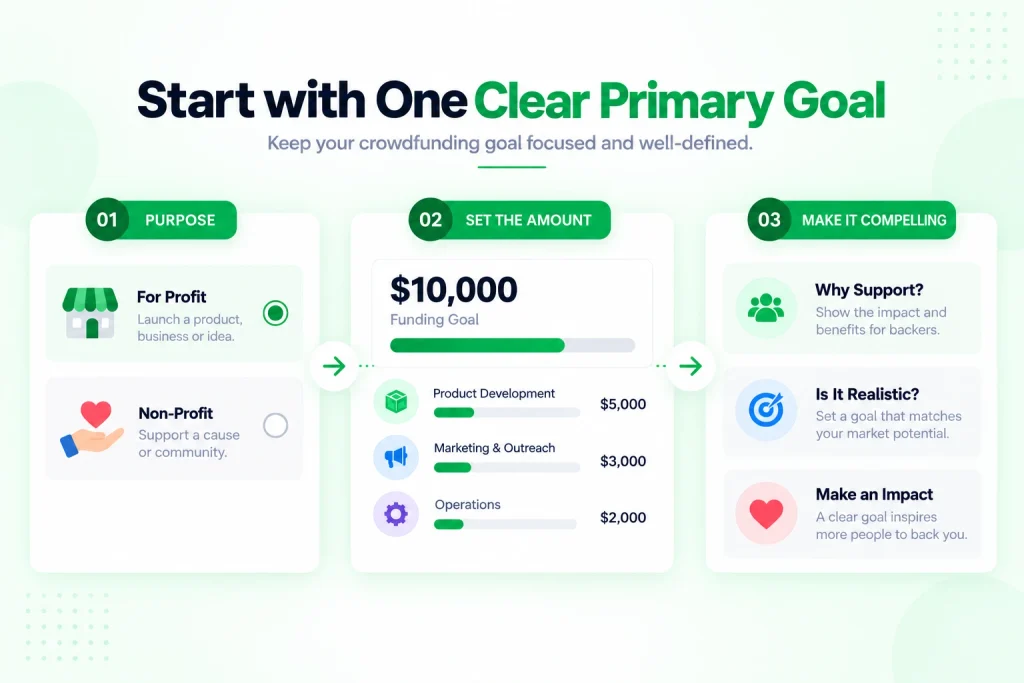
A single, well-defined primary goal is what lets you pitch with confidence in front of an audience that will judge the idea in seconds.
2. Keep the goal clear and specific
A crowdfunding goal that is vague or complicated loses people. State it simply so an investor or donor understands it immediately.
- State the reason plainly. Short and honest beats clever and inflated.
- Give it a strong title. The title is the first thing people see, so make it specific and compelling.
- Ask for the right amount. Analyze your market and value before you set the number; a figure that is clearly too high scares backers off.
- Back it with proof. For a non-profit cause especially, documents and evidence show you are legitimate and build trust.
3. Note down your secondary goals
Do not stop at the primary goal. Secondary crowdfunding goals are the milestones that get you there, and they make a big target feel achievable:
- Choose the right platform for your cause.
- Build engagement and an audience before launch.
- Line up volunteers or supporters to help run the campaign.
- Estimate what it costs to run the campaign itself.
- Grow your email list and plan your promotion.
Write these down as a step-by-step ladder to your main goal.
4. Run the target through the SMART test
Before you commit, test your goal against the SMART criteria: Specific, Measurable, Attainable, Relevant, and Time-bound.
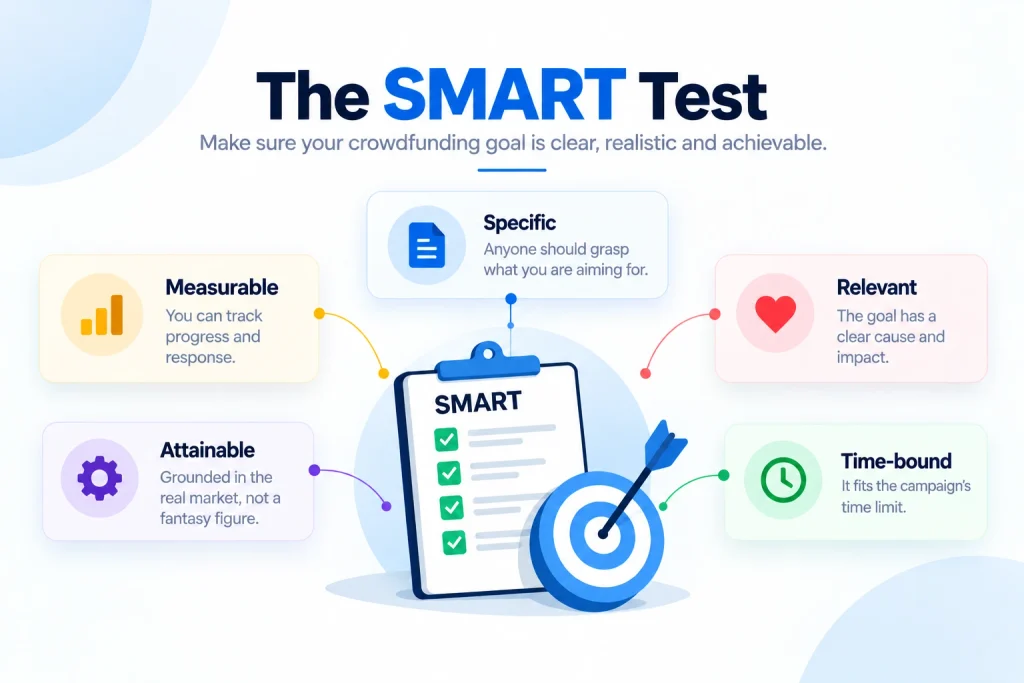
- Specific: anyone should grasp what you are aiming for.
- Measurable: you can track progress and response.
- Attainable: grounded in the real market, not a fantasy figure.
- Relevant: the goal has a clear cause and impact.
- Time-bound: it fits the campaign’s time limit.
If your goal passes all five, it is ready. If it fails one, fix that before you launch.
5. Choose the platform that fits your goal
The platform carries your crowdfunding goal to the public, so match it to your campaign type. A non-profit cause fits a charity-focused platform, while a product or creative project fits a general platform like Kickstarter or Indiegogo. If you want to keep the fees and own your data, you can build your own platform instead, Fundorex is a ready-made script built for exactly that. For a full comparison, see our guide to the best crowdfunding platform options.
6. Set the right campaign duration
Duration affects your odds more than most people realize. Too short and you cannot build awareness; too long and backers lose interest or start to doubt you. Around 30 to 40 days is the sweet spot for most campaigns. If you miss the target, you can regroup and run again, plenty of now-famous campaigns succeeded on a second or third attempt.
7. Pre-fund before you go public
The single biggest predictor of success is early momentum. Aim to raise about 30 percent of your goal from your own network before the public launch. A progress bar that already shows traction tells strangers the campaign is real and worth backing, and it gives you a read on demand before you commit.
8. Use strong photos and video
Visuals do the emotional work that text cannot. Campaigns with a video raise far more than those without, so make one, and keep it short and honest.
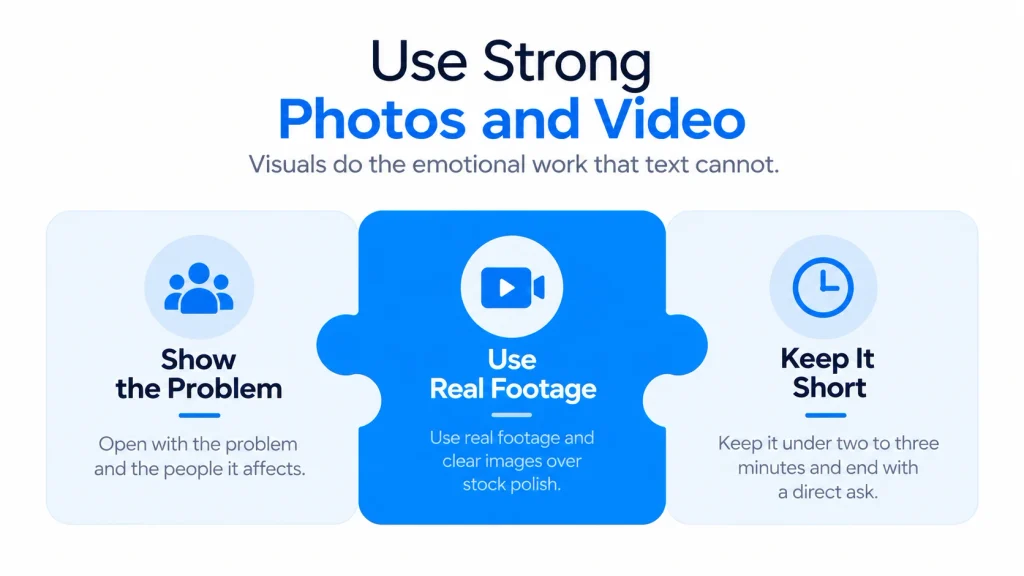
- Open with the problem and the people it affects.
- Use real footage and clear images over stock polish.
- Keep it under two to three minutes and end with a direct ask.
A compelling crowdfunding pitch and a strong campaign page are where many campaigns win or lose, so it is worth getting both right.
9. Build a marketing strategy
A great product still needs promotion, and it is often what carries your crowdfunding goals over the line. Start before launch and use every channel you have:
- Personal network first. Tell family, friends, and colleagues, and ask them to share even if they will not give.
- Email. A direct email with your campaign link is one of the most effective ways to drive early gifts.
- Social media. Post updates and progress on the platforms your audience uses.
- Influencers. For a cause or social campaign, a creator with the right audience can expand your reach fast.
For a deeper plan, our guide on crowdfunding marketing tactics covers the full playbook.
10. Know your target audience
Every product has its people. Research who is most likely to back yours, their age, interests, and where they spend time, and aim your campaign and your platform choice at them. A sharp, well-targeted pitch reaches your goal faster than a broad one that speaks to no one in particular.
11. Offer rewards
Rewards turn hesitant visitors into backers. Offer something tied to your project or a simple perk, a sticker, a t-shirt, early access, or a bigger gift for larger pledges. The one rule: never promise a reward you cannot deliver.
12. Communicate with your backers
Communication keeps a campaign alive. Update supporters regularly and respond to questions quickly.
- Share progress. Post milestones, especially hitting 50 percent, which nudges others to give.
- Answer questions honestly. Reply politely and accurately; a chatbot can handle common questions and pass hard ones to a human.
- Say thank you. Appreciation, including naming top backers publicly, turns one-time givers into repeat supporters.
13. Build a team and get expert help
You cannot run a strong campaign alone. Bring in volunteers and, where you can, advice from people who have fundraised before. A small team to handle promotion, updates, and questions is often the difference between a campaign that stalls and one that finishes funded.
14. Tell a real story
Backers give to a story, not a spreadsheet. Explain how your idea came about, the problem it solves, and what their support will change. Be honest and specific, the hardship, the stakes, the impact, so the reader connects emotionally. A genuine story is what makes people care enough to give and to share.
15. Measure your progress
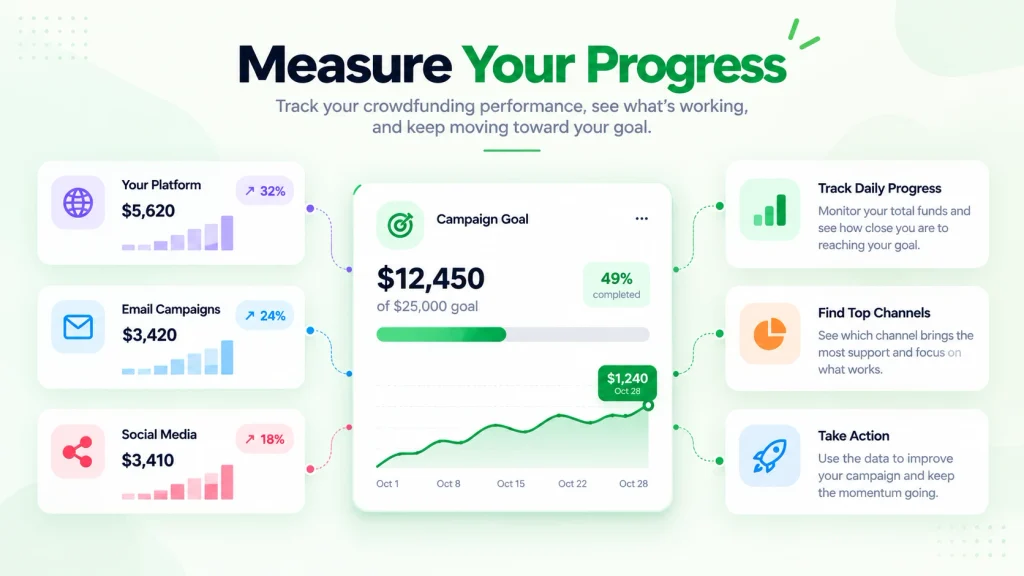
Collecting funds without tracking them is flying blind. Watch your daily total against your crowdfunding goals and note which channel brings the most gifts, your platform, email, or social, then double down on it. Treat a slow stretch as data to act on, not a reason to quit; momentum often builds late when you keep promoting.
Common mistakes that sink crowdfunding goals
- Setting the target too high. A number that never moves signals failure. Ask for what you truly need.
- Launching cold. No pre-raise and no audience means no early momentum, and momentum is everything.
- A vague or inflated story. Backers can smell both; be specific and honest.
- Going quiet after launch. Campaigns that stop updating raise less than ones that keep supporters in the loop.
- Quitting at the first slow day. Many funded campaigns looked stuck before a late surge. Keep going.
Final thoughts
Strong crowdfunding goals are specific, realistic, and broken into steps you can actually work. The 15 tips above all serve that one aim: setting crowdfunding goals you can reach and then reaching them. Set one clear primary goal, test it against SMART, pre-raise from your network, promote through email, social, and personal outreach, and keep backers updated while you measure progress daily.
Do that, and your goal stops being a hopeful number and becomes a target you can genuinely reach. For inspiration, our roundup of crowdfunding success stories shows how far a well-run campaign can go.
Frequently asked questions
What are crowdfunding goals?
Crowdfunding goals are the targets you set for a campaign: the primary goal (how much you need and why) and the secondary goals (the steps to get there, like choosing a platform, building an audience, and promoting). Clear goals guide every decision and give backers a reason to trust and support the campaign.
How do I set a realistic crowdfunding goal?
Base the amount on what your project genuinely needs and what your market can support, then run it through the SMART test: specific, measurable, attainable, relevant, and time-bound. A target grounded in real numbers and demand funds far more often than an inflated one.
How much should I raise before launching publicly?
Aim for about 30 percent of your goal from your own network before the public launch. Campaigns that show early momentum are much more likely to fully fund, because a progress bar that is already moving convinces strangers the campaign is real.
How long should a crowdfunding campaign run?
Around 30 to 40 days works best for most campaigns. Shorter gives you too little time to build awareness; longer can cause backers to lose interest or doubt the campaign. If you miss the target, you can regroup and run again.
Why is my crowdfunding campaign not reaching its goal?
The usual causes are an unrealistic target, no pre-launch audience or momentum, a vague story, or going quiet after launch. Fix the goal with the SMART test, pre-raise from your network, sharpen the story and video, and keep promoting and updating throughout.