



Crowdfunding lets nonprofits raise money from many small donors online, often faster and cheaper than traditional fundraising. But the platform you choose determines how much of each donation reaches your cause, because fees, features, and payout rules vary widely.
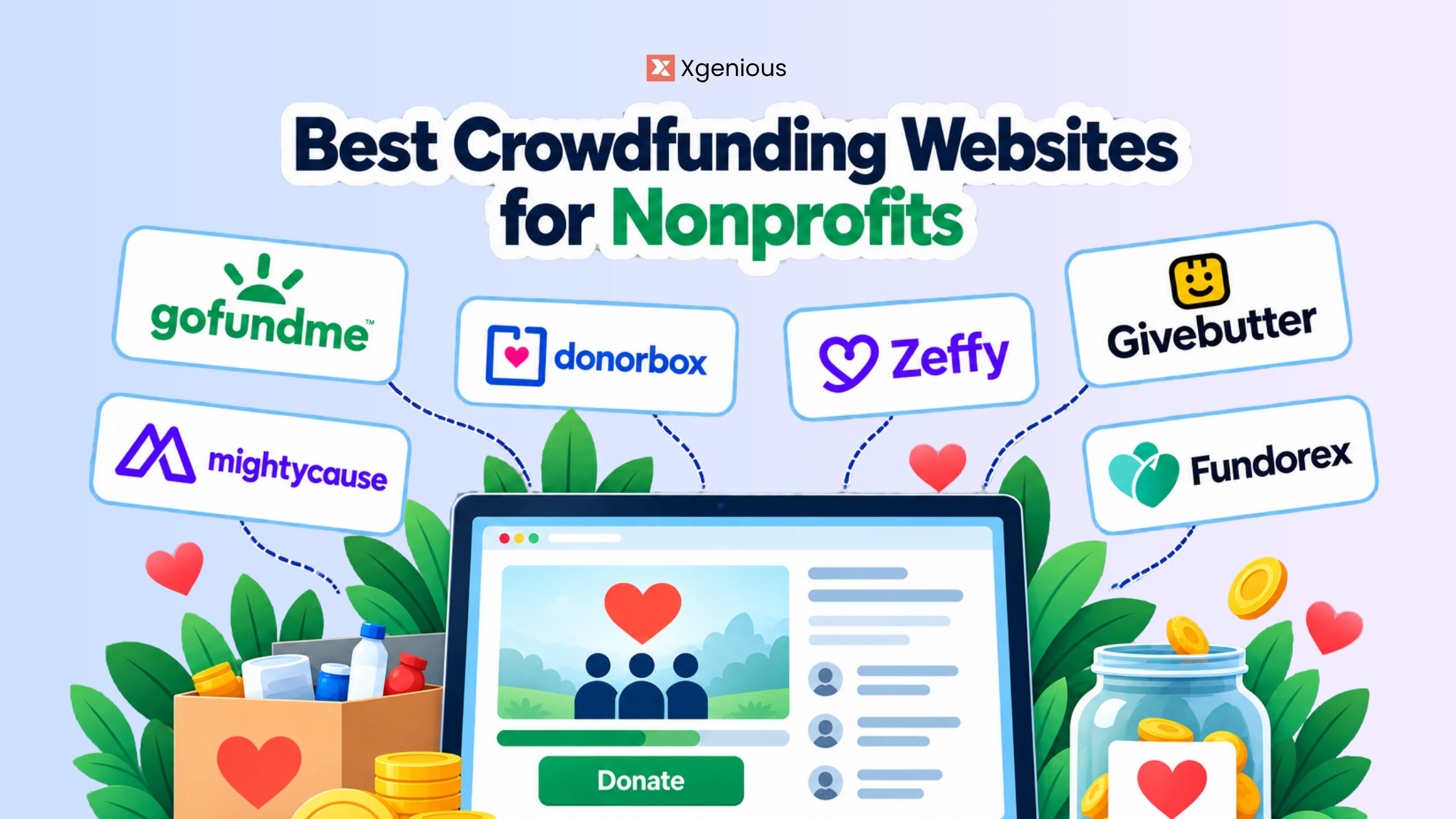
This guide compares the 10 best crowdfunding websites for nonprofits in 2026, what each costs, and who each one fits.
The quick answer
- For a US or Canadian 501(c)(3) that wants to keep the most money, a zero-fee platform like Zeffy is the strongest starting point.
- For reach and recognition, GoFundMe is the most widely known and trusted by donors.
- For recurring donations and donor management, Donorbox and Givebutter lead.
- Every “free” platform still passes through card processing fees of roughly 2.2 to 2.9 percent plus a fixed amount, so compare the total cost, not just the platform fee.
- If you want to own your fundraising platform outright with no per-campaign fee, a self-hosted script like Fundorex is the alternative to renting a hosted site.
Table of Contents
What to look for in a nonprofit crowdfunding platform
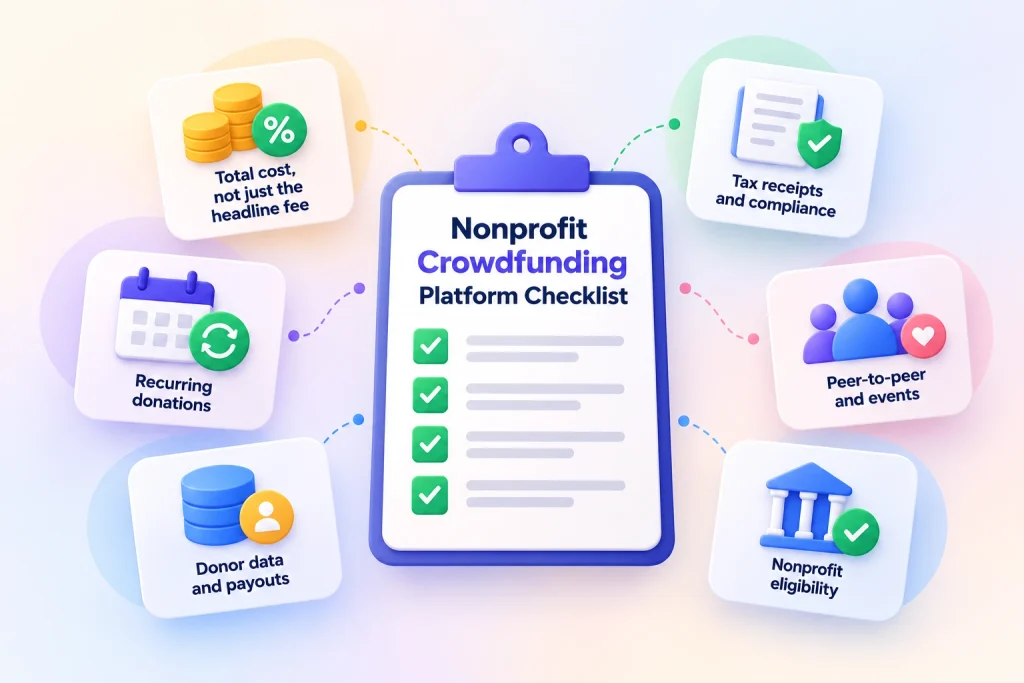
Not every crowdfunding website suits a nonprofit. Run any nonprofit crowdfunding platform through this checklist before you commit.
- Total cost, not just the headline fee. A platform can advertise “no platform fee” and still pass through card processing of 2.2 to 2.9 percent plus about 30 cents per donation. Add both to see what actually reaches your cause.
- Recurring donations. Monthly giving is the backbone of nonprofit income, so built-in recurring donations matter more than a one-time campaign tool.
- Tax receipts and compliance. Donors expect automatic tax receipts, and you need the platform to handle them for your jurisdiction.
- Donor data and payouts. Confirm you own your donor list and understand how and when funds are paid out.
- Peer-to-peer and events. If supporters fundraise on your behalf, look for peer-to-peer and event tools.
- Nonprofit eligibility. Some platforms serve only registered charities in specific countries, so check that yours qualifies.
The 10 best crowdfunding websites for nonprofits
Here is the nonprofit crowdfunding shortlist, then the details. Confirm current fees on each platform’s own site before you commit, since they change.
| # | Platform | Type | Fees (platform + card processing) | Best for |
|---|---|---|---|---|
| 1 | Zeffy | Hosted, free | 0% platform, 0% processing (funded by optional donor tips) | Keeping 100% of donations |
| 2 | GoFundMe | Hosted | 0% platform, 2.2% + $0.30 processing (verified 501(c)(3)) | Reach and donor trust |
| 3 | Donorbox | Hosted | 1.75% platform on the free plan, plus 2.2% + $0.30 processing (Pro $150/mo) | Recurring donations |
| 4 | Givebutter | Hosted | 0% with donor tips on, otherwise 3% platform + 2.9% + $0.30 processing | All-in-one free fundraising |
| 5 | Give Lively | Hosted, free | 0% platform, 2.2% + $0.30 processing | US nonprofit fundraising |
| 6 | Mightycause | Hosted | Free plan, about 1.99% + $0.30 processing; paid plans add features | Donor management and events |
| 7 | GlobalGiving | Hosted | 5 to 12% nonprofit support fee + 3% processing | International nonprofits |
| 8 | SignUpGenius Donations | Hosted | No platform fee, 2.9% + $0.30 processing | Simple donation pages and sign-ups |
| 9 | Bonfire | Hosted | No platform fee on donations; merch sales keep the profit per item | Merchandise fundraising |
| 10 | Fundorex | Self-hosted script | One-time license, no per-campaign fee (you set your own) | Owning your own platform |
How we evaluated these platforms
We scored each nonprofit crowdfunding platform on the things that actually decide how much reaches your cause: total cost (platform fee plus card processing, not just the headline rate), recurring-donation support, tax receipts and compliance, donor data ownership, peer-to-peer and event tools, and nonprofit eligibility. Fees were checked in October 2026 on each vendor’s own pricing page or current public sources. Fundorex is our own product, and we have disclosed that wherever it appears; the other nine are independent platforms scored on merit, not on any relationship with us.
1. Zeffy
Zeffy is a crowdfunding and fundraising platform that charges nonprofits nothing: no platform fee, no transaction fee, and it even covers card processing, funding itself through an optional tip donors can add. For a US or Canadian registered charity, that means close to every dollar reaches your cause, which is hard to beat. It covers donation forms, campaigns, events, and peer-to-peer. The catch is eligibility: it is built for registered 501(c)(3) and Canadian nonprofits, so it is not for personal or informal fundraising.
2. GoFundMe
GoFundMe is the most recognized crowdfunding name, which matters because donors trust it. For verified nonprofits it charges no platform fee, with only standard payment processing deducted. Its charity tools (formerly Classy, now folded into GoFundMe Pro) add donor management for larger organizations. If your priority is exposure and a name donors already know, GoFundMe is the safe default.
3. Donorbox
Donorbox is strong where nonprofits earn the most: recurring monthly giving. Its donation forms embed on your own site, it handles recurring donations and tax receipts well, and the free Standard tier charges a small platform percentage on top of processing, with a paid Pro tier for advanced features. Best for a nonprofit that wants steady monthly donors rather than one-off campaigns.
4. Givebutter
Givebutter combines donation pages, crowdfunding, events, and peer-to-peer in one free platform, funded by optional donor tips. It is popular with small and mid-sized nonprofits that want many tools without a subscription, and its built-in donor CRM is a genuine advantage. Standard card processing still applies, so compare the total against a flat-fee option.
5. Give Lively
Give Lively offers free fundraising technology for US 501(c)(3) nonprofits, with no platform fee and only payment processing passed through. It covers donation pages, peer-to-peer, text-to-donate, and events. It is US-focused and more selective than the broadest platforms, so confirm eligibility, but for an American nonprofit that wants free, solid tools, it is a strong pick.
6. Mightycause
Mightycause is built specifically for nonprofits and leans toward ongoing programs rather than one big campaign. It supports recurring giving, peer-to-peer, and giving-day events, with stronger donor management than the free tools. Pricing starts around a monthly subscription, which makes sense once you raise enough volume to justify it. Best for an established nonprofit that needs to steward donors over time.
7. GlobalGiving
GlobalGiving connects vetted nonprofits worldwide with donors and corporate partners, which is valuable if you operate internationally or want access to company matching programs. It vets organizations before they join, which adds credibility but also a bar to entry. A small platform fee applies. Best for established international nonprofits that want reach and matching funds.
8. Fundly
Fundly is a straightforward crowdfunding platform that makes it easy for supporters to create their own fundraising pages for your cause. Setup is quick and the peer-to-peer tools are simple, which suits a nonprofit that wants volunteers and supporters running campaigns without much training. A small platform fee plus processing applies, so weigh it against the free options.
9. Bonfire
Bonfire raises money a different way: supporters buy custom t-shirts and merchandise, and the profit funds your cause. It is not a donation platform in the classic sense, but for nonprofits with an engaged community and a recognizable brand, selling merch alongside donations is a proven extra channel. Costs are per item rather than a platform percentage.
10. Fundorex
If renting a hosted platform and paying processing on every donation is not what you want long term, you can own your fundraising platform instead. Fundorex is our own self-hosted crowdfunding and donation script: you buy it once, host it on your own server, set your own rules, and keep everything you raise with no per-campaign commission going to anyone but you. It supports donation and reward campaigns, multiple payment gateways, and a full admin dashboard.
If you are weighing that route, our guide on how to build your own crowdfunding platform covers it step by step.
Benefits of nonprofit crowdfunding
Nonprofit crowdfunding has become a core fundraising channel for charities, and for good reasons.
- Wide reach. You can reach many potential donors quickly online, which helps most for organizations with small traditional fundraising budgets.
- Low barrier to start. Most platforms let you launch a campaign in a day, with no setup cost beyond processing fees.
- More visibility. A campaign that spreads brings new donors, volunteers, and supporters, not just one-time money.
- Flexibility. Campaigns can fund a specific project, a program, or general operating costs, whatever your need.
- Community building. Donors who back a campaign feel ownership in your cause, which deepens long-term engagement. Keeping that engagement is its own skill, covered in our guide to donor engagement strategies.
- Tax-deductible giving. Donations to a registered nonprofit are often tax-deductible, which encourages people to give.
Tips for a successful nonprofit crowdfunding campaign
The platform is only half the job. These nonprofit crowdfunding tips decide whether a campaign hits its goal.
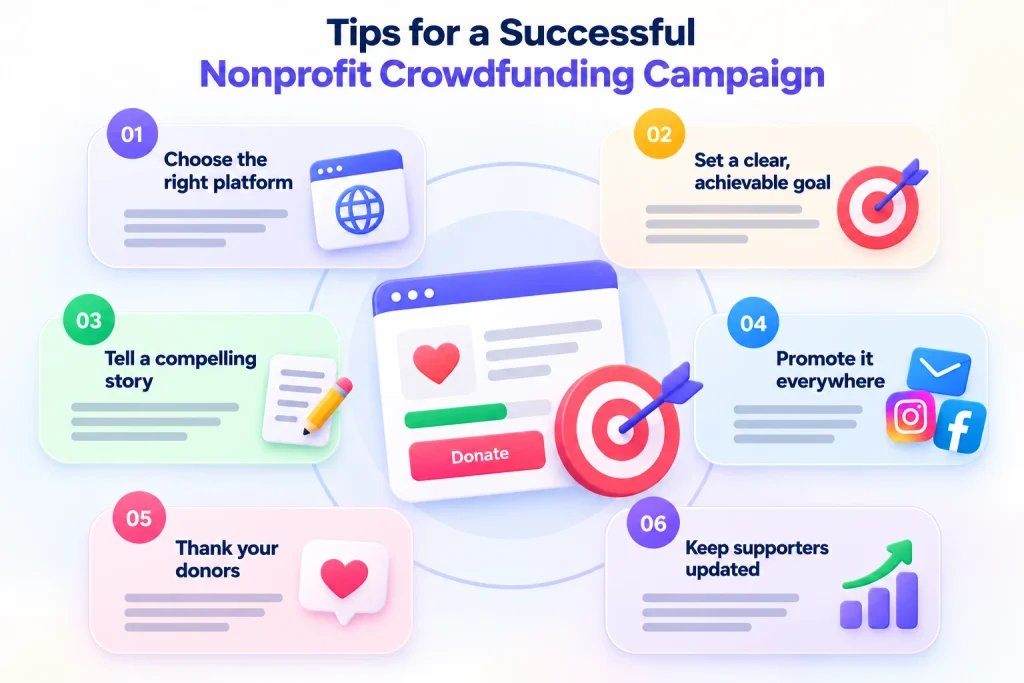
- Choose the right platform. Match the platform to your need: a free tool like Zeffy to keep the most money, GoFundMe for reach, Donorbox for recurring giving. There are many crowdfunding platforms available, so pick for your situation, not the loudest name.
- Set a clear, achievable goal. A specific goal you can credibly hit early builds momentum, which attracts more donors.
- Tell a compelling story. Donors give to a story and an impact, not a spreadsheet. Explain your mission and exactly what their money changes. Our guides on what makes a good crowdfunding campaign page and how to create a killer crowdfunding pitch break down the elements that convert.
- Promote it everywhere. Line up email, social media, and your community before launch, because a strong first 48 hours does more than weeks of slow traction. Most donors now give on their phones, so make sure your pages are built for mobile fundraising.
- Thank your donors. Prompt, personal thank-you messages turn one-time givers into repeat supporters.
- Keep supporters updated. Share progress and results throughout, so donors see the impact they funded. For more, see our tips for driving more donations through your website.
How to choose the right platform for your nonprofit
Run through these questions and the shortlist narrows quickly.
- Are you a registered nonprofit? If you are a US or Canadian 501(c)(3), free platforms like Zeffy and Give Lively are open to you and keep the most money. If not, a general platform like GoFundMe fits.
- Do you need recurring donations? If monthly giving matters, Donorbox or Givebutter lead.
- Do you need donor management? For CRM, events, and stewardship, Mightycause or Givebutter are stronger.
- Are you international? GlobalGiving opens cross-border donors and corporate matching.
- Do you want to own the platform? If a per-donation fee forever is unappealing and you have technical help, a self-hosted script like Fundorex removes the ongoing cut entirely.
Match the platform to your organization, not to whichever name is most familiar. If you want a wider shortlist that goes beyond nonprofits, our roundup of the best crowdfunding platform options compares them across every use case. For the self-hosted route specifically, our guides on the open source crowdfunding platform options and donation-based crowdfunding cover it in depth.
Final thoughts
The best crowdfunding website for your nonprofit is the one that keeps the most money in your cause while giving you the tools your campaigns actually need. For most registered charities, a free platform like Zeffy or Give Lively is the smartest starting point, GoFundMe wins on reach, and Donorbox or Givebutter win on recurring giving and donor management.
And if you would rather own your fundraising platform than rent one, Fundorex lets you run your own donation site with no per-campaign fee, for a one-time cost. Whichever route you take, the goal is the same: more of every donation reaching the people you serve.
Frequently asked questions
What is the best crowdfunding website for nonprofits?
It depends on your needs. For keeping the most money as a registered charity, Zeffy is the strongest because it charges no platform fee. For reach and donor trust, GoFundMe leads. For recurring donations and donor management, Donorbox and Givebutter are best. Compare the total cost, including card processing, not just the platform fee.
Are nonprofit crowdfunding platforms really free?
Some, like Zeffy, Give Lively, and Givebutter, charge no platform fee and fund themselves through optional donor tips. But nearly all platforms still pass through card processing fees of roughly 2.2 to 2.9 percent plus a fixed amount per donation, so a “free” platform is rarely zero cost. Always add processing to the platform fee.
Which crowdfunding site has the lowest fees for nonprofits?
Zeffy advertises the lowest effective cost, since it charges no platform fee and covers processing, funding itself through optional tips, so a registered nonprofit can keep close to 100 percent of each donation. Confirm eligibility and current terms on its site, since the model and availability can change.
Can a nonprofit build its own crowdfunding platform?
Yes. A self-hosted crowdfunding script like Fundorex lets a nonprofit run its own donation site, set its own rules, and avoid a per-campaign platform fee, in exchange for hosting and maintaining it. This suits organizations that want full control and have technical help, while a hosted platform is simpler for everyone else.
Do donors get tax receipts through crowdfunding platforms?
Most platforms built for nonprofits issue automatic tax receipts for eligible donations, but the details depend on your jurisdiction and the platform. Confirm that your chosen platform handles compliant receipts for your country before you launch, since it affects whether donors can claim their gift.
How much does nonprofit crowdfunding cost?
The main costs are the platform fee (0 percent on free platforms, a few percent or a monthly subscription on others) and card processing of roughly 2.2 to 2.9 percent plus about 30 cents per donation, which applies almost everywhere. A self-hosted script replaces the ongoing fee with a one-time purchase plus your own hosting.