

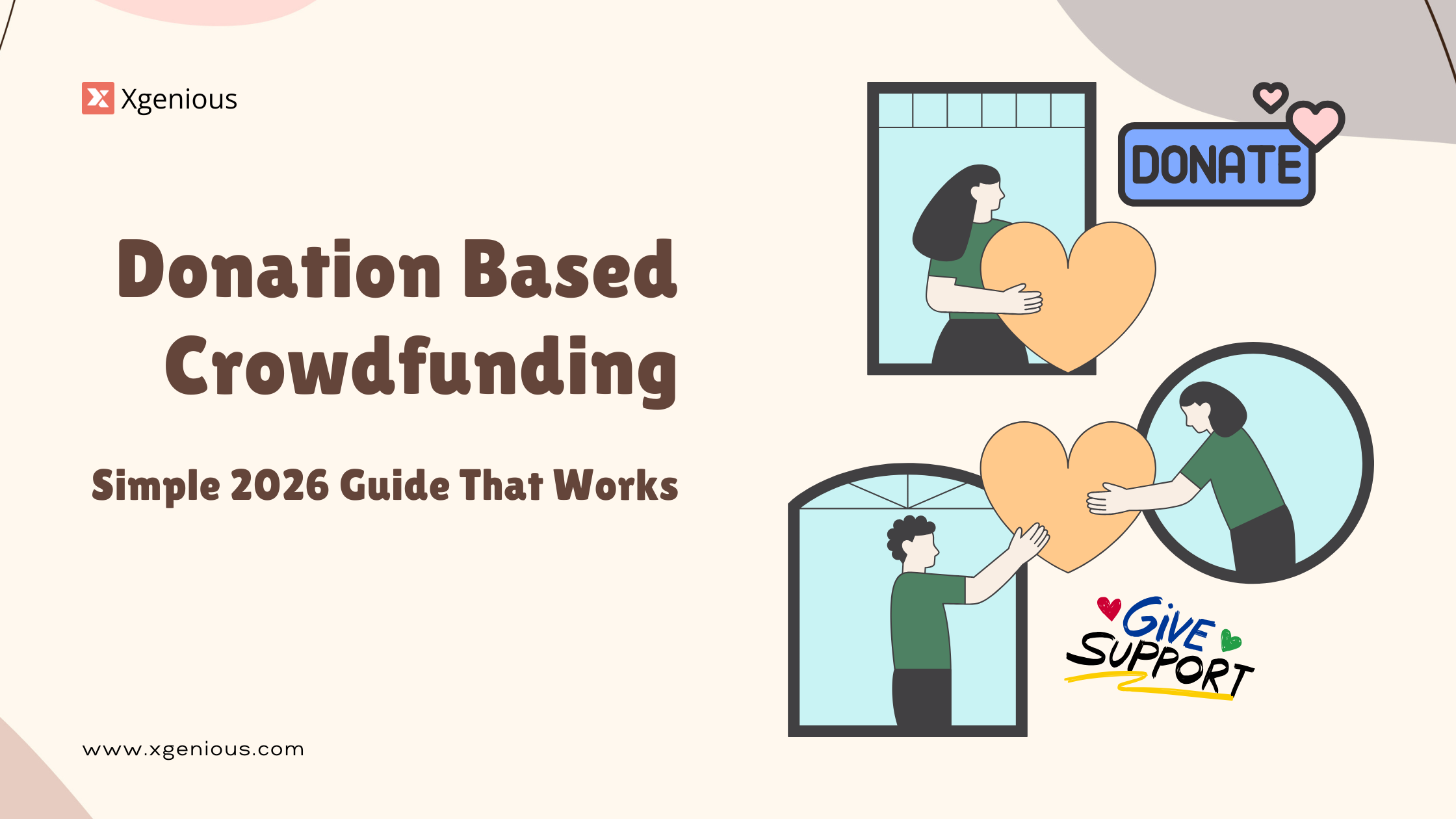


Donation based crowdfunding is the simplest way to raise money online: people give to a cause they care about and expect nothing back except the good feeling of helping. No rewards, no equity, no repayment. Just support.
It is also the biggest slice of the whole crowdfunding world. Donation based crowdfunding holds about 37 percent of the crowdfunding market, and that market is on track to grow from 16.6 billion dollars in 2025 to 18.5 billion in 2026, according to crowdfunding market data. When a stranger’s medical bill goes viral or a disaster relief fund fills up in a day, you are watching donation based crowdfunding at work.
This guide walks through what donation based crowdfunding actually is, how it works step by step, who uses it, and how to run a campaign that hits its goal instead of stalling at 12 percent. I will show you the numbers, the platforms, and the mistakes that quietly kill campaigns. By the end you will know whether this model fits your cause and how to launch one properly.
Table of Contents
What is donation based crowdfunding?
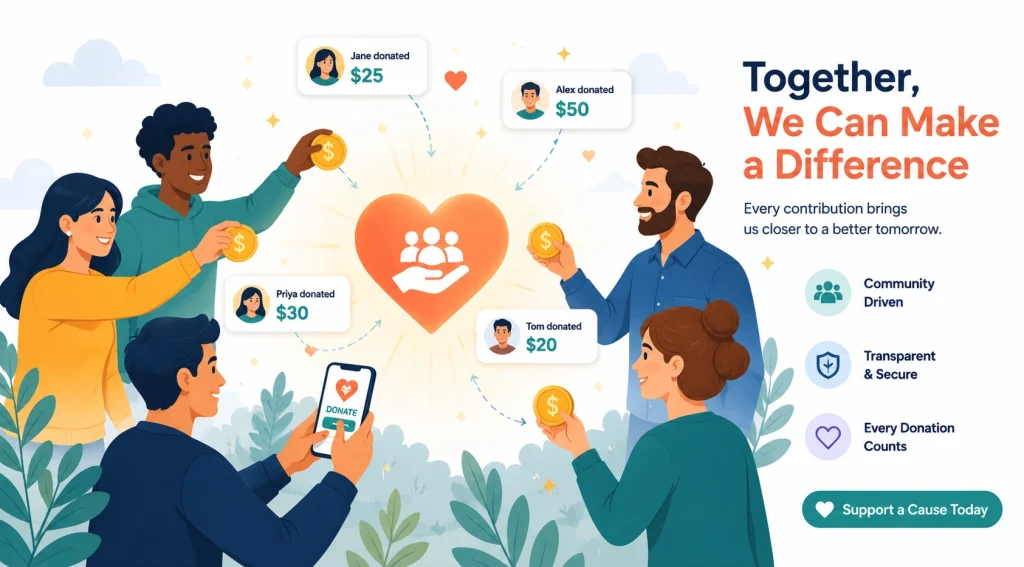
Donation based crowdfunding is a way of raising funds where many people give small amounts toward a single goal, and none of them expect a financial return. You are asking for help, not selling a product or offering shares.
That last part is what separates it from every other funding model. A donor to a medical fund does not get equity in the patient. Someone chipping in for a school library does not get their money back with interest. They give because the cause moved them, and the reward is knowing they made a difference.
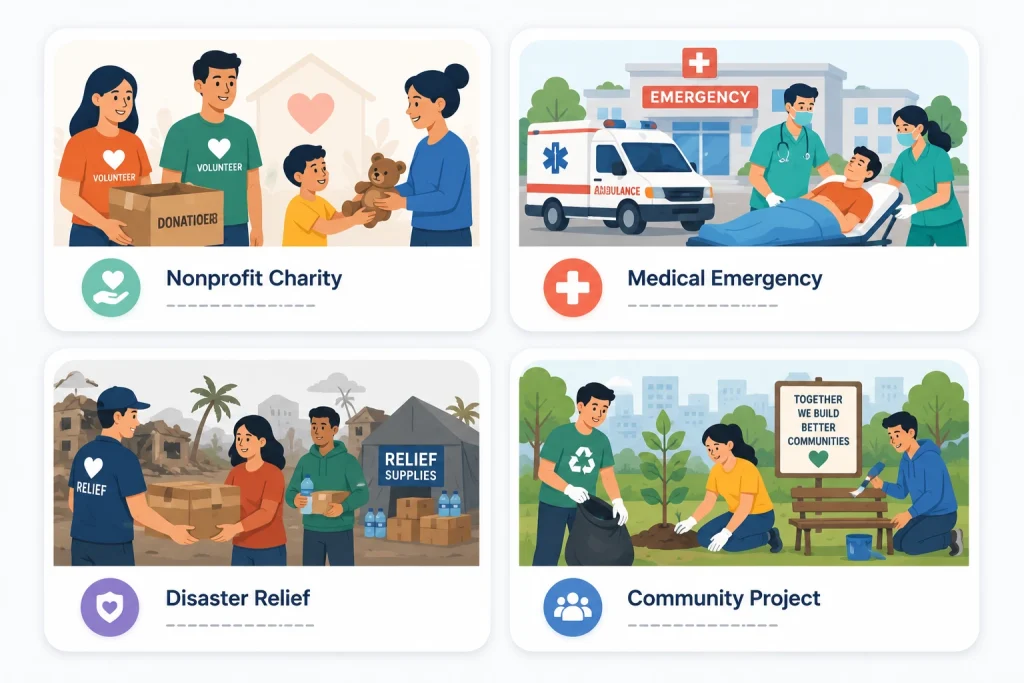
Because there is nothing to repay and nothing to deliver, donation based crowdfunding works best for causes that pull on emotion or serve a clear public good. Medical emergencies, disaster relief, community projects, memorials, animal rescue, and nonprofit programs all fit the model naturally. The story does the heavy lifting, and the platform just makes it easy to give.
You will sometimes see it described as donation crowdfunding or charitable crowdfunding. The labels point at the same thing: raising money through lots of small gifts, usually shared across social media, with no strings attached.
How does donation based crowdfunding work?
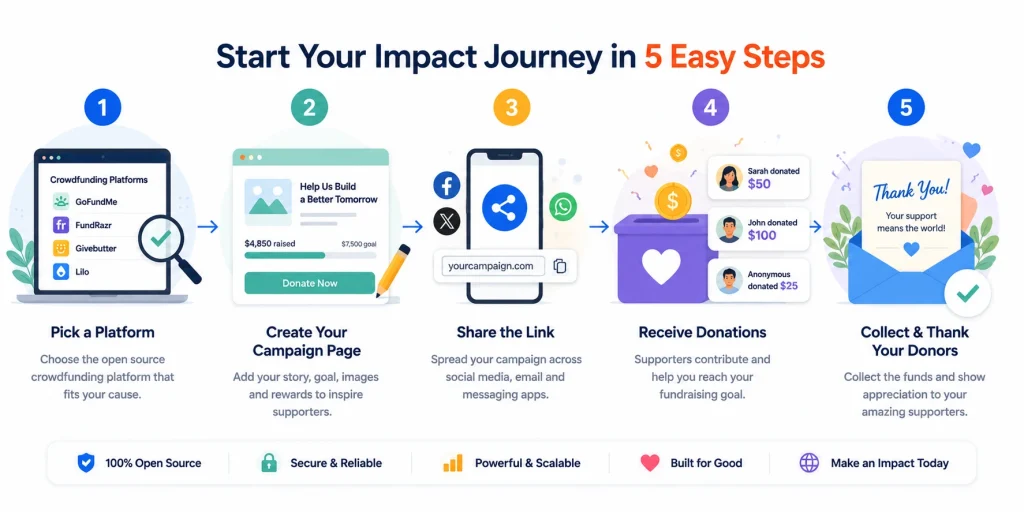
The mechanics are refreshingly simple, which is a big part of why donation based crowdfunding took off. Here is the flow from idea to funded.
First, you pick a platform.
This could be a hosted site like GoFundMe, a nonprofit focused option, or your own self-hosted crowdfunding platform if you want to keep the fees. Each choice changes your costs and your control, so it is worth a little research before you commit.
Second, you create the campaign.
You set a funding goal, write your story, add photos, and ideally a video. The page is where donation based crowdfunding lives or dies, because donors decide in seconds whether they believe you.
Third, you launch and share.
You send the link to family, friends, and your community first, then spread it wider through social media, email, and any press you can get. Early momentum matters more than people think.
Fourth, donations come in.
Backers give whatever they can, often between 20 and 100 dollars, and watch the progress bar climb. Most platforms show the total raised and the number of supporters, which builds social proof and nudges the next person to give.
Fifth, you collect the funds and follow up.
Once the campaign ends, or hits its goal, the money moves to your account minus the payment processing fees. Then comes the part many people skip: thanking donors and telling them what their gift accomplished. That follow up is what turns a one time giver into a repeat supporter.
There is a well-known pattern worth remembering here. Campaigns that raise 30 percent of their goal within the first week have roughly a 75 percent chance of finishing successfully. Momentum early on signals to strangers that the campaign is real and worth backing.
Donation based crowdfunding vs other crowdfunding types
Crowdfunding is not one thing. There are four main models, and mixing them up leads to the wrong platform and the wrong expectations. Here is how donation based crowdfunding compares to the rest.
| Model | What the backer gets | Best for |
|---|---|---|
| Donation based crowdfunding | Nothing but the satisfaction of helping | Medical, disaster relief, nonprofits, community causes |
| Reward based | A product, perk, or gift | Creative projects, product launches, gadgets |
| Equity | A share of ownership in the venture | Startups raising investment |
| Debt or lending | Their money back with interest | Small business loans, peer to peer lending |
The key difference is the promise. With reward and equity crowdfunding, you owe the backer something concrete, a product or a share. With donation based crowdfunding, you owe them honesty and a thank you, nothing more. That makes it lighter to run legally and operationally, but it also means your story has to carry the whole campaign, since there is no gadget or payout to sweeten the ask.
If you are weighing the reward route instead, our comparison of the best crowdfunding platform software breaks down which tools fit which model.
Who uses donation based crowdfunding?
The model stretches across very different groups, but they all share one trait: a cause that people feel something about. These are the people who lean on donation based crowdfunding most.
Nonprofit organizations use it to fund programs without draining their operating budget. For a charity, this model is a natural fit, because donors already expect to give without getting anything back. If that is you, our roundup of the best crowdfunding sites for nonprofits is a good starting point.
People facing medical emergencies make up a huge share of these campaigns. Surprise hospital bills, treatments that insurance will not cover, and recovery costs push families to raise money the only way they can, quickly and publicly.
Disaster relief efforts move fast on this model. After a flood, fire, or earthquake, donation based crowdfunding lets communities pool small gifts and get help to people within hours instead of weeks.
Social entrepreneurs and community groups use it to fund projects that serve a public good but do not turn a profit, like a neighborhood garden, a well, or a local sports team.
Creative people and individuals with a personal cause round out the picture. A memorial fund, an animal rescue, a student who needs tuition help. Any goal that others can rally behind can work as donation based crowdfunding, as long as the story is honest and clear.
Is donation based crowdfunding actually worth it? The numbers
Enthusiasm is nice, but it helps to know what the model really delivers before you pour weeks into a campaign. The data gives a realistic picture.
The average successful crowdfunding campaign raises around 8,150 dollars. That is the average for the ones that succeed, which is worth keeping in mind, because plenty do not. Donation based crowdfunding sits at roughly a 25 percent success rate, and for emotionally powerful causes like medical or disaster relief, campaigns tend to do better than that baseline.
The platforms move serious money. GoFundMe alone has facilitated over 15 billion dollars in donations since it started, including about 2.5 billion in a single year. That scale tells you donors are comfortable giving online, which was not always true.
One number should shape how you build your page: campaigns with a video raise about 105 percent more than those without. A short, honest video where you look into the camera and explain your cause outperforms any amount of polished text. If you want help there, we wrote a guide on creating an effective crowdfunding pitch video.
The takeaway is not that donation based crowdfunding is easy money. It is that the model works when the cause is real, the story is strong, and you put in the promotion. For more context on giving trends, the annual nonprofit fundraising statistics are worth a read.
Real world examples of donation based crowdfunding
It is easier to trust the model when you see where it has worked. Donation based crowdfunding has funded some genuinely large efforts, not just small personal asks.
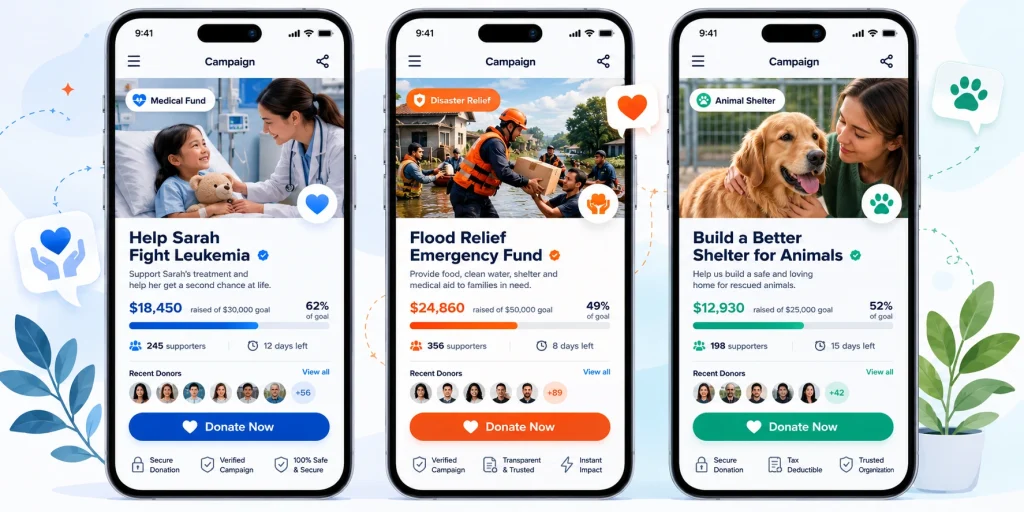
Medical campaigns are the clearest example. Families facing costs that insurance refused have raised tens of thousands of dollars from strangers who simply read the story and gave. On GoFundMe, medical fundraisers are consistently among the most funded categories, which is why the platform has moved billions of dollars over its lifetime.
Disaster relief is another. When wildfires, floods, or earthquakes hit, donation based crowdfunding pages appear within hours, and communities pool small gifts into serious relief funds faster than traditional charities can mobilize. The speed is the whole advantage.
Community and creative causes fill out the picture. Animal shelters covering a surprise vet bill, a village raising money for clean water, a school funding new equipment. None of these offer a product or a return, and all of them work because donation based crowdfunding lets a good story travel. The common thread is simple: a real need, told honestly, shared widely.
Advantages of donation based crowdfunding
There are good reasons this model became the default for personal and charitable fundraising. The pull is easy to see once you have run a campaign.
- It is low risk. You are not taking on debt or giving away equity, so if the campaign underperforms, you have lost effort but not ownership or money you owe.
- It doubles as marketing. Every share spreads your cause to new people, so the model raises awareness even when it does not hit the full goal. A medical fund that reaches half its target still reached hundreds of people who now know the story.
- It builds real relationships. Donors who give once, feel appreciated, and see the outcome often come back for the next campaign. Treated well, they become a community rather than a list.
- It is fast to launch. You can have a donation based crowdfunding page live in an afternoon, which matters enormously for emergencies where every day counts.
- It reaches everywhere. A local cause can pull gifts from across the country or the world, because the whole thing runs on a shareable link.
Disadvantages and honest drawbacks
I would be doing you a disservice if I only listed the upsides. The model has real limits, and knowing them ahead of time saves a lot of disappointment.
- Trust can be fragile. Because the model runs on emotion and honesty, a hint of doubt can stop donors cold. You have to be transparent about where the money goes.
- You might not reach your goal. Most donation based crowdfunding campaigns do not fully fund, and a stalled progress bar is public and discouraging. Set a realistic target so you are not chasing an impossible number.
- It takes constant promotion. The campaign will not spread itself. You have to keep posting, emailing, and asking, which is more work than most first timers expect.
- Fees eat into the total. Payment processors take their cut, and hosted platforms often add a fee on top. Over a large campaign that adds up, which is why some organizers move to a self-hosted donation platform where they keep more of what they raise.
How to run a successful donation based crowdfunding campaign
Knowing the model is one thing. Running a campaign that actually funds is another. These moves separate the campaigns that hit their goal from the ones that fade.
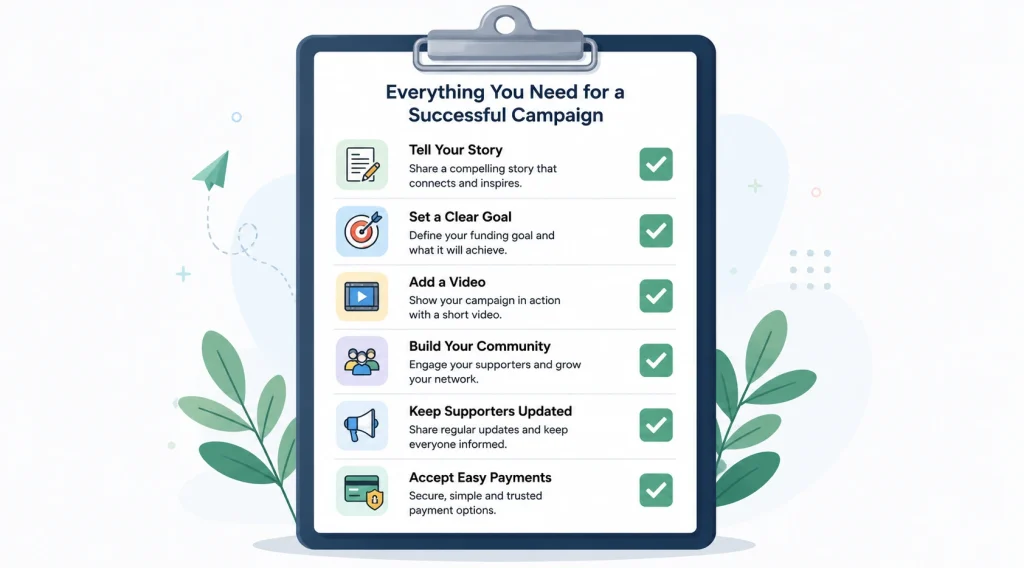
- Tell a specific, honest story. Vague appeals get ignored. Name the person, the problem, and exactly what the money will do. “5,000 dollars covers three months of treatment for Maria” beats “help us raise funds” every time.
- Set a realistic goal. Ask for what you truly need, not a padded number. A goal that gets met builds momentum, and one that stalls scares people off. Our guide on how to ask for donations covers the wording in detail.
- Lead with a video. Video campaigns raise around 105 percent more, so this is not optional if you can manage it. Keep it short and real.
- Launch to your inner circle first. Donation based crowdfunding needs early momentum, so line up family, friends, and close supporters to give in the first few days. Hitting 30 percent early sharply raises your odds.
- Post updates and say thank you. Share progress, tell donors what their gift did, and thank them publicly. Our piece on donor engagement best practices goes deep on it.
- Make giving effortless. Give people multiple payment options, a clean mobile page, and a big obvious donate button. If donating takes more than a few taps, you lose people. A strong campaign page removes every bit of friction.
Choosing a platform for donation based crowdfunding
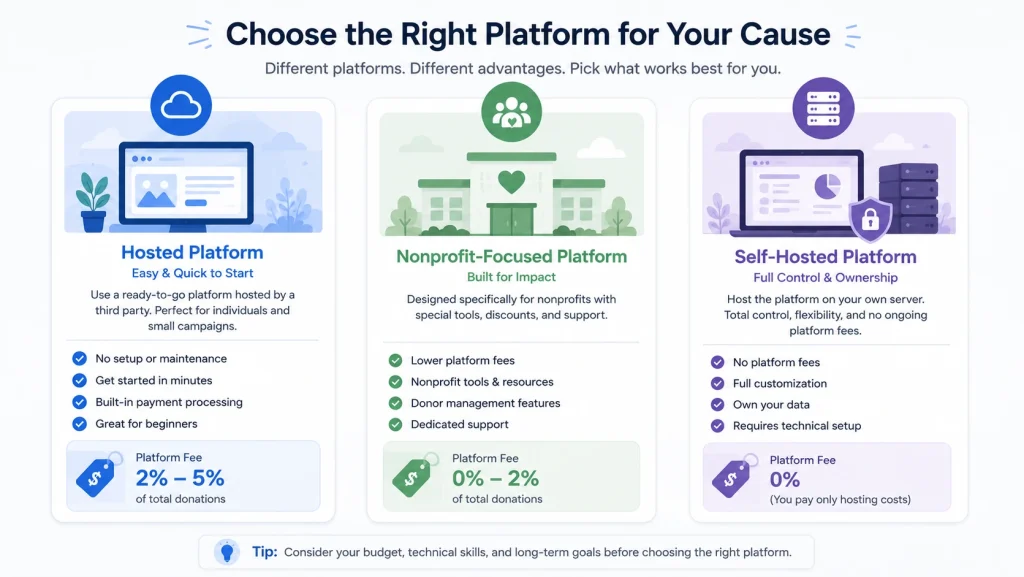
Where you run your campaign shapes your fees, your control, and how much of the money actually reaches your cause. You have three broad options.
Hosted platforms like GoFundMe are the easiest to start with. You sign up, build a page, and launch the same day. The trade off is the fees and the fact that your donors belong to the platform as much as to you.
Nonprofit focused platforms cater specifically to registered charities, often with tax receipt features and lower fees for verified organizations. If you run a nonprofit, these are worth comparing against the general sites.
Your own self-hosted platform is the route for people who plan to fundraise repeatedly and want to keep the fees. Instead of paying a commission on every campaign, you run donation based crowdfunding on software you own.
That last option is where Fundorex fits. It is a ready made crowdfunding and donation platform you host yourself. You buy it once, keep everything you raise beyond payment processing fees, and get 17 plus payment gateways, donation and reward campaigns, and a full admin dashboard. For a charity or organizer running campaign after campaign, owning the platform can save far more than it costs. If you are the technical type, our list of open source crowdfunding platforms covers the free routes too.
Trends shaping donation based crowdfunding in 2026
The model is not standing still, and a few shifts are worth knowing about before you launch.
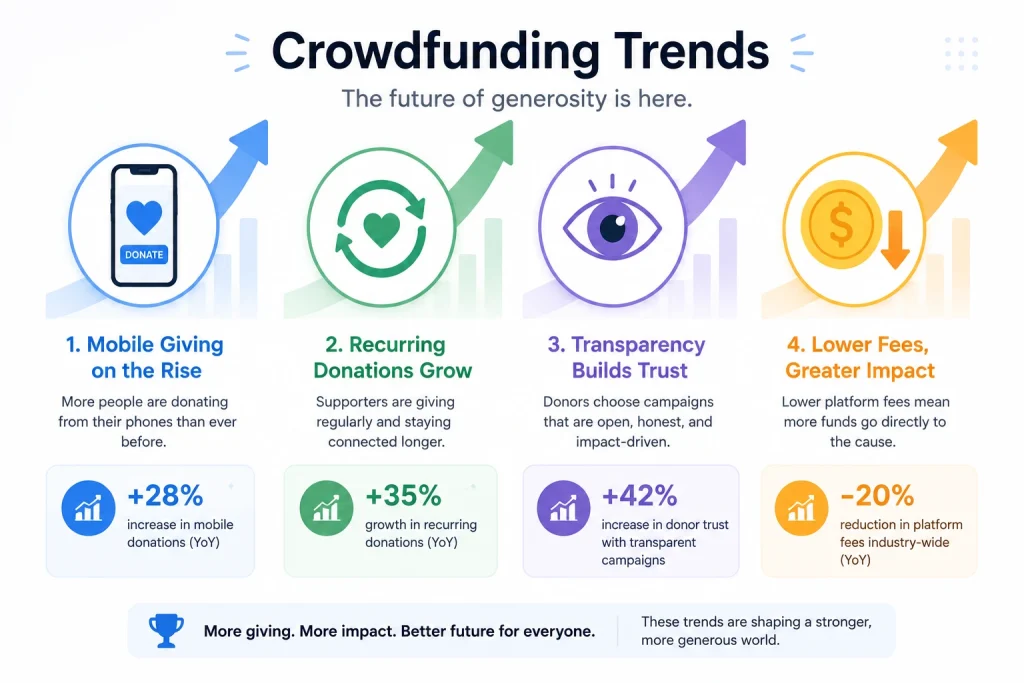
Mobile giving keeps growing. More donors now give from a phone than a desktop, so a fast, clean mobile page is no longer a nice extra. It is the main experience. Our guide to mobile fundraising digs into this.
Recurring donations are rising. Instead of a single gift, more supporters set up small monthly contributions, which gives campaigns and nonprofits a steadier base. Platforms that support recurring giving get more long term value out of each donor.
Transparency is becoming a requirement, not a bonus. Donors increasingly want to see exactly where their money goes, and campaigns that show receipts and post honest updates raise more. This is one reason some organizers move to self-hosted software where they control the donor relationship and the data.
Lower fees are pushing organizers to own their platforms. As donation based crowdfunding grows, the fees on hosted sites add up, and repeat fundraisers are doing the math and switching to platforms they own. The savings compound with every campaign.
Mistakes to avoid
A few errors sink donation based crowdfunding campaigns over and over, and every one of them is preventable.
1. Forgetting to say thank you.
Skipping the follow up costs you future donations. A thank you and an outcome report turns a donor into a supporter for life. For more ways to lift your results, see our tips to improve your crowdfunding goals.
2. Launching without a plan.
Posting a campaign and hoping it spreads is the most common failure. Line up your first wave of donors and your promotion schedule before you go live.
3. Setting the goal too high.
A number that never moves signals failure to visitors. Ask for what you need, and you can always run a second campaign later.
4. Ignoring mobile.
Most donations now come from phones. If your page looks broken on a small screen, you are turning away money at the moment people are ready to give.
5. Going quiet after launch.
Donation based crowdfunding is not set and forget. Campaigns that post regular updates raise more than ones that fall silent.
Final thoughts
Donation based crowdfunding turned online giving into something anyone can do. No product to ship, no equity to give away, no loan to repay. Just a clear cause, an honest story, and a link people can share. The model funds medical emergencies, disaster relief, nonprofit programs, and community projects, and the numbers show donors are ready to give when the story is real.
Success comes down to the basics done well: a specific story, a realistic goal, a short video, early momentum, and genuine follow up with the people who gave. Get those right and donation based crowdfunding can carry your cause further than you expect.
If you plan to raise funds more than once, owning your platform pays off. Explore Fundorex and launch a donation based crowdfunding site where every dollar you raise stays with your cause.
Frequently asked questions
1. Is donation based crowdfunding tax-deductible?
It depends on who is raising the money. Gifts to a registered nonprofit are often tax-deductible, while giving to help an individual usually is not. Donors should check the rules in their country, and organizers should be clear about their status on the page.
2. How much does donation based crowdfunding cost?
The software can be free or paid, but you will always pay payment processing fees of roughly 2 to 3 percent. Hosted platforms may add a platform fee on top. Self-hosted options remove the platform fee but add hosting costs.
3. What is the success rate of donation based crowdfunding?
Around 25 percent of campaigns fully fund, though emotionally strong causes like medical and disaster relief tend to beat that. Early momentum and a video improve your odds significantly.
4. Can I run donation based crowdfunding for a personal cause?
Yes. Medical bills, memorials, tuition, and animal rescue are all common personal uses. You do not need to be a registered charity, though being transparent about where the money goes matters even more for personal campaigns.
5. Which platform is best for donation based crowdfunding?
For a quick one-off campaign, a hosted site is simplest. For repeated fundraising where you want to keep the fees, a self-hosted platform like Fundorex is usually the better long-term choice.