

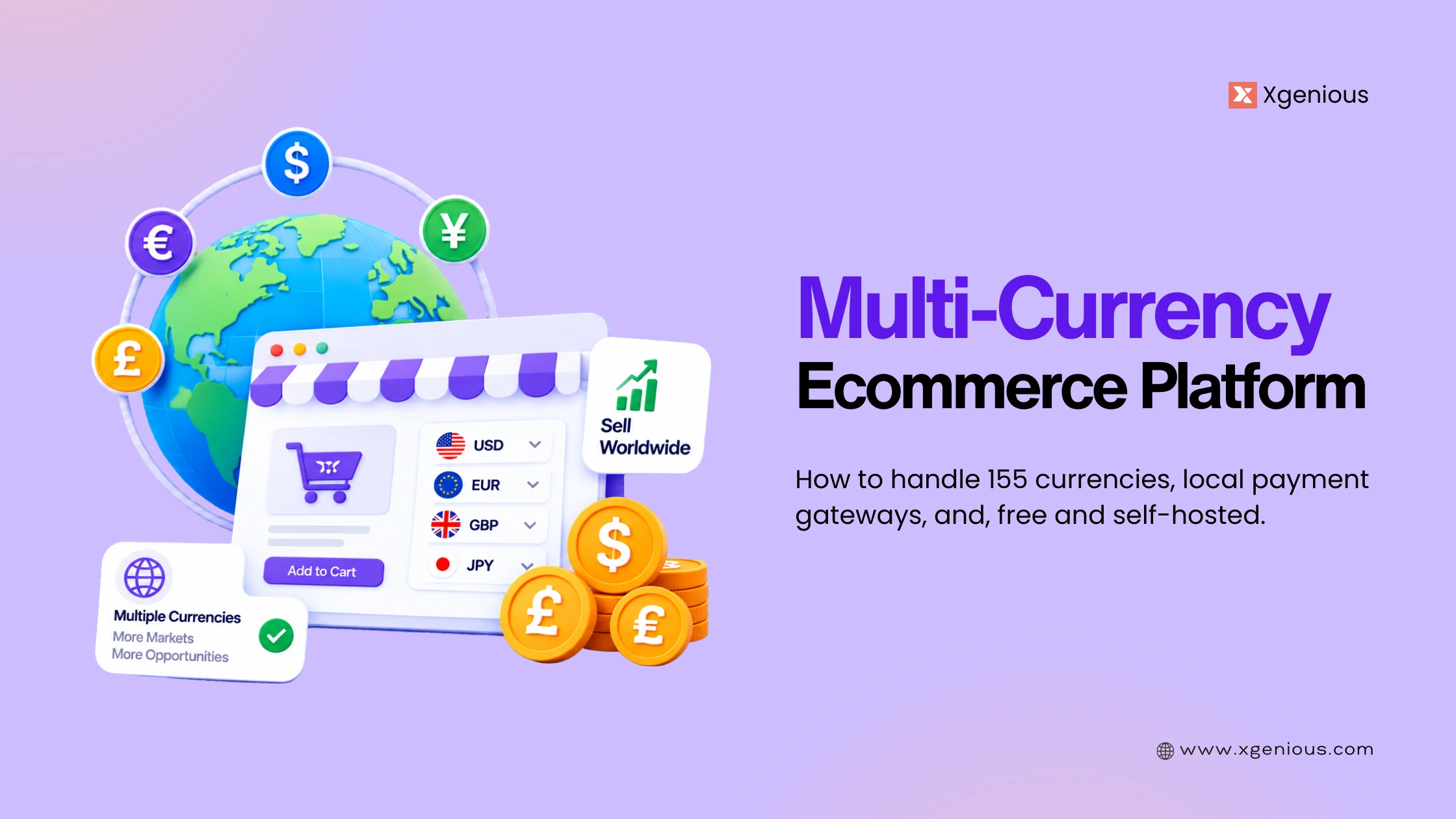


Selling to one country is simple. Selling to twenty is where most online stores quietly break. Prices show in the wrong currency, the checkout demands a postal code from a country that has none, the tax is wrong, and the payment method your customer actually trusts isn’t on the page. A true multi-currency ecommerce platform handles all of that in the box, so a shopper in Lagos, Lisbon, or Lahore gets a checkout that feels local.
Most carts leave this to you. They show a converted price and call it multi-currency, then hand you the hard parts, accurate accounting, destination tax, and local payment gateways, as your problem to solve with plugins. This guide covers what a real multi-currency ecommerce platform needs, how a cross-border ecommerce platform should handle checkout and tax, and why an ecommerce platform with local payment gateways wins the markets others lose. Full disclosure: Genius Commerz, referenced throughout, is our own free product, built specifically for cross-border selling.
Key takeaways
- A real multi-currency ecommerce platform does more than convert prices; it freezes the exchange rate at order time and keeps accounting audit-safe.
- A cross-border ecommerce platform adapts the checkout per country, address format, postal rules, and destination-based tax, so global shoppers are not blocked.
- An ecommerce platform with local payment gateways wins markets that global carts ignore, because customers pay with the method they already trust.
- Most free and hosted carts leave currency accounting, tax, and local payments to the merchant to solve with plugins.
- Genius Commerz ships 155 currencies, country-aware checkout, destination tax, and 39 payment gateways free and self-hosted, so cross-border selling works out of the box.
Table of Contents
What a multi-currency ecommerce platform actually needs
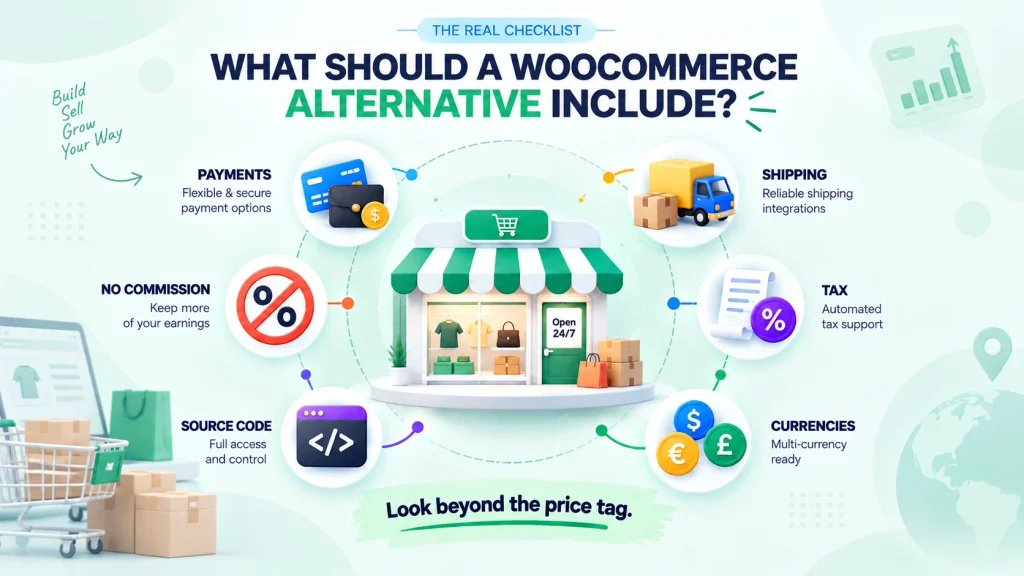
Plenty of platforms claim multi-currency support and mean nothing more than a converted price label. A true multi-currency ecommerce platform has to handle several things well, and if any one is missing, cross-border selling gets painful fast. A real multi-currency ecommerce platform should cover all of these:
- Correct currency display and handling. Prices shown in the shopper’s currency, with correct decimal rules (a price in Japanese yen has no decimals; one in Bahraini dinar has three).
- Frozen exchange rates. The rate locks at the moment of order, so a refund or report months later still reconciles to what the customer actually paid.
- Dual-currency accounting. Every order stored in both your base currency and the customer’s currency, so reports stay accurate and audits stay clean.
- Country-aware checkout. Address forms and fields that adapt to the destination, not a single form that assumes everyone lives in one country.
- Destination-based tax. Tax matched to the buyer’s country, state, and postal rules, with the right rate applied automatically.
- Local payment methods. The gateways and wallets shoppers in each market actually use, not just international cards.
- Secure settlement. Orders marked paid only after a verified gateway confirmation, so no one games the checkout.
- No per-sale penalty. A fee model that does not take a growing cut of your revenue as you scale into new markets.
Get these right and you have a platform that can genuinely sell worldwide. Miss them and you have a domestic store with a currency dropdown bolted on. The rest of this guide takes the most important of these in turn.
Multi-currency done right
This is the heart of any multi-currency ecommerce platform, and it is where most tools cut corners. Converting a price for display is the easy 10 percent. The hard 90 percent is doing it in a way that survives an audit.
A serious platform stores every order twice: once in your base currency, which every report sums, and once in the currency the customer actually saw, with the exchange rate frozen at order time. That way an order from six months ago stays reconstructible even after rates have moved. Rates should refresh automatically from a reliable source, reject an implausible swing, and stay pinned for the duration of a browsing session so a refresh cannot change a total mid-checkout.
Genius Commerz does exactly this. It supports 155 currencies with correct decimal handling, stores each order in both base and display currency with the rate frozen, and refreshes rates hourly from open exchange-rate sources. That is the difference between a multi-currency ecommerce platform you can run a real business on and one that quietly corrupts your books the first time a currency moves.
Cross-border checkout and tax
Currency is only half of what a multi-currency ecommerce platform must handle. The other half is that a cross-border ecommerce platform has to change its checkout for every destination, and get tax right in each one. Two things trip up most carts here.
The address form.
A single, fixed checkout form breaks the moment a foreign customer reaches it. A true multi-currency ecommerce platform adapts the form per country:
- A US checkout needs a state dropdown and a ZIP code.
- A UK checkout needs a postcode and no state field.
- The UAE, Hong Kong, Qatar, and Panama have no postal system, so a required postal field just blocks the sale.
- The right label matters too: ZIP, Postcode, or PIN, depending on the country.
The tax logic.
Destination-based tax is more than a single rate. A proper cross-border ecommerce platform handles:
- Matching on country, then state, then postal pattern, with the most specific rule winning.
- Rates that stack, the way US state-plus-county and Canadian GST-plus-PST actually work.
- Product tax classes, because EU rates differ for food, books, and children’s clothing.
- A tax breakdown frozen onto the order, so the invoice and the amount charged can never disagree.
Genius Commerz ships all of this: country-aware checkout across 213 countries, destination-based tax with stacking rules and product tax classes, and one-click templates for EU VAT across 27 member states, UK VAT, US sales tax across 46 states, and Canada GST/HST/PST. For a fuller picture of how the checkout and tax layer fits an international build, our guide on how to launch an ecommerce website walks through the setup.
An ecommerce platform with local payment gateways
For a multi-currency ecommerce platform, this is the difference that actually moves conversion. A shopper will abandon a cart if the payment method they trust is missing, no matter how good the product page is. An ecommerce platform with local payment gateways meets each market where it already pays.
International cards and PayPal are table stakes, but they are not how most of the world buys. A store that offers only Visa and PayPal is invisible to buyers in entire regions. Here is how the world actually pays:
- Brazil runs on Pix, the instant bank-transfer method.
- India runs on UPI through Razorpay, PhonePe, and Paytm.
- Bangladesh runs on mobile wallets like bKash and Nagad.
- Africa runs on Paystack, Flutterwave, and mobile money like M-Pesa and MTN MoMo.
- The Gulf and MENA use PayTabs, Tap Payments, and Fawry.
- Southeast Asia uses Midtrans and Xendit.
An ecommerce platform with local payment gateways meets each of these markets where it already pays, which is why local payments belong in any serious multi-currency ecommerce platform. Genius Commerz is built exactly for this, shipping 39 payment gateways out of the box:
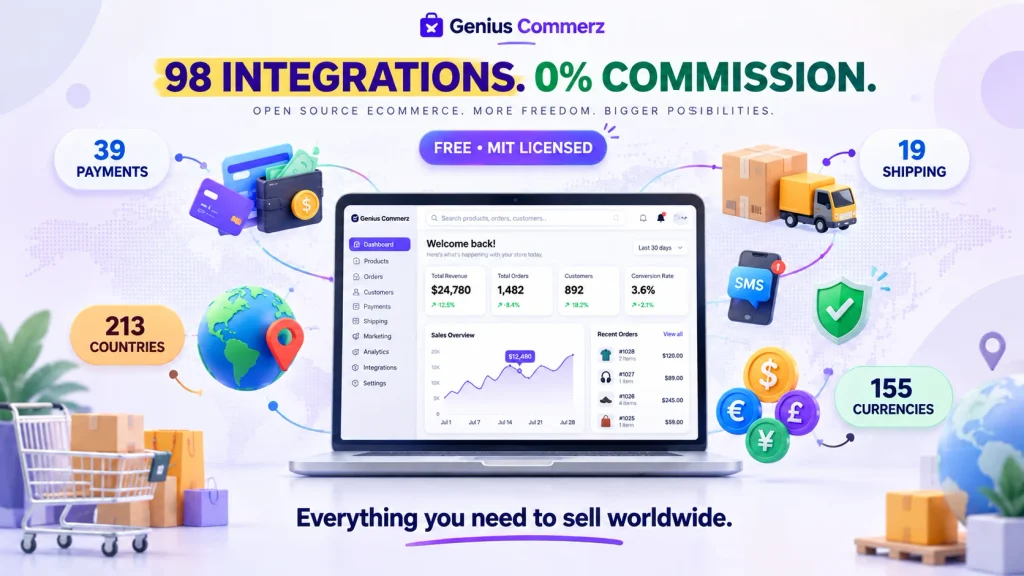
- Worldwide: Stripe, PayPal, Adyen, 2Checkout, and Cash on Delivery.
- Regional: SSLCOMMERZ, bKash, and Nagad for Bangladesh; Razorpay, PhonePe, and Paytm for India; Paystack, Flutterwave, and M-Pesa for Africa; PayTabs, Tap, and Fawry for the Gulf; MercadoPago and Pix via Pagar.me for Latin America, and more.
- Secure by default: every gateway settles the same way, with the order marked paid only after a verified webhook, never on a return URL.
- Easy to extend: adding a new gateway is a definition plus a driver, not a rewrite of the checkout.
That is what turns a domestic cart into an ecommerce platform with local payment gateways that can actually take money in every market you sell to.
Why most carts leave this to you
If these cross-border features are this important, why do so few platforms ship a real multi-currency ecommerce platform? Because building a real multi-currency ecommerce platform is genuinely hard, and the common platforms each dodge a different part of it. Here is what usually goes wrong:
- Currency is display-only. Most carts convert the price on screen but store the order in one currency, so accounting drifts the moment rates move.
- Exchange rates are not frozen. Without a locked rate at order time, refunds and reports months later no longer match what the customer paid.
- Local gateways are paid add-ons. On hosted platforms, regional methods like bKash or Pix arrive through third-party apps, not the core.
- Destination tax is an extension. Getting EU VAT, US sales tax, and Canadian GST right per order is usually a separate paid plugin or app.
- Checkout does not adapt per country. A fixed form blocks buyers in countries with different address or postal rules.
- A fee rides on every sale. Hosted platforms often take a cut per order on top of the monthly plan, which grows with your success.
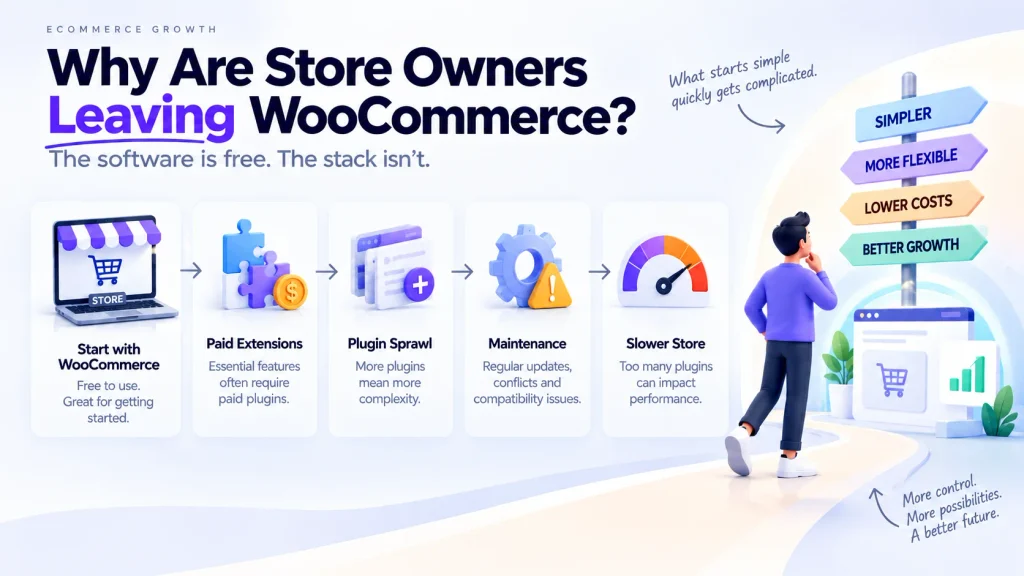
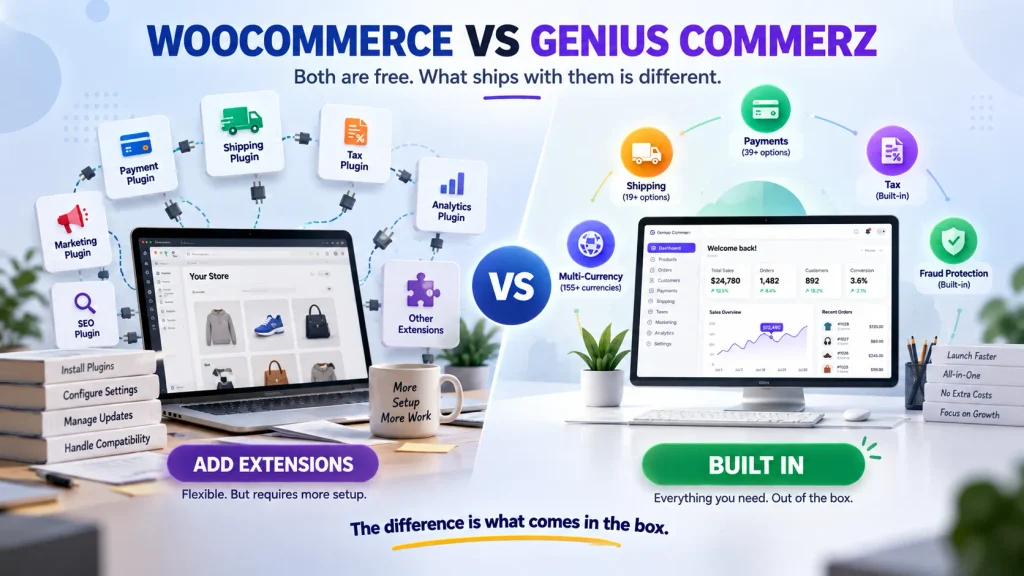
- Plugin sprawl on WooCommerce. Each regional gateway, tax setup, and currency tool is its own paid extension, so a global store becomes a stack of a dozen plugins to maintain.
- Free carts punt entirely. Most simply leave currency accounting, tax, and local payments for the merchant to solve.
That gap is the whole reason to choose a platform built for cross-border selling from the start, rather than bolting it onto a domestic cart. If you want the wider comparison, see our roundup of the 13 best SaaS ecommerce platforms and the best WooCommerce alternatives.

Here is how the three approaches compare for cross-border selling specifically.
| Cross-border feature | Genius Commerz | Shopify | WooCommerce |
|---|---|---|---|
| Currencies | 155, rate frozen at order | Multi-currency (Shopify Payments regions) | Plugin-dependent |
| Local payment gateways | 39 built in | Varies by region, via apps | Usually a paid extension each |
| Destination tax | EU, UK, US, Canada templates built in | Shopify Tax built in | Usually a paid extension |
| Country-aware checkout | 213 countries built in | Built in | Plugin-dependent |
| Commission on sales | 0% | 0 to 2% unless Shopify Payments | 0% |
| Hosting and ownership | Self-hosted, you own it | Shopify-managed | Self-hosted |
| Cost | Free (MIT) | $29 to $299+/mo | Free core plus paid extensions |
The pattern is clear. A hosted platform bundles some of this but rents it to you with a fee; WooCommerce makes each piece a paid add-on; and a purpose-built multi-currency ecommerce platform ships the whole cross-border layer in one place.
Genius Commerz: a free multi-currency ecommerce platform
Genius Commerz is a free, MIT-licensed, self-hosted multi-currency ecommerce platform built for merchants who sell across borders. It is the rare free platform that treats global selling as the default, not an add-on, and ships the whole cross-border layer in the box:
- 155 currencies with correct decimal handling and rates frozen at order time.
- 213 countries with country-aware checkout, correct address fields, and postal rules.
- Destination-based tax with stacking rules, product tax classes, and one-click EU, UK, US, and Canada templates.
- 39 payment gateways, including local methods like bKash, Razorpay, Paystack, Pix, and M-Pesa.
- 19 shipping carriers and 11 fraud checkers built in, with real-time rates and a fallback so checkout never has no shipping option.
- Audit-safe accounting, storing every order in both base and display currency so reports and refunds always reconcile.
- 0% commission, so nothing is deducted from your revenue on any gateway.
- Full Laravel 12 and React 19 source, so you own the code, can extend it, and are never locked in.
- Self-hosted on your own server, so your data and your sending domain stay yours.
Honest positioning: if your store sells into multiple countries and currencies and you keep hitting missing payment methods or broken checkouts, Genius Commerz is built for exactly that. If you only sell in one country with one currency, it is more than you need, and a simpler cart will do.
Who a cross-border platform is for
- Merchants selling into multiple countries who do not want a percentage of revenue taken and need local payments in each market.
- Regional-market sellers who need methods like bKash, Razorpay, or Paystack that global carts treat as an afterthought.
- Agencies building client storefronts that must work across currencies and borders without stacking paid extensions.
- Founders leaving Shopify or WooCommerce who want the cross-border features they were paying apps and plugins for, shipped free in one platform.
If your build is more specialized, our custom SaaS development team can extend it or build around it.
How to choose a multi-currency ecommerce platform
Choosing a multi-currency ecommerce platform comes down to a handful of questions. Run any option through these before you commit.
- Does it store orders in both base and display currency with the rate frozen? If not, your accounting breaks the first time rates move.
- Does the checkout adapt per country? Test a country with no postal system and one with stacked taxes before you commit.
- Does it handle destination tax automatically? Confirm it covers the regions you sell into (EU VAT, US sales tax, GST) without a separate tool.
- Does it ship the local payment methods your markets use? Not just cards, but the wallets and instant-pay methods buyers actually trust.
- How many gateways are built in versus paid add-ons? Every method behind a paid plugin is a hidden cost as you expand.
- What does it cost as you scale? Watch for per-sale commissions and per-gateway or per-market plugin fees.
- Can you extend it? Source access and a clean integration layer mean adding a provider is simple, not a rebuild.
- Do you own it? Self-hosted with full source means no lock-in and no revenue cut.
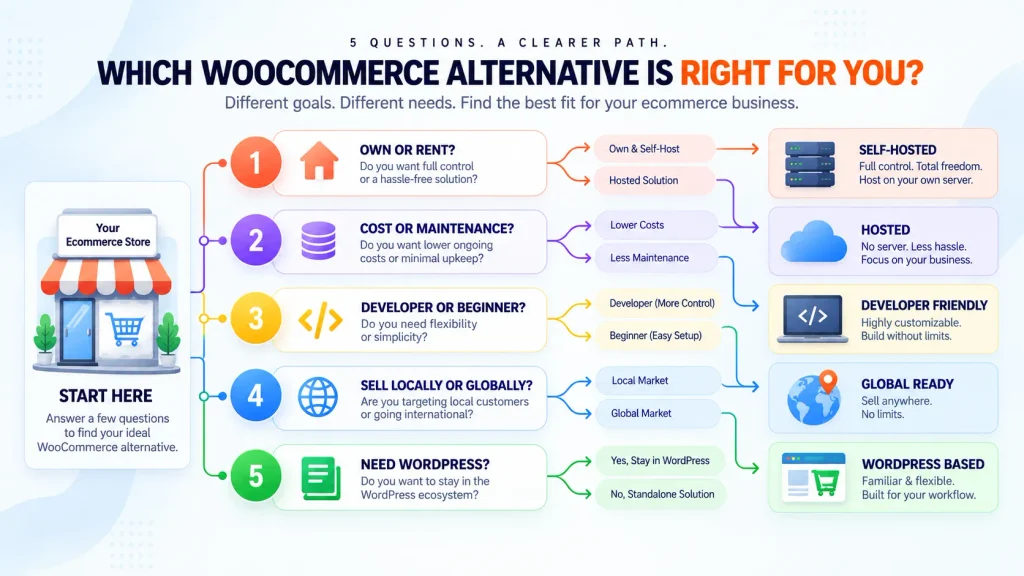
Match the multi-currency ecommerce platform to where you actually sell, and you will not lose customers at the checkout for reasons that have nothing to do with your product.
Final thoughts
A multi-currency ecommerce platform is not one feature, it is three that have to work together: currency handled to audit standard, a checkout that adapts to every country, and the local payment methods each market trusts. A platform that nails all three can genuinely sell worldwide. One that only shows a converted price is a domestic store in disguise, and it will lose customers at the checkout in every market it does not truly support.
That is the gap Genius Commerz is built to close: a free, self-hosted cross-border ecommerce platform with 155 currencies, country-aware checkout, destination tax, and 39 payment gateways including the local methods most carts ignore, all with 0% commission. If you sell across borders, download it, connect your gateways, and give every shopper a checkout that feels local. And if you would rather have a team build or migrate your store, our custom SaaS development service can help.

Frequently asked questions
What is a multi-currency ecommerce platform?
A multi-currency ecommerce platform is one that shows prices in each shopper’s currency and, done properly, stores every order in both your base currency and the customer’s currency with the exchange rate frozen at order time, so accounting stays accurate after rates move.
What is the difference between multi-currency and cross-border ecommerce?
Multi-currency is about pricing and accounting in different currencies. A cross-border ecommerce platform goes further, adapting the checkout, address forms, and tax to each destination country and offering local payment methods, not just currency conversion.
Which multi-currency ecommerce platform has the most local payment gateways?
Among free, self-hosted options, Genius Commerz ships 39 payment gateways covering worldwide providers plus regional methods like bKash, Razorpay, Paystack, Pix, and M-Pesa, which is unusually broad for a free platform.
Can WooCommerce or Shopify handle multi-currency selling?
Both can display multiple currencies, but full cross-border support (local gateways, destination tax, audit-safe accounting) usually means paid apps on Shopify or a stack of paid extensions on WooCommerce. A platform built for it ships those features in the box.
Is a free multi-currency ecommerce platform good enough for a real business?
Yes, if it handles currency accounting, tax, and local payments correctly. Genius Commerz is free and self-hosted, and it covers all three, so the cost is only your server and the payment gateways’ own processing fees.
How are exchange rates handled at checkout?
In a well-built platform, rates refresh automatically from a reliable source, are pinned per browsing session so a total cannot change mid-visit, and are frozen onto the order at purchase, so refunds and reports always reconcile to what the customer paid.