



I have watched three different fitness founders ship beautiful trainer apps in the last two years. All three got installs. All three lost most of their users by month two. The product was not bad. The trainers were good. The clients started motivated. The app simply did not give either side enough reason to come back next week.
That is the thing about personal trainer app development. Acquiring a user who wants to get fit is comparatively easy. There is high search intent, real motivation, and a clear willingness to pay. Keeping that user past the first burst of enthusiasm is the actual business. Personal trainer app development that ignores retention ends up funding the next platform’s growth.
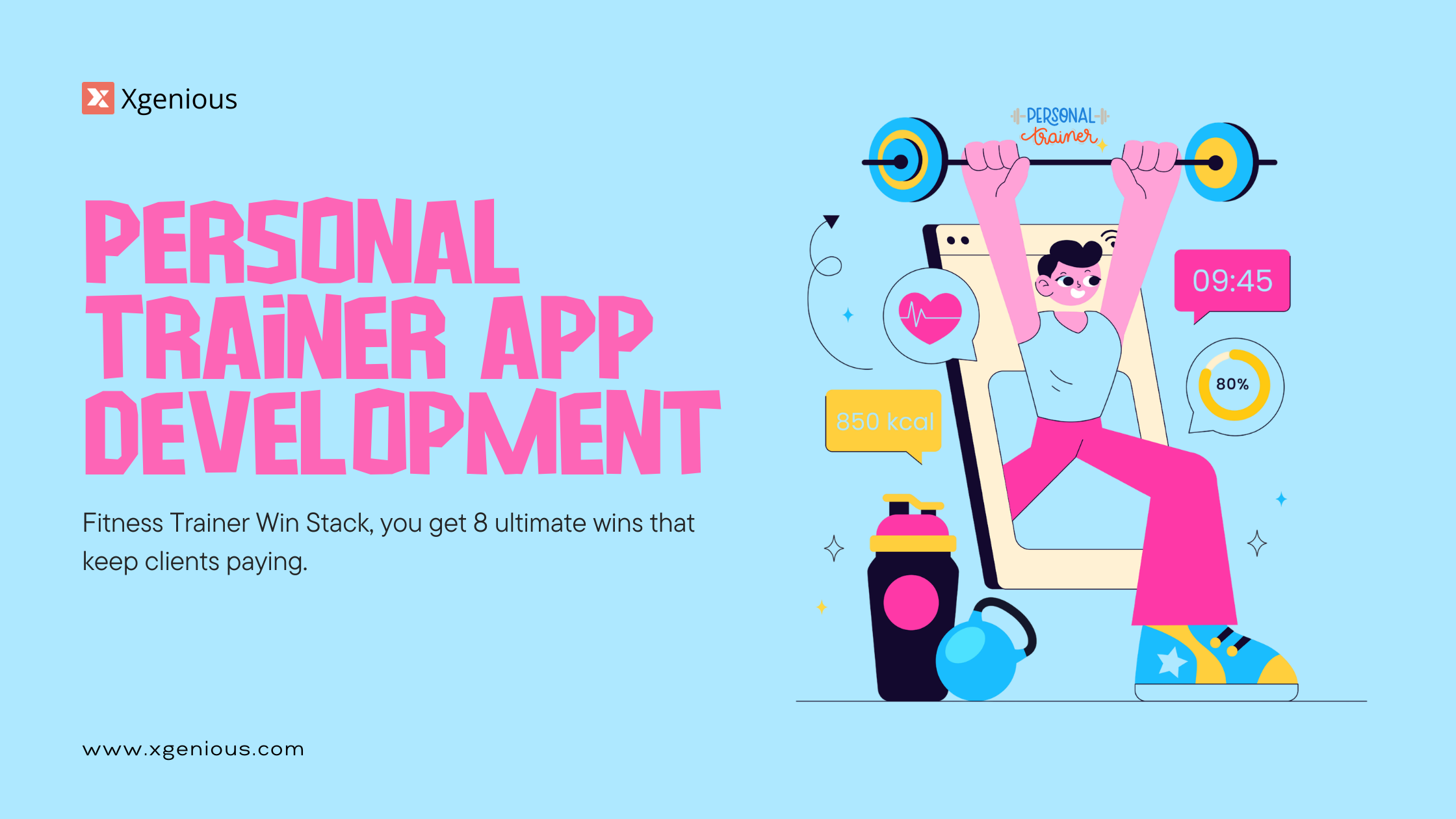
This piece is about the eight wins that move retention. I call it the Fitness Trainer Win Stack, and it is what we use at Xgenious when a fitness founder asks us to scope a build. Each win is a feature, but more importantly each one is a moment where the client either finds a reason to open the app again or quietly stops. Stack the wins right and the app becomes a habit. Skip any of them and the app becomes another forgotten icon on a third screen.
Table of Contents
If you are working on a wider on-demand service marketplace, read this alongside our on-demand service marketplace development guide, which covers the full marketplace shape. This piece sits inside that shape and goes deep on the fitness category specifically.
Why personal trainer app development is a retention game
The economics of personal trainer app development are unusual. Customer acquisition is more expensive than it looks because the people most likely to download a fitness app are also the people downloading three other fitness apps the same month. They are shopping. The platform that keeps them past week six is the one that earns the lifetime value.
Retention numbers in fitness are brutal across the category. The American College of Sports Medicine’s fitness industry research shows that most consumers who start a structured program drop out within ninety days. App-based programs are not exempt. If anything, the friction of being on a phone makes them worse. A trainer app that holds 30 percent of its day-30 users at day 180 is doing better than the category average. Most do not.
That is why retention is the lens for every product decision in personal trainer app development. A flashy onboarding feels great in user testing and loses to a boring habit loop in production. A new exercise library feels valuable and moves no retention metric. A simple “rebook your trainer with one tap” flow looks unremarkable and lifts six-month retention by double digits, because it removes the moment of friction that breaks the habit.
There is also a two-sided dynamic that complicates things. Trainers are the supply side, and they have their own retention curve. A trainer who does not earn meaningful income in the first three months will leave for the platform that offered them more. So personal trainer app development is really two retention problems sitting on top of each other, and the wins below have to serve both sides.
The fitness marketplace opportunity
The fitness category went through a strange decade. Boutique studios boomed, then collapsed under the pandemic, then partially recovered as hybrid models took hold. Trainers who used to depend on a gym for clients now find them online. Clients who used to walk into a studio now expect a phone-first experience even when the workout is in person.
That shift is what makes 2026 a good moment for personal trainer app development. The behaviour has changed. Consumers expect to find a trainer the same way they find a restaurant. Trainers expect a platform that handles bookings, payments, and content delivery so they can focus on actual coaching. The infrastructure expectations have caught up with the gym-replacement use case, and the market is no longer dominated by the legacy “scheduling tool with a website” generation of products.
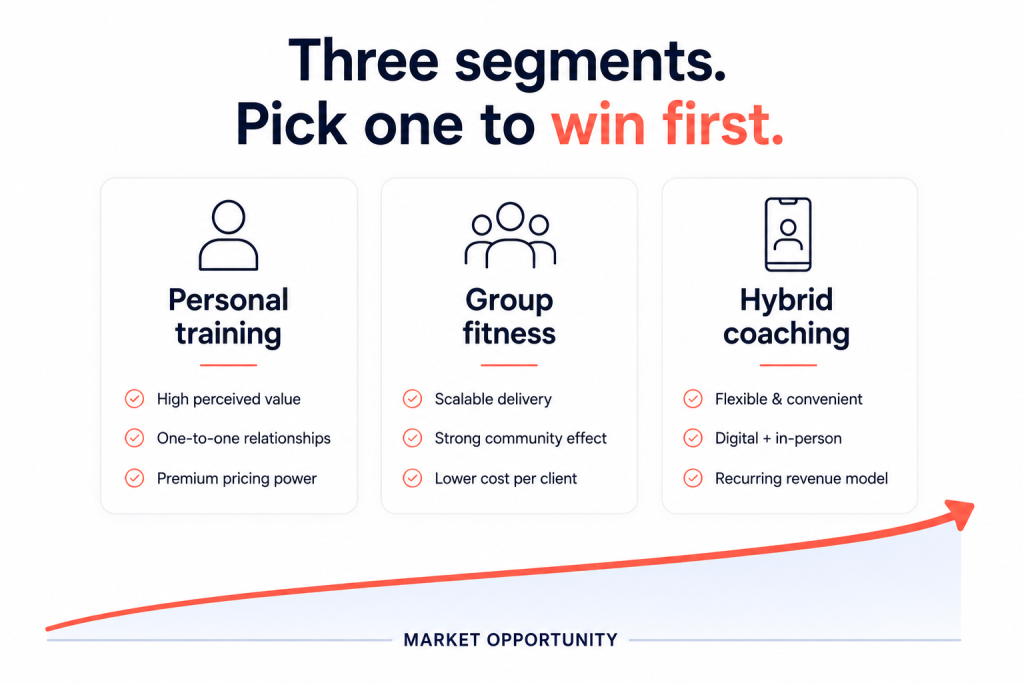
The opportunity sits in three rough segments. Personal training (one trainer, many clients, deep relationship), group fitness (one trainer, many clients, lighter touch), and hybrid coaching (in-person plus digital follow-up). A serious personal trainer app development project usually picks one segment to win first and expands later. Trying to serve all three from day one is the most common scoping mistake in the category.
The Fitness Trainer Win Stack framework for personal trainer app development
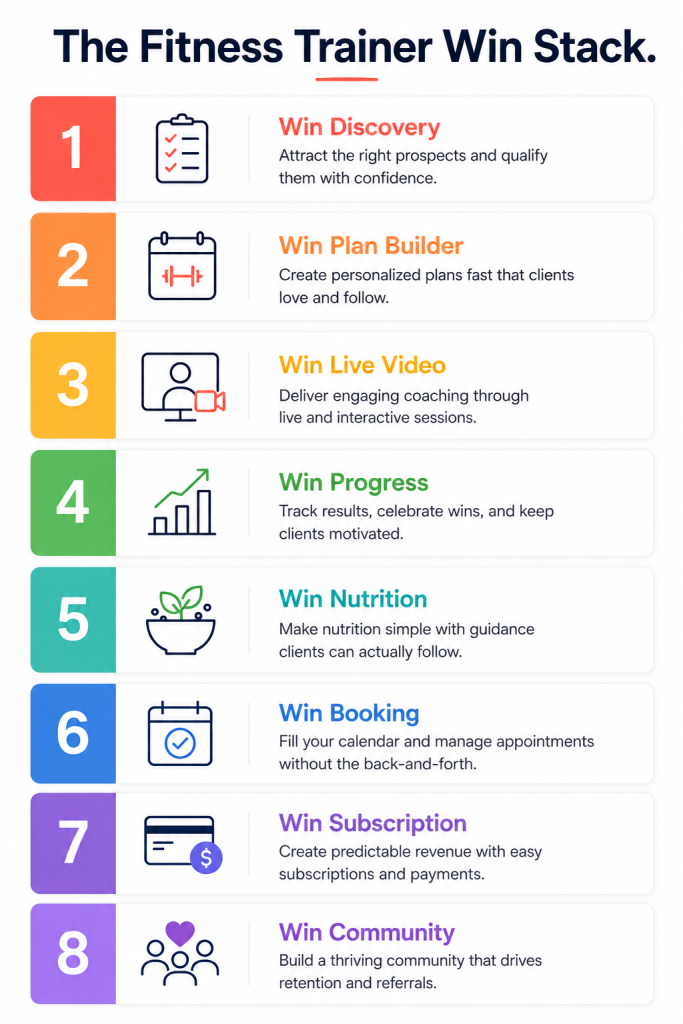
The Fitness Trainer Win Stack has eight wins. Each one is a moment where the platform either earns another week of attention from a client (and another week of income for a trainer) or quietly loses both. They are not features in a feature list. They are retention levers. The order matters because the early wins set up the later ones. Discovery has to work before any workout can happen. Workout plans have to exist before live sessions are useful. Live sessions have to feel good before subscriptions stick.
I see founders treat the stack as a wishlist and try to build everything at once. The Fitness Trainer Win Stack is not a wishlist. It is a sequence. Ship wins 1 to 4 first and prove the retention curve before touching wins 5 to 8. A fitness platform that only ships wins 1 to 4 cleanly will already outperform most of the category, because most of the category fails on win 1.
Win 1: Trainer discovery with specialization filters
The first impression a client has of personal trainer app development happens in the discovery flow. They open the app, want to find someone they trust, and either find that person in under two minutes or close the app forever. Discovery is the highest-leverage retention surface in the product because it is the first one a user touches, and most apps in this category get it wrong by being too generic.
A trainer is not a trainer is not a trainer. A client who is six weeks postpartum needs a very specific kind of coach. A client recovering from a knee injury needs another. A client training for a marathon, another. Generic discovery (name, photo, rating, price) does not surface that fit, so the client picks based on the photo and is disappointed in week two.
What good trainer discovery looks like:
- Specialization filters that match real use cases (postpartum, rehab, weight loss, strength, endurance, mobility)
- Availability filters with timezone awareness, because online coaching crosses timezones constantly
- A trainer profile that shows certifications, years of experience, and a short intro video
- Real client reviews tied to verified bookings, not anonymous accounts
- Price clarity at the discovery stage, not after three clicks
Get this right and the conversion from app open to first session booked improves dramatically. Get it wrong and personal trainer app development is fighting a leak it cannot close downstream.
Win 2: Workout plan builder and sharing
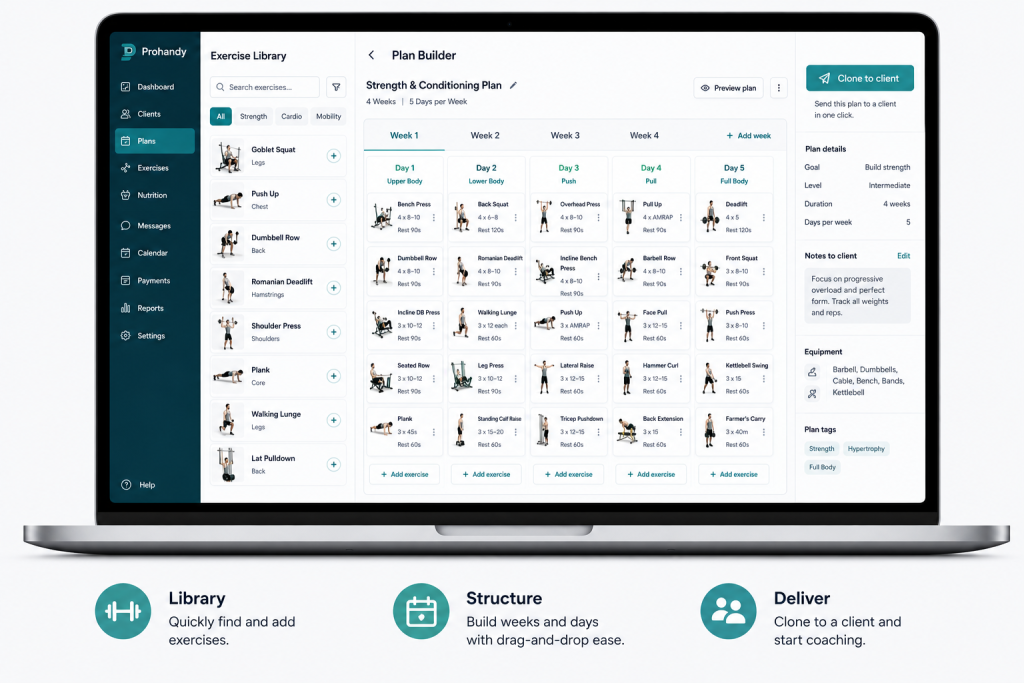
Once a client books, the trainer needs to deliver a program. This is the heart of the value exchange in personal trainer app development. The trainer is selling expertise made visible through a structured plan. A clean workout plan builder turns a trainer’s knowledge into something the client can follow on a Tuesday morning at 6am without messaging anyone.
A workout plan builder is also the trainer’s productivity tool. A trainer who can build a four-week plan in twenty minutes and assign it to multiple clients can serve five times the volume of a trainer who has to write everything from scratch each week. The platform that makes the trainer faster keeps the trainer longer.
What a workout plan builder needs to handle:
- A library of exercises with video demos and proper categorisation
- Sets, reps, tempo, rest periods at the exercise level
- Week-by-week progression and deload weeks
- Templates that can be cloned and adapted per client
- In-app delivery to the client with reminders and check-ins
- A feedback loop where the client logs completion and the trainer sees it
The biggest mistake here is over-engineering the builder. Trainers do not want a full periodisation engine. They want fast, predictable tooling that gets out of the way. Personal trainer app development that nails this win produces apps that trainers actually use as their primary workflow rather than as a side channel.
Win 3: Live video session infrastructure
Hybrid coaching is now the default in most segments of fitness, and live video is the spine of the hybrid model. Personal trainer app development without solid live video infrastructure is a content app pretending to be a coaching platform. The two are not the same business.
Live video is harder than it looks. It is not just a camera feed. It is the camera feed plus screen overlay (for form cues), plus a recording so the client can rewatch, plus a chat layer for asynchronous follow-up, plus scheduling that handles late starts and overruns. WebRTC handles the basic media layer. The trickier parts are session state, billing integration (a session that the client did not show up to should not be billed the same as one that ran full length), and the polite handling of connection drops.
What live video infrastructure has to cover:
- One-on-one and small group video with sub-second latency
- Recording with clear permissions on both sides
- Calendar integration so the session creates a real event with reminders
- A “join session” button surfaced everywhere, not buried two screens deep
- Quality fallback when the trainer’s connection dips (audio-only mode)
Skip this win and the platform competes only with cheap content apps. Get this win and the platform becomes a real alternative to in-person training for a meaningful segment of the market.
Win 4: Progress tracking with photos and metrics
Progress is the single biggest driver of week-on-week retention in personal trainer app development. A client who can see they are getting stronger, leaner, or fitter has a reason to log in next Monday. A client who cannot see progress has nothing pulling them back. Trainers know this. The good ones build their entire client communication around showing progress visually.
The progress surface has to handle quantitative metrics (weight, body composition, lift numbers, running pace, heart rate zones) and qualitative ones (photos, energy ratings, sleep notes). It has to make it easy to compare a snapshot now with one from six weeks ago. And it has to do all this with strict privacy controls because progress photos are deeply personal data.
What good progress tracking includes:
- Weekly metric logging with reminders that do not feel nagging
- Photo comparison views with before-and-after side-by-side
- Lift history per exercise with one-rep-max trend lines
- Wearable integration (Apple Health, Google Fit, Whoop, Garmin) so the data flows in automatically
- A trainer-facing dashboard so the coach can spot stalls and adjust the plan
This win pairs powerfully with win 2 because a client who sees their lift numbers climbing is much more likely to follow the trainer’s next program. Personal trainer app development that connects programming to measured progress is what produces multi-month subscriptions instead of one-off downloads.
Win 5: Nutrition plan integration
You cannot solve fitness retention without addressing nutrition. The clients who get results stay. The ones who only train without changing how they eat plateau and quit. Trainers know this. Most of them would happily deliver nutrition guidance if the platform made it possible without forcing them to become full registered dietitians.
The trick is offering nutrition as a structured surface without overstepping into regulated dietary advice. The platforms that get this right let trainers offer meal frameworks, macro targets, and habit-based guidance, while keeping clinical nutrition (allergies, medical conditions) outside the trainer’s scope. Personal trainer app development that handles this distinction protects everyone.
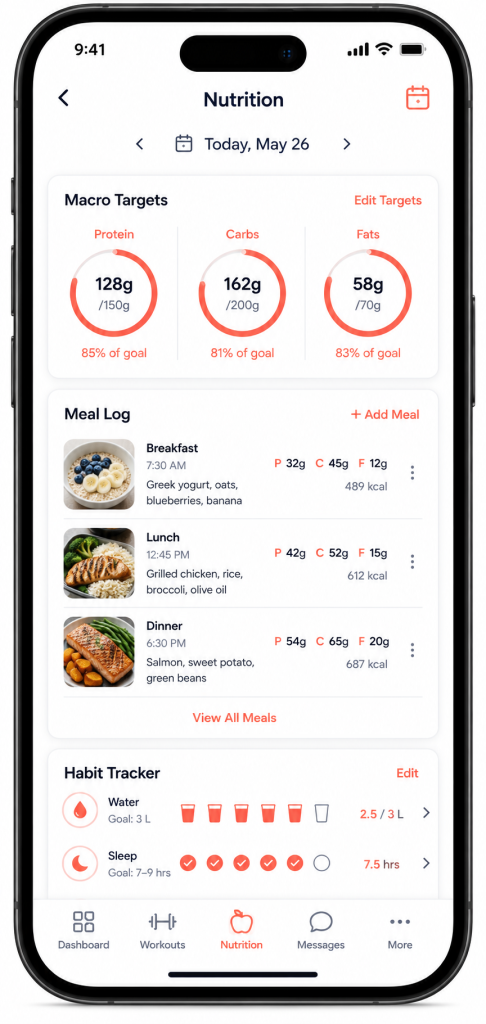
What nutrition integration usually includes:
- Macro and calorie targets per client, set by the trainer or self-set
- Meal logging via barcode, search, or photo
- Habit tracking (water, sleep, supplements)
- A recipe library or partnership with one
- Connection to popular trackers (MyFitnessPal, Cronometer)
The mistake here is treating nutrition as a full second product. It is a wing of the main product. Build it as a clean integration that supports the trainer’s coaching rather than competing with dedicated nutrition apps, and it lifts retention without sprawling the scope of the build.
Win 6: Group class and 1-on-1 booking
Booking is where personal trainer app development meets operations. Whatever else the app does, it has to make scheduling a session frictionless for both sides. A trainer who can publish their availability once and have it sync across one-on-ones, group classes, and recurring memberships earns the platform their loyalty. A client who can book in three taps without a back-and-forth message thread converts at a much higher rate than one who has to negotiate.
Group classes add complexity that does not exist in pure one-on-one. Capacity limits. Waitlists. Last-minute cancellations that need to free spots for the waitlist. Different pricing for drop-ins versus members. The platforms that handle this gracefully treat the booking engine as a first-class system, not an afterthought, and it shows in the trainer-side adoption numbers.
What the booking engine needs to do:
- Trainer availability rules that respect breaks, buffers, and personal blocks
- One-on-one booking with timezone awareness
- Group classes with capacity and waitlist handling
- Last-minute cancellation and reschedule windows with clear policies
- Automatic reminders so no-shows go down
- Integration with the video session layer from win 3 so the join link works the moment the session starts
The same patterns show up in adjacent service categories. Our beauty service app development guide covers the booking surface for personal-service categories that have similar last-minute cancellation dynamics.
Win 7: Membership and package subscription
Personal trainer app development without recurring revenue is a transaction business with no economic moat. Single sessions are easy to sell and hard to retain. Memberships and package subscriptions are slightly harder to sell and create the compounding revenue that makes the platform viable.
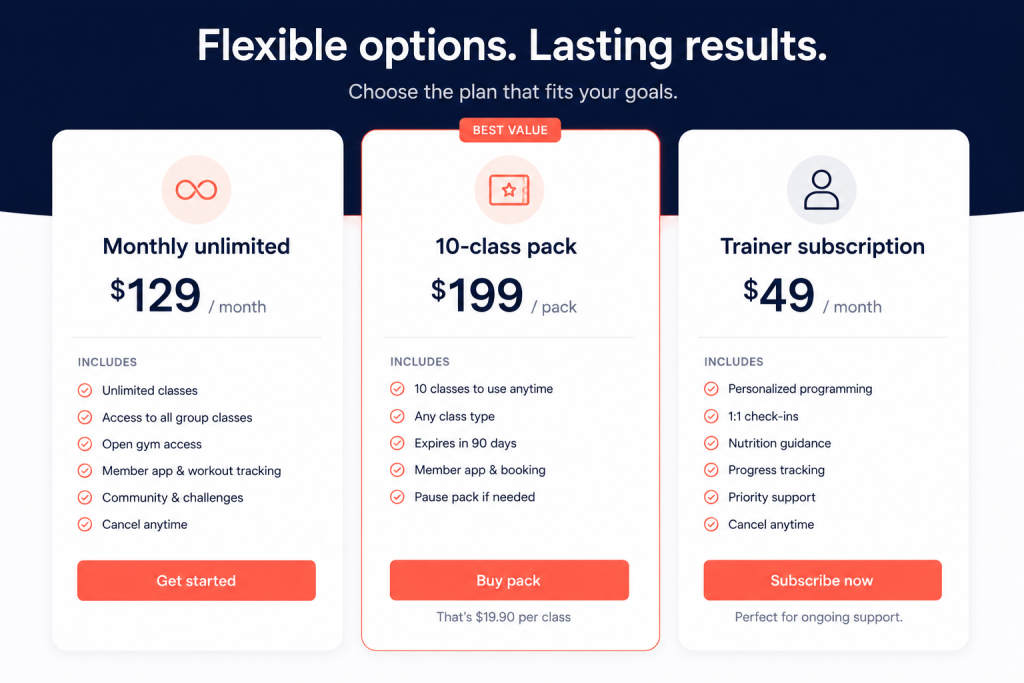
The platforms that win in this segment offer multiple subscription shapes so trainers can match the way they already sell. Monthly unlimited. Class packs. Hybrid (one live session plus on-demand library). Trainer-specific subscriptions where the client pays one trainer directly through the platform. Each of those shapes needs different billing logic, different pause and cancel handling, and different revenue split rules.
What subscription infrastructure has to support:
- Recurring billing with clear pause, skip, and cancel options
- Pro-rata calculations for mid-cycle changes
- Different commission rates per subscription type if the trainer pays a platform fee
- Failed-payment recovery (smart retries, dunning emails) because card failures are the largest source of subscriber churn
- Clean cancel flows that capture the reason without making the cancel feel hostile
The mistake here is treating subscription as a single boolean. Real personal trainer app development needs multiple subscription shapes from day one, because trainers will leave for a competitor that supports the shape they want to sell. Stripe Billing and Stripe Connect handle most of this together, but the product decisions on top are what differentiate the platform.
Win 8: Community and accountability features
The final win is the one most personal trainer app development teams underestimate. Community and accountability features look soft on a feature comparison and turn out to be the strongest retention multiplier in the stack. A client who shows up because they do not want to let their group down has a fundamentally different retention curve than a client who shows up because they paid for it.
Community can take several shapes. A trainer’s private group where clients see each other’s progress. A weekly check-in ritual. Leaderboards for friendly competition. Streak tracking for habit formation. Direct messaging between client and trainer that feels personal without becoming a 24-hour support burden on the trainer.
Useful community features:
- Trainer-led groups with controlled membership
- Progress sharing with privacy controls per post
- Streaks and habit tracking that recognise consistency over intensity
- Light gamification (badges for milestones) without infantilising the experience
- Asynchronous check-ins so trainers can support more clients without being always-on
The trap is over-engineering community into a social network. The client is not there for likes. They are there to be slightly accountable to a small group of people who are doing the same work. Personal trainer app development that treats community as a focused retention tool rather than a generic social layer is the version that holds users past month six.
Five real fitness platforms
Looking at real platforms helps frame personal trainer app development trade-offs.
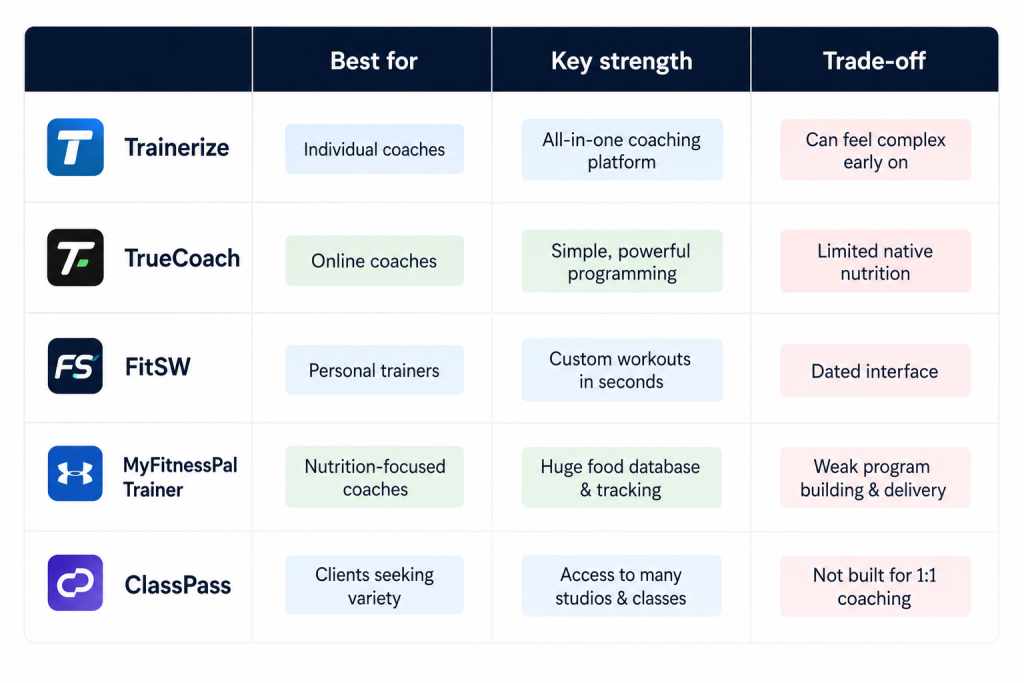
Trainerize is the most established personal trainer software in the category. Built for trainers selling online or hybrid programs. Strong workout plan builder, decent client app, integrated payments. Their trainer marketing resources are worth reading for the language that converts fitness consumers. Trainerize is the right benchmark for any personal trainer app development project that targets serious independent trainers.
TrueCoach is the more boutique competitor. Cleaner interface, faster trainer workflow, weaker on the client-facing side compared to Trainerize. Popular with strength coaches and one-on-one specialists. Often used by trainers who want their software to be invisible.
FitSW is the budget option, with a broader feature set than the price suggests. Used heavily by trainers who run a side business and need something cheap that works. Lower polish but covers the core surface.
MyFitnessPal’s trainer offering is the nutrition-led angle. Strong food database, weaker coaching tools. The right comparison for any personal trainer app development project that leads with nutrition rather than training.
ClassPass is the marketplace at the other end of the spectrum, aggregating in-person studios and digital content. Not a trainer-side tool. Useful as a competitive reference for the discovery and booking surface.
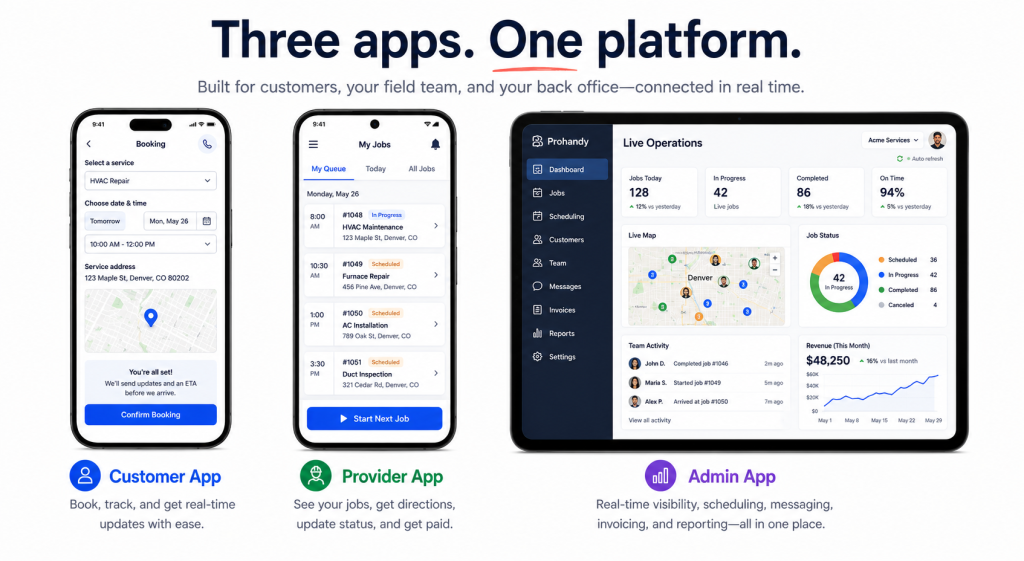
If your build is closer to a multi-service on-demand platform than a single-category fitness product, the patterns we use for Prohandy apply here too, especially around trainer onboarding and payouts.
Personal trainer app development cost and timeline
Personal trainer app development cost varies more than most categories because the eight wins can be built thinly or deeply. A realistic MVP that ships the first four wins with web-only delivery sits around $40,000 to $80,000. A full mobile app (iOS and Android) covering all eight wins lands closer to $120,000 to $250,000. Enterprise builds with custom programming engines and white-label trainer storefronts go higher.
Rough cost ranges by build shape:
- White-label or SaaS configuration with light branding: $20,000 to $50,000
- Custom MVP, web first, wins 1 to 4: $50,000 to $120,000
- Full custom build, iOS and Android, all 8 wins: $150,000 to $350,000
- Enterprise with custom programming engines and analytics: $400,000+
Timeline ranges:
- White-label launch: 4 to 8 weeks
- MVP custom build: 12 to 20 weeks
- Full custom build: 24 to 36 weeks
The single biggest cost driver in personal trainer app development is live video infrastructure. A platform that uses an off-the-shelf video provider (Daily, Whereby, 100ms, Zoom SDK) ships meaningfully faster and cheaper than one trying to engineer its own. The trade-off is per-minute pricing at scale. Plan for it explicitly. Patterns from the pet care app development guide on integrating real-time features apply here too.
The second biggest is the workout plan builder. A trainer-facing tool that needs to be fast and pleasant takes design polish that is hard to compress. Budget the design phase properly.
A final word
Personal trainer app development is one of the more rewarding software categories to ship because the success story is visible. Clients who stay get fitter. Trainers who stay earn more. The Fitness Trainer Win Stack is the order I keep coming back to (trainer discovery, workout plan builder, live video, progress tracking, nutrition, booking, subscription, community) because each win compounds on the one before it.
At Xgenious we have built fitness, beauty, and on-demand service platforms across categories, and the pattern that decides outcomes is almost never the depth of the exercise library or the cleverness of the workout algorithm. It is whether the platform makes the trainer’s daily workflow faster and the client’s next session easier to reach. Everything else is a multiplier on those two things.
If your build is a single-category fitness product, the Win Stack is the spec. If it is a broader on-demand marketplace where fitness is one vertical, build on top of the on-demand service marketplace development foundation and use the Win Stack to design the fitness vertical specifically. Either way, retention is the metric. Personal trainer app development that holds users past day 180 is the version worth building. Our on-demand platform Prohandy is built around the same multi-vertical retention thinking, and the fitness vertical drops cleanly onto it when the model fits.
Frequently asked questions about personal trainer app development
What is personal trainer app development, in one sentence?
Personal trainer app development is the work of building a platform that connects clients with fitness coaches, delivers structured workout plans, handles live and asynchronous coaching sessions, tracks progress, and manages subscriptions and bookings.
How long does personal trainer app development take?
A focused MVP covering the first four wins of the Fitness Trainer Win Stack usually takes 12 to 20 weeks. A full custom build with iOS and Android apps covering all eight wins takes 24 to 36 weeks. White-label configurations can launch in 4 to 8 weeks but trade flexibility for speed.
How much does personal trainer app development cost?
A white-label or configured solution sits around $20,000 to $50,000. A custom MVP runs $50,000 to $120,000. A full mobile build covering all eight wins lands at $150,000 to $350,000. Enterprise builds with custom programming engines run higher. Live video infrastructure and the workout plan builder are the two biggest line items.
Should I build personal trainer app development custom or use a SaaS like Trainerize?
Use Trainerize, TrueCoach, or a similar platform if you are an independent trainer who wants software fast. Build custom if you are launching a marketplace, an aggregated brand, or a coaching business with workflows that off-the-shelf tools cannot support. Most founders who eventually go custom started on SaaS, validated the business, and migrated when the constraints of the SaaS started limiting growth.
Which features matter most for retention?
Progress tracking with visible improvement and community accountability are the two highest-leverage retention features. Live video matters but it is one habit per week; progress and community show up daily. Personal trainer app development that nails these two will outperform competitors who lead with content libraries.
Do I need both iOS and Android from day one?
Not necessarily. Many successful builds start web-only, validate the trainer and client side on a responsive web app, and add native mobile only once retention is proven. The wins on the stack work web-first. Mobile improves them but is not a precondition. Mobile is also where you spend the second-largest chunk of personal trainer app development budget, so deferring it lets you prove the model on less capital.
How do I handle the regulatory side of nutrition advice?
Keep the platform’s nutrition tools framework-based (macros, habits, meal frameworks) rather than clinical. Surface a clear disclaimer that the trainer is not providing medical or dietary advice and that clients with medical conditions should consult a registered dietitian. The platforms that get this right do not police every trainer’s content but build the structure so the default usage stays inside safe boundaries.