

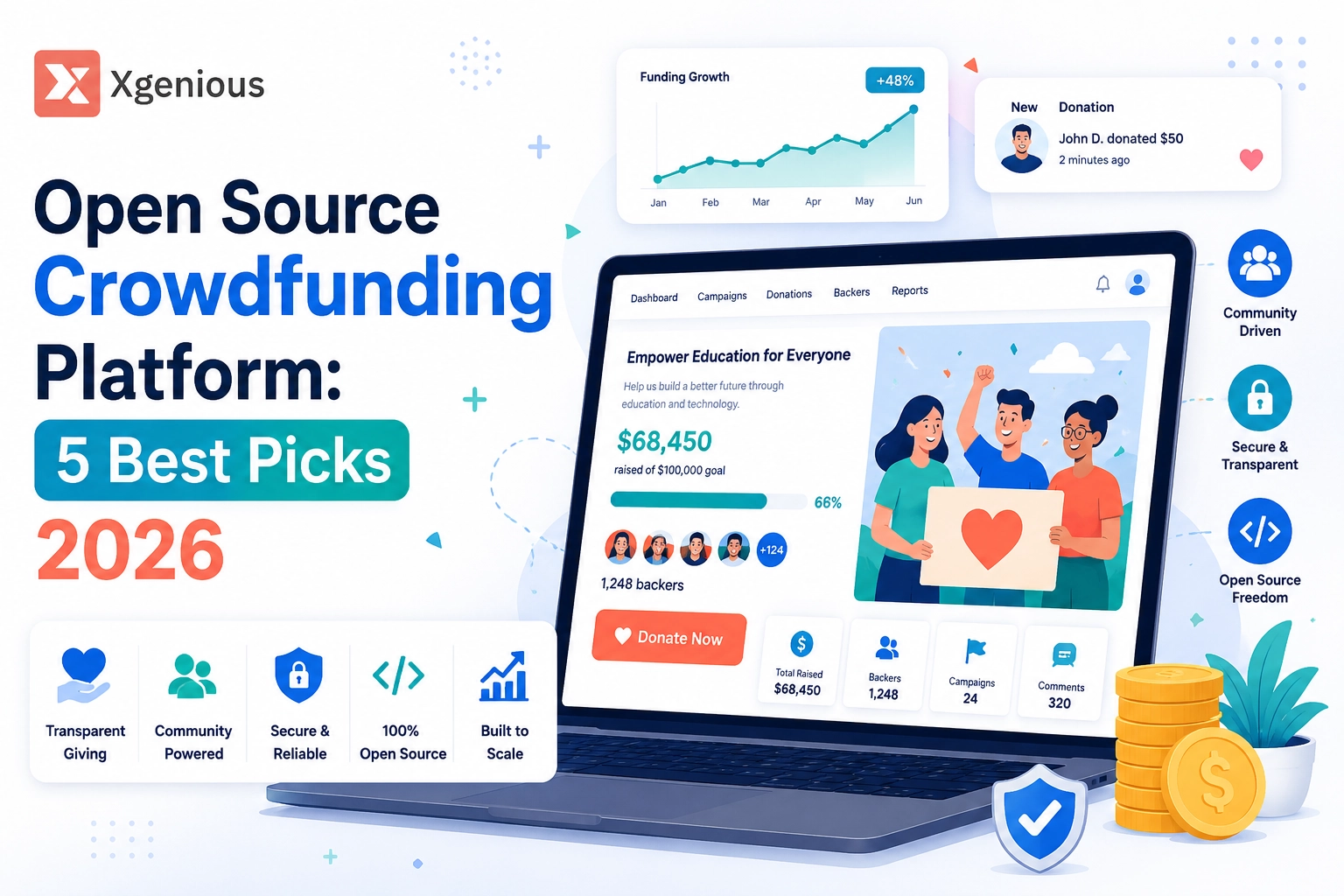


An open source crowdfunding platform lets you run your own fundraising site, keep the fees, and own your data instead of handing a slice of every donation to Kickstarter or GoFundMe. On a small campaign the platform cut barely registers. Raise six figures and those percentages turn into a number that stings.
That is the main reason people go looking for an open source crowdfunding platform in the first place. They want control, they want the money to actually reach the campaign, and they are tired of asking permission from a company that can change its rules whenever it likes.
This guide is a practical look at what an open source crowdfunding platform really is, who it suits, and the five options worth your time in 2026. I will also be honest about where the free route gets painful, because “free” and “no cost” are not the same thing. By the end you will know whether to install an open source crowdfunding platform yourself or take a shortcut that saves you a month of developer time.
Table of Contents
What is an open source crowdfunding platform?
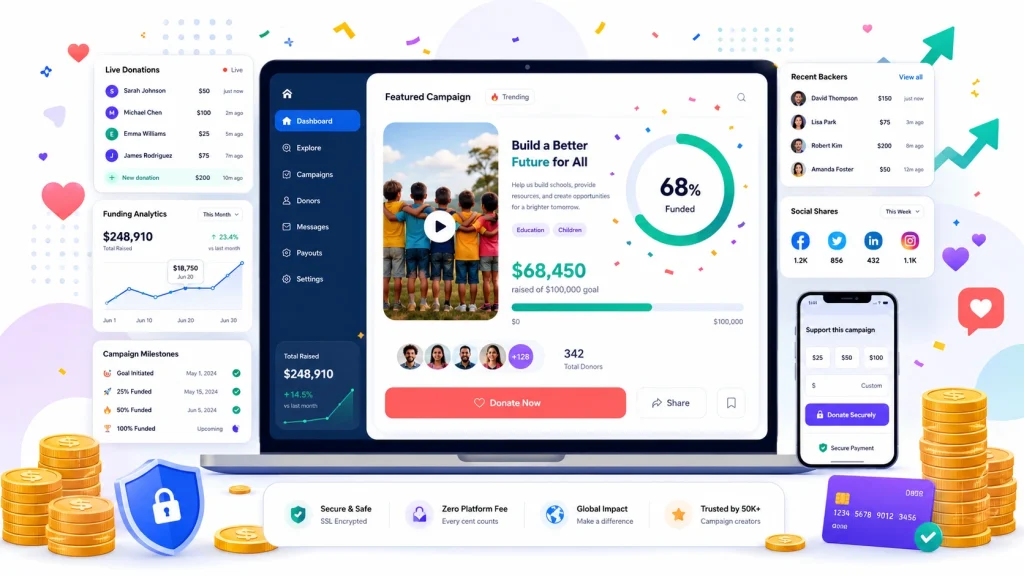
An open source crowdfunding platform is fundraising software whose source code is public. You can download it, read it, change it, and run it on your own hosting for free. Nobody sits between you and your backers taking a cut of each pledge.
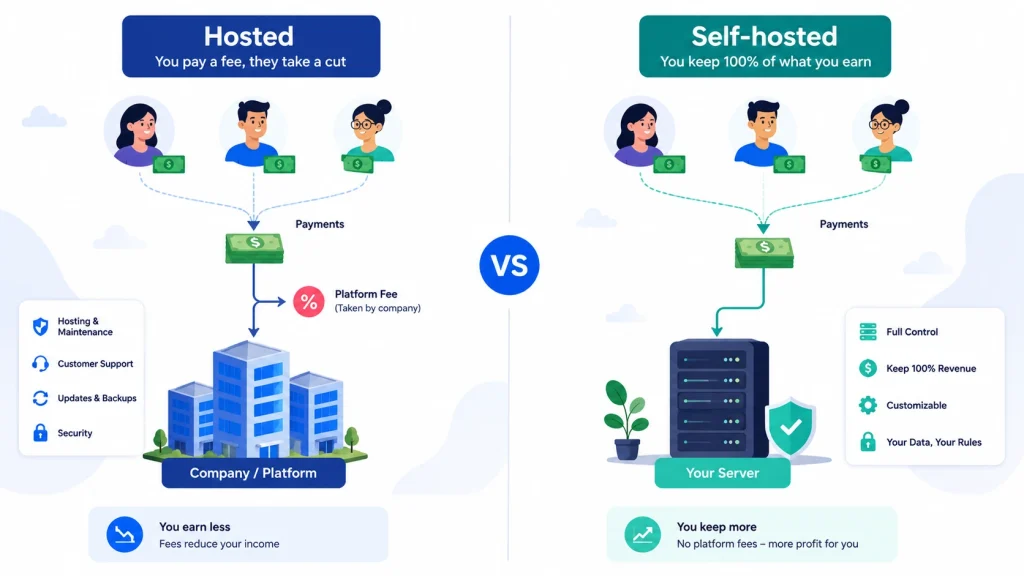
Compare that to a hosted platform. When you use Kickstarter or Indiegogo, you are renting a spot on their website. They own the servers, the code, and the relationship with your backers. An open source crowdfunding platform flips that arrangement. You get the code and full control, and in exchange you take on the work of hosting it, securing it, and keeping it running.
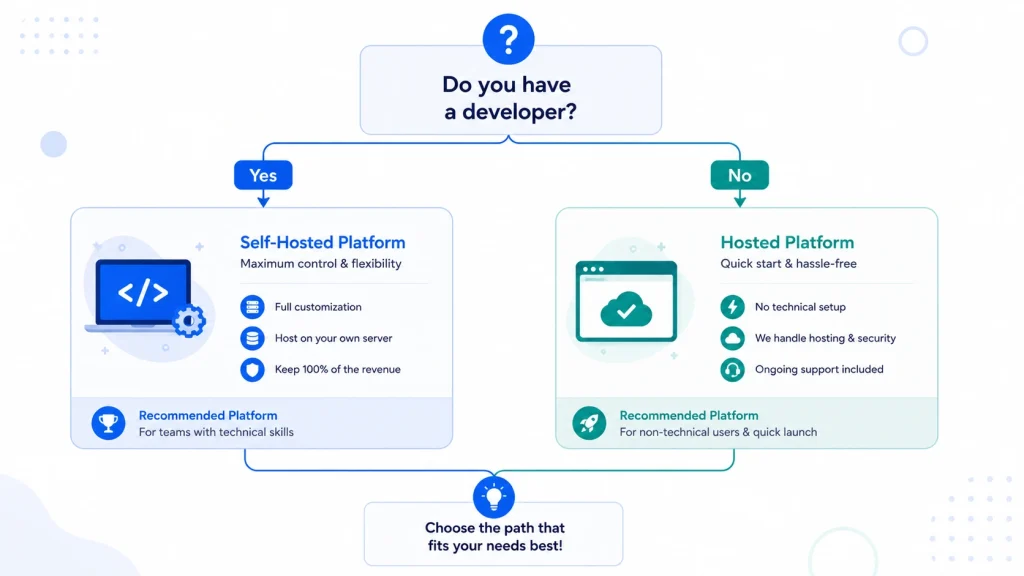
For a nonprofit that plans to fundraise for years, or an agency building sites for clients, an open source crowdfunding platform is usually worth the trouble. For a first time campaigner who just wants a page up by Friday, it can be more than they bargained for.
There is one more thing people forget. An open source crowdfunding platform does not automatically mean easy or finished. Some of these projects are polished. Others are half maintained experiments that a couple of developers built and then drifted away from. Reading the code of an open source crowdfunding platform is your right. Fixing it when it breaks is also your job.
Why people switch to open source crowdfunding software
The pull is easy to understand once you have paid a platform fee on real money.
You keep more of what you raise. There is no per campaign commission on a self hosted open source crowdfunding platform. You still pay standard payment processing fees to Stripe or PayPal, but those are much smaller than the 5 to 8 percent that hosted platforms often layer on top.
You own your donor data. Run your own open source crowdfunding platform and every email, every donation record, every bit of behavior sits in your database. That matters for your next campaign, and it matters for privacy rules like GDPR where you need to control where the data lives.
You can change anything. Want recurring donations, reward tiers, equity offerings, a Bengali language option, or a local payment gateway that Kickstarter has never heard of? With the source code of an open source crowdfunding platform in hand, none of that is locked away.
Nobody can pull the rug out. A hosted platform can raise its fees or rewrite its terms overnight. Your own open source crowdfunding platform runs on your terms until you decide otherwise.
Now the honest catch, because I would rather you hear it from me than learn it the hard way. Self hosting an open source crowdfunding platform needs technical skill. You will deal with servers, updates, and security patches, or pay someone who can. Community run projects sometimes go quiet, which leaves you sitting on software that no longer gets fixes. And “free to download” still means paying for hosting, a developer’s time, and processing fees. I have seen people spend forty hours wiring up a “free” open source crowdfunding platform and only then realize what their time was worth.
If that list made you nervous rather than excited, keep reading, because the ready made option later in this guide exists for exactly that reason.
The 5 best open source crowdfunding platforms in 2026
I picked these five because each one is a genuine open source crowdfunding platform, each suits a different type of project, and each is worth a serious look rather than a footnote. Before you commit to any open source crowdfunding platform, click through to the source and check the latest activity, because these projects move and this list is a starting point, not gospel.
1. Goteo
Goteo came out of Spain in 2011, and it was built for a specific kind of fundraising: civic projects, social causes, and work that creates some public good. One feature sets this open source crowdfunding platform apart from the Kickstarter clones. Alongside money, Goteo lets people pledge non cash help, things like volunteer hours, skills, or materials. For a community project that needs hands as much as cash, that is genuinely useful.
The codebase lives on GitHub, and the team has been working on a newer version 3 built on PHP and Symfony. The catch is that the original platform is being wound down while the new one matures, so check which version is current before you build anything serious on it.
Best for: nonprofits and civic or social impact campaigns. Stack: PHP and Symfony. The good: made for social good, accepts non cash pledges, has a values driven community behind it. The rough: the codebase is in transition, so confirm the current version’s maturity first.
2. Catarse
Catarse calls itself the first open source crowdfunding platform for creative projects, and it is not an empty boast. It powers one of the biggest crowdfunding sites in Brazil, so this is code that has handled real traffic and real money at scale. The model is reward based, the same pledge for perks setup that made Kickstarter famous.
Because Catarse is open, developers can take the code and build their own creative funding site on top of this open source crowdfunding platform. The trade off is the stack. It runs on Ruby on Rails with a PostgreSQL database, which is powerful but not beginner territory. If your developer has never touched Rails, budget time for the learning curve.
Best for: creative projects and reward based campaigns. Stack: Ruby on Rails and PostgreSQL. The good: proven at scale, clean reward flow, active repository. The rough: Rails and PostgreSQL setup wants a real developer, and the docs lean technical.
3. IgnitionDeck
IgnitionDeck has one big advantage over every other open source crowdfunding platform on this list: it runs on WordPress. If you already have a WordPress site, and a huge share of the web does, you can add crowdfunding to it without moving to a brand new system. It supports both reward based and equity crowdfunding, and it tries hard to keep things no code for people who are not developers.
That WordPress foundation is also the limit. You are tied to the WordPress ecosystem, with its plugins, its quirks, and its update cycles. Some of the more advanced features of this open source crowdfunding platform sit behind paid tiers, so read the pricing before you assume everything is free. You can see how it positions itself on the IgnitionDeck site.
Best for: people who already live on WordPress and want a fast start. Stack: WordPress plugin, PHP based. The good: quick for the WordPress crowd, nothing new to learn, supports equity campaigns. The rough: advanced features cost extra, and you inherit every WordPress limitation.
4. Open Collective
Open Collective solves a different problem than the others. This open source crowdfunding platform is built around total financial transparency. Every contribution that comes in and every expense that goes out is visible to anyone who looks. For open source software projects, community groups, and collectives that live or die on trust, that openness is the whole point. Backers can see exactly where their money went, down to the receipt.
The platform itself is open source, built on a JavaScript stack with Node.js and React. It leans more toward ongoing fund management for a group than toward the classic one big push campaign, so if your goal is a single reward based launch, this open source crowdfunding platform may be the wrong shape for you.
Best for: communities and open source projects that need transparent money management. Stack: Node.js and React. The good: transparent by design, strong for recurring community funding, fully open code. The rough: built more for continuous funding than for one off reward campaigns.
5. Selfstarter
Selfstarter has a good origin story. The team at Lockitron got tired of waiting for a platform to approve their campaign, so they built their own simple pledge page and released it for anyone to use. This open source crowdfunding platform is deliberately bare bones. Think of it as a foundation to build on rather than a finished product you switch on.
Because Selfstarter is minimal, you get near total control and zero platform fees, but you also get to build most of the features yourself. It runs on Ruby on Rails with Stripe for payments. For a developer who wants a clean starting point, that is a feature, not a bug. For anyone hoping to unpack a full platform, it will feel empty.
Best for: developers who want a minimal base to extend. Stack: Ruby on Rails and Stripe. The good: simple, no platform fees, complete control. The rough: very little works out of the box, so you build the rest.
Quick comparison of the five platforms
Here is the short version if you are skimming. Match the row to your situation rather than chasing whichever open source crowdfunding platform sounds most impressive.
| Platform | Best for | Tech stack | Setup difficulty |
|---|---|---|---|
| Goteo | Social impact and civic projects | PHP and Symfony | Medium to high |
| Catarse | Creative reward campaigns | Ruby on Rails | High |
| IgnitionDeck | Existing WordPress sites | WordPress and PHP | Low to medium |
| Open Collective | Transparent community funding | Node.js and React | Medium |
| Selfstarter | A developer starter base | Ruby on Rails | High, mostly DIY |
If you want a wider look at paid and free tools side by side, our roundup of the best crowdfunding platform software covers options beyond the open source world.
An open source crowdfunding platform is not the only way to own your site
Here is the gap that trips people up. The free platforms tend to land in one of three awkward spots. Some need serious developer skill to set up. Some have gone quiet and no longer ship updates. Some are missing features you will need on day one, like multiple payment gateways, multi language support, a clean admin panel, or reliable security patches.
So you end up with a choice that feels like all pain or all commission. Either you wrestle with a free open source crowdfunding platform that fights you, or you crawl back to a hosted platform that taxes every dollar you raise.
There is a middle path. A ready made, self hosted crowdfunding script sits between “free but do it yourself” and “hosted but you pay forever.”
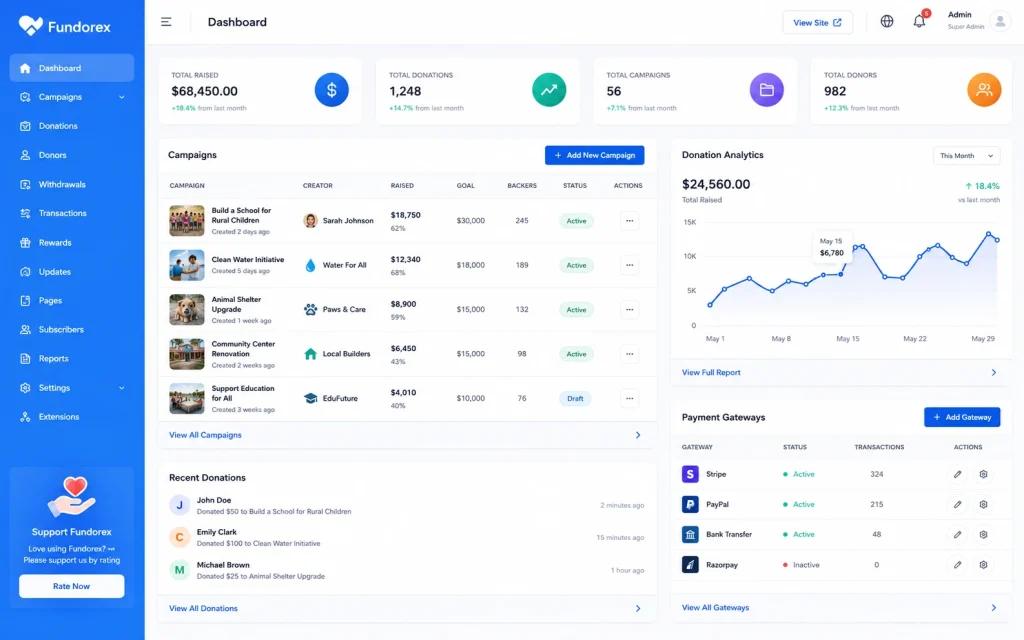
Fundorex is our own crowdfunding and donation platform built for that middle ground. You buy the script once, host it on your own server, and keep everything you raise. There is no per campaign commission taking a bite out of your total. It ships with 17 plus payment gateways, support for donation and reward campaigns, a full admin dashboard, and regular updates, so you get the ownership of an open source crowdfunding platform without babysitting a codebase that a stranger abandoned two years ago.
I am not going to pretend it is free, because it is not, and you have read enough of this guide to spot that dodge. The pitch is simpler than that. If you like owning your platform but you do not want to spend a month gluing an old open source crowdfunding platform back together, a maintained script saves you that month. If you have a strong developer and time to spare, one of the five free options above may serve you just as well. Both are reasonable.
If you want to see how the paid scripts stack up against each other first, we compared the leading ones in our guide to the top PHP crowdfunding scripts.
How to choose the right platform for you
Skip the feature checklists for a minute and answer four honest questions about your own situation. The right open source crowdfunding platform falls out of the answers.
1. Do you have a developer?
If yes, Catarse, Goteo, or Selfstarter are all on the table. If no, lean hard toward IgnitionDeck or a ready made script, because the others will stall you on the very first step.
2. What kind of campaigns will you run?
Reward based launches point you at Catarse. Civic and donation drives fit Goteo. Transparent community funding is Open Collective’s home turf. If you want to run a bit of everything under one roof, a full script handles donation, reward, and mixed campaigns without you stitching modules together.
3. What does the real cost look like over a year?
Add up hosting, developer hours, and payment processing, not just the download price. An open source crowdfunding platform that costs nothing but eats forty hours of setup is not free. It is a bill you pay in time instead of money.
4. Which payment gateways do you actually need?
This one quietly kills projects. Many open source tools support Stripe and PayPal and stop there. If your donors pay through a regional gateway, confirm your open source crowdfunding platform supports it before you fall in love, not after.
Setting up your crowdfunding platform step by step
Once you have chosen your open source crowdfunding platform, the road looks roughly the same no matter which option you picked. Here is the shape of it.
First Step- get hosting.
You will need a VPS or a cloud server that meets the platform’s requirements. Check the RAM, PHP or Node version, and database it expects before you buy, because mismatches here cause most first day headaches.
Second Step- install the software and connect your database.
Some projects have a one click installer. Others expect you to run commands in a terminal. This is the step where having a developer pays for itself.
Third Step- connect your payment gateways.
Nothing else matters if you cannot collect money, so test a real transaction end to end before you launch. Send a dollar, watch it arrive, then refund it.
Fourth Step- brand the thing.
Add your logo, your colors, your domain, and design your campaign pages so your open source crowdfunding platform looks like you and not like a default template. Trust follows a professional look, and donors can smell a slapdash page.
Fifth Step- build your first campaign.
Set a clear goal, write a story people can feel, and lay out your rewards or donation tiers. If you are not sure what a strong page looks like, we broke it down in what makes a good crowdfunding campaign page.
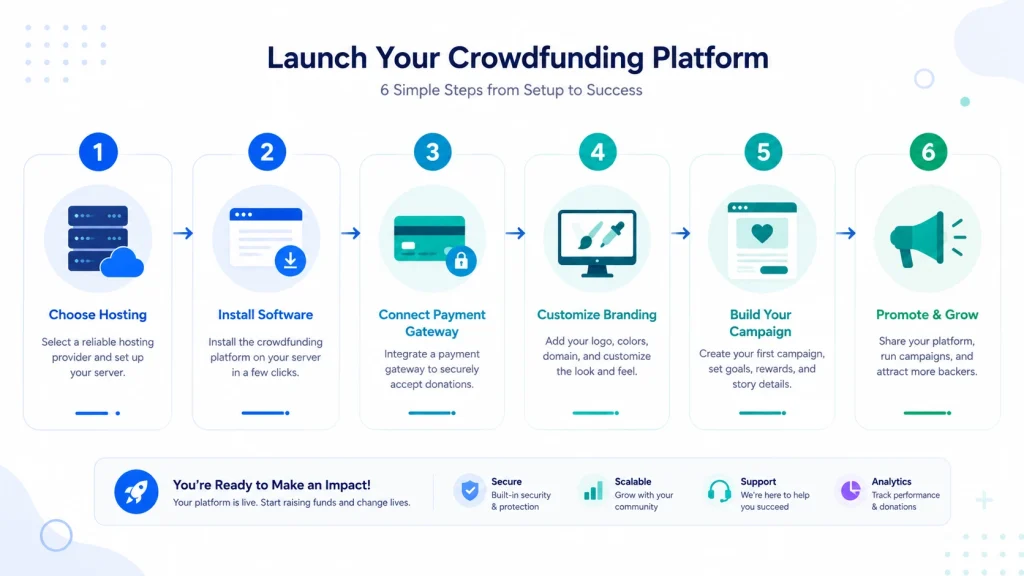
Sixth Step- promote it.
A platform with no traffic raises no money. Line up email, social media, and your own community before launch day. Our guide on how to ask for donations walks through the wording that actually gets people to give.
For a fuller walkthrough of the build itself, we wrote a longer piece on how to build your own crowdfunding platform that goes deeper than this summary.
Mistakes to avoid when you self-host
A few traps catch people over and over, and all of them are avoidable if you know they are coming.
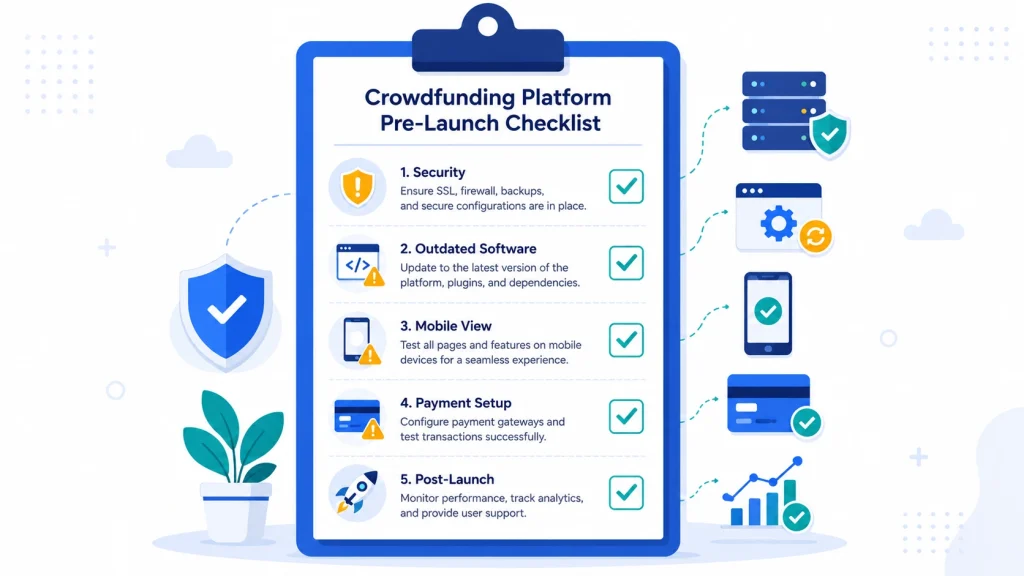
Mistake-1.
Ignoring security. When you self host an open source crowdfunding platform, patching is your responsibility. An outdated install is an open door. Set a reminder to update the software and your server, and do not skip it because a campaign is busy.
Mistake-2.
Choosing software nobody maintains. A GitHub repo with its last commit three years ago is a warning, not a bargain. Before you build on any open source crowdfunding platform, check when it was last updated and whether anyone answers issues.
Mistake-3.
Forgetting mobile. A large share of donations now come from phones. If your campaign pages look broken on a small screen, you are turning away money. Test on an actual phone, not just a shrunk browser window.
Mistake-4.
Underestimating payment setup. Getting a gateway approved and configured takes longer than people expect, especially for nonprofits that need extra verification. Start this early so it is not the thing standing between you and launch day.
Mistake-5.
Treating launch as the finish line. Your open source crowdfunding platform going live is the start of the work, not the end. Donor updates, thank you notes, and steady promotion are what carry a campaign to its goal. Keeping supporters engaged is a skill of its own, and our piece on donor engagement best practices is a good place to sharpen it.

Final thoughts
An open source crowdfunding platform gives you three things that hosted sites will not: control, ownership, and freedom from per campaign fees. The price of those things is the work of running your own software. Goteo, Catarse, IgnitionDeck, Open Collective, and Selfstarter each fit a different kind of project, so choose your open source crowdfunding platform based on your team and your campaign type rather than on which name you have heard before.
And if the idea of owning an open source crowdfunding platform appeals but inheriting a stranger’s abandoned code does not, a maintained script like Fundorex gives you a running start for the cost of skipping a month of setup. Free or paid, the goal is the same. Your platform, your donor data, your money.
If you are ready to launch, take a closer look at Fundorex and start raising funds on a platform you genuinely own.
Frequently asked questions
Are open source crowdfunding platforms really free?
The software is free to download and use. You still pay for hosting, possibly a developer, and standard payment processing fees. Over time it usually costs less than a commission based hosted platform, but it is not zero.
Which open source crowdfunding platform is easiest to set up?
IgnitionDeck, because it runs as a WordPress plugin and skips the separate stack. If you want something more complete without the do it yourself work, a ready made self hosted script like Fundorex is the simplest route overall.
Can I run donation and reward campaigns on the same platform?
Sometimes. A few open source tools do one model well and the other poorly, so check before you commit. Full scripts typically handle donation, reward, and even equity campaigns out of the box.
Do I really keep all the money I raise?
With a self hosted platform there is no platform commission. You only pay the normal fees your payment processor charges, like Stripe or PayPal. That saving is the main financial reason people leave hosted platforms in the first place.
Is open source safe for handling payments?
It can be, as long as you keep it updated and use a reputable payment gateway that handles the sensitive card data for you. The risk comes from neglected installs, not from open source itself. You can read Stripe’s own security documentation to understand how the payment side is protected.