



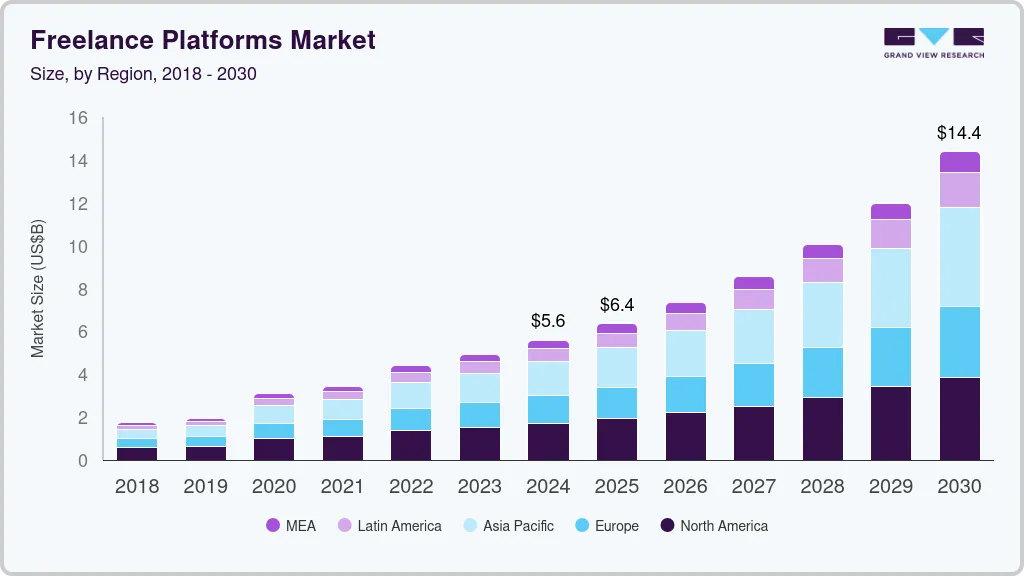
The freelance economy is experiencing unprecedented growth, transforming how businesses operate and how professionals build their careers. According to Statista research, the global freelance marketplace is projected to reach a staggering $9.5 billion by 2030, with millions of skilled professionals choosing independent work over traditional employment. This seismic shift has created an urgent need for sophisticated time tracking for freelancers and robust project management for freelancers solutions that can handle the unique demands of the gig economy.
$9.5B
Projected Market Value by 2030
59M+
Freelancers in the US Alone
36%
US Workforce Freelancing
78%
Report Better Work-Life Balance
Yet despite this remarkable growth, freelancers and the freelance marketplace platforms that connect them with clients face significant challenges. Without proper time tracking and project management tools, freelancers struggle with accurate billing, clients worry about transparency, and marketplace operators cannot guarantee the quality of service that builds trust in their platforms. The consequences are real: payment disputes increase by 340% on platforms without integrated time tracking, according to Upwork’s research division.
This comprehensive guide explores everything you need to know about implementing and optimizing freelance time tracking software and project management software for freelancers within marketplace environments. Whether you’re a freelancer looking to maximize your productivity, a client seeking transparency in your projects, or a marketplace operator building the next-generation freelancer marketplace platform, this guide provides actionable insights backed by industry data and real-world examples.
Throughout this article, we’ll examine how leading platforms like Upwork and Fiverr have implemented these features, compare different approaches to time tracking app for freelancers solutions, and provide a framework for building or choosing the right tools for your specific needs. We’ll also explore how marketplace scripts like Xilancer are enabling entrepreneurs to launch feature-rich freelancer platforms with built-in time tracking and project management capabilities.
Key takeaways
- Time tracking for freelancers is the foundation of marketplace trust: it drives accurate billing, protects both sides, and cuts payment disputes.
- Freelancers who track time systematically tend to earn more and bill more accurately than those who work from estimates.
- Every marketplace needs the same core stack: automatic and manual tracking, activity or screenshot verification, automated invoicing, and escrow.
- Upwork uses an hourly Work Diary model; Fiverr uses fixed-price milestones; the strongest platforms support both.
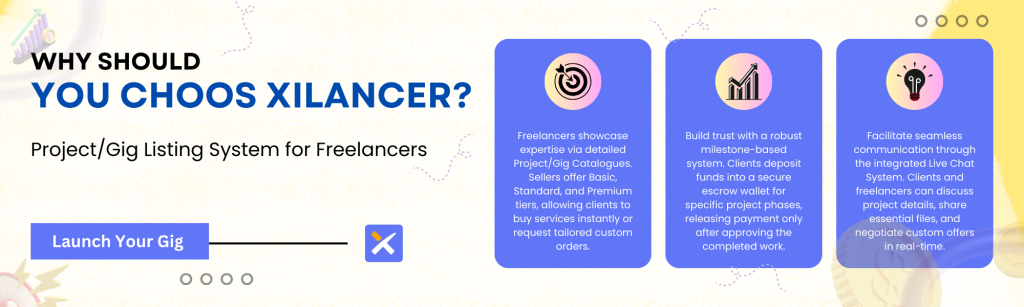
- To launch your own marketplace with time tracking, escrow, and project management built in, a ready-made script like Xilancer skips months of development.
Table of Contents
The Critical Role of Time Tracking in Freelancer Marketplaces
Why Time Tracking Matters for Freelance Success
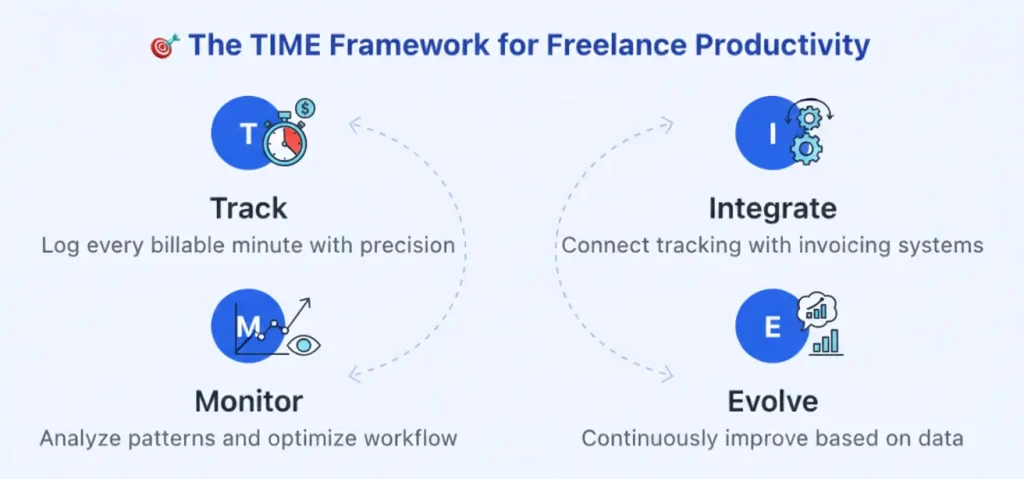
Time tracking isn’t just about logging hours, it’s the foundation of trust between freelancers and clients, the basis for accurate compensation, and a powerful tool for personal productivity optimization. In the context of billable hours tracking, proper time management directly impacts a freelancer’s income potential and professional reputation. Studies from the Freelancers Union indicate that freelancers who implement systematic time tracking earn an average of 23% more than those who rely on estimates or manual record-keeping.
The benefits extend beyond individual earnings. For marketplace platforms, integrated Upwork time tracking systems and similar solutions provide the transparency needed to resolve disputes, protect both parties in transactions, and build the trust that attracts premium clients. Platforms with robust hourly rate tracking capabilities report 67% fewer payment disputes and 45% higher client retention rates, making time tracking infrastructure a critical business investment rather than a mere feature.
Essential Time Tracking Features for Modern Marketplaces
Automatic vs. Manual Time Tracking
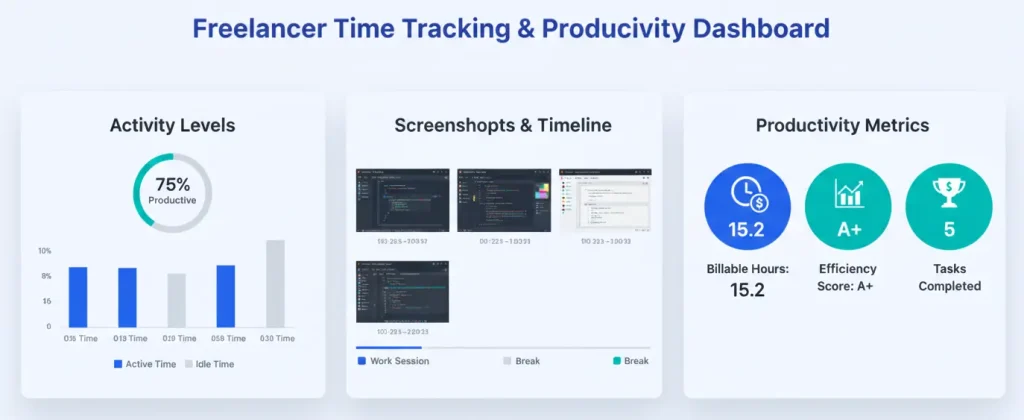
The debate between automatic and manual time tracking reflects different working styles and project requirements. Automatic time tracking, exemplified by tools integrated into Upwork time tracking systems, runs silently in the background, detecting active applications and logging time accordingly. This approach eliminates the cognitive burden of remembering to start and stop timers, providing continuous, accurate records. Manual time tracking, conversely, gives freelancers complete control over what gets logged, accommodating offline work and creative processes that don’t generate digital activity signals.
| Feature | Automatic Tracking | Manual Tracking | Best For |
|---|---|---|---|
| Accuracy | High (captures all activity) | Dependent on user diligence | Automatic: Digital work |
| User Control | Limited customization | Full control over entries | Manual: Creative work |
| Offline Support | Requires sync mechanisms | Native support | Manual: Field work |
| Privacy | Activity monitoring concerns | User-controlled data | Manual: Privacy-sensitive |
| Learning Curve | Minimal (set and forget) | Requires habit formation | Automatic: New freelancers |
For marketplace operators building platforms with Xilancer, both tracking options can be configured to match the specific needs of your target market and user preferences.
Weekly Automated Invoicing
The connection between time tracking and invoice generation represents one of the most valuable integrations in modern freelance workflow automation. Rather than manually compiling hours and creating invoices, integrated systems automatically generate weekly billing statements based on tracked time. This automation reduces administrative overhead by an estimated 5-7 hours per month for active freelancers while eliminating common errors in manual invoice preparation.
Pro Tip: Maximizing Time Tracking Accuracy
Set up automatic tracking for digital work sessions but supplement with manual entries for meetings, phone calls, and planning time. Review your weekly time logs every Friday to catch any gaps before invoicing. Freelancers who review logs weekly report 18% higher billing accuracy.
Real-World Platform Implementations
Upwork’s Work Diary System
Upwork’s Work Diary stands as the industry’s most comprehensive Upwork time tracking solution for hourly contracts. The system captures work activity in 10-minute segments, taking random screenshots and measuring keyboard/mouse activity levels within each segment. Freelancers can review and remove segments before submission, maintaining privacy control while still providing clients with detailed work verification.
Fiverr’s Project-Based Approach
Unlike Upwork’s hourly focus, Fiverr project management centers on fixed-price deliverables. Time tracking in this model serves a different purpose: rather than billing clients, it helps freelancers understand their true hourly earnings and optimize their gig pricing.
Taskip’s All-in-One Approach
Not every freelancer wants to build inside someone else’s marketplace. Taskip takes a different angle: instead of tracking time only to settle a marketplace dispute, it bundles timers, timesheets, and billing sync directly into the same platform freelancers use for client portals, invoicing, and project boards.
With Taskip’s time tracking feature, hours logged against a task sync automatically to timesheets and billing, so freelancers and small agencies skip the manual step of moving numbers from a tracker into a separate invoicing tool.
For teams that want the accountability of Upwork-style tracking without giving up a percentage of every project to a marketplace, this kind of integrated setup is worth a look.
| Platform | Time Tracking Model | Payment Protection | Best For |
|---|---|---|---|
| Upwork | Hourly with Work Diary | 100% for logged hours | Long-term hourly projects |
| Fiverr | Project-based milestones | Escrow until delivery | Quick fixed-price gigs |
| TopTracker | Flexible (hourly/project) | Platform-dependent | Multi-platform freelancers |
| Xilancer-Powered | Integrated time & projects | Built-in escrow system | Custom marketplace solutions |
Project Management Systems for Marketplace Success
Core Project Management Components
Effective project management for freelancers within marketplace environments requires a carefully designed system that balances flexibility with structure. Unlike traditional corporate project management, freelance marketplaces must accommodate diverse project types, working styles, and client expectations while maintaining the platform-level oversight needed for quality assurance and dispute resolution.
Job/Gig Posting and Bidding Systems
The project lifecycle in most freelance marketplace platforms begins with job posting. According to McKinsey’s workforce research ↗, platforms with intelligent matching systems see 3.2x higher project completion rates than those relying on simple keyword matching.
When building your own marketplace using solutions like Xilancer, the job posting and bidding infrastructure comes pre-built, allowing you to focus on customization rather than core development.
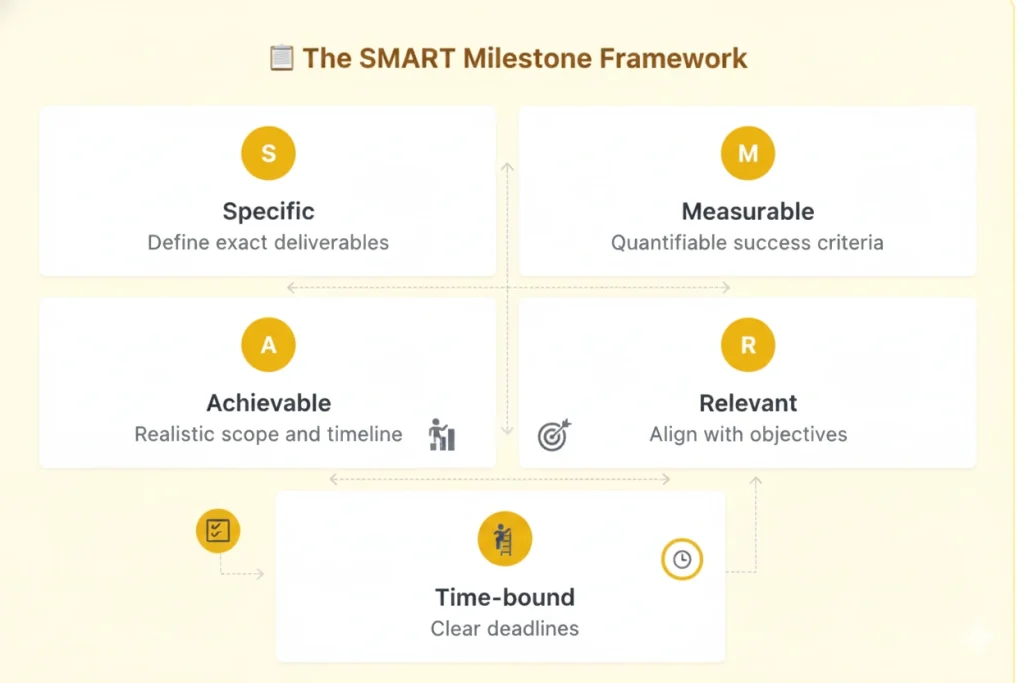
Different Marketplace Models
| Model | Client Effort | Freelancer Effort | Best For |
|---|---|---|---|
| Proposal-Based (Upwork) | Post job, review proposals | Write custom proposals | Complex, custom projects |
| Gig-Based (Fiverr) | Browse, purchase directly | Create service packages | Standardized services |
| Hybrid (Xilancer) | Choose preferred approach | Flexible service delivery | Versatile relationships |
Integration: Where Time Tracking Meets Project Management
Seamless Workflow Benefits
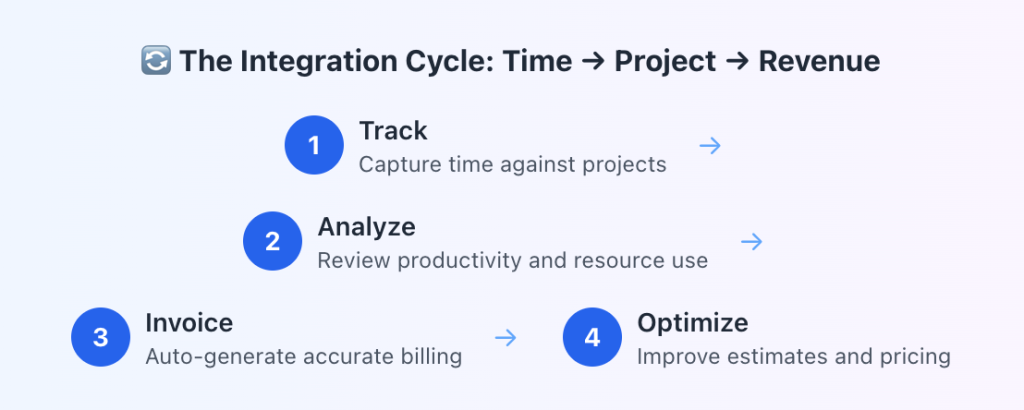
The true power of modern freelance business management emerges when time tracking and project management work as an integrated system rather than separate tools. This integration eliminates data silos, reduces administrative overhead, and creates workflows that feel natural rather than burdensome.
✅ Implementation Checklist – Time-to-Invoice Workflow
- ✓Configure default billing rates for each project type
- ✓Set up automatic time categorization by task or project
- ✓Enable weekly or monthly automated invoice generation
- ✓Configure client approval workflows for tracked time
- ✓Set up payment reminders for outstanding invoices
- ✓Integrate with accounting software for financial reporting
Payment Protection Through Integration
For both freelancers and clients, financial security ranks among the top concerns in marketplace transactions. Integrated time tracking and payment systems create the infrastructure needed for robust payment protection.
Platforms built on Xilancer include built-in escrow functionality that integrates seamlessly with the time tracking and milestone systems.
Critical Features for Marketplace Operators
Admin Panel Capabilities
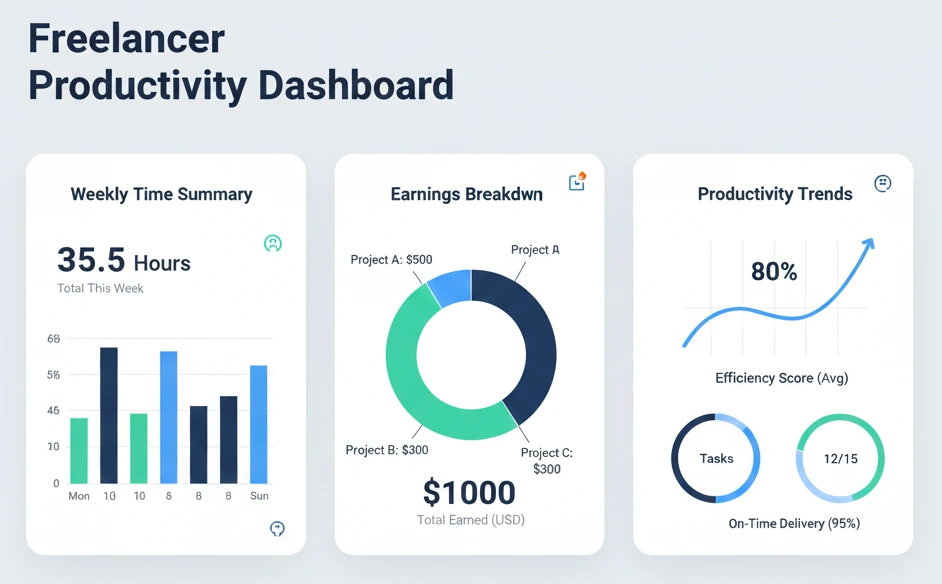
Operating a successful freelancer marketplace platform requires robust administrative tools that enable efficient platform management at scale. These backend capabilities are as important as user-facing features in determining marketplace success.
| Capability | Purpose | Key Metrics | Impact Area |
|---|---|---|---|
| Commission Management | Revenue optimization | Fee revenue, transaction value | Business model |
| User Verification | Quality assurance | Verification rate, fraud detection | Trust & safety |
| Dispute Arbitration | Conflict resolution | Resolution time, satisfaction scores | User retention |
| Analytics Dashboard | Strategic decision support | GMV, retention, NPS | Platform growth |
Security and Compliance
Security Considerations for Marketplace Operators
Data breaches in marketplace platforms can devastate user trust and trigger regulatory penalties. Ensure your platform maintains: SOC 2 compliance for enterprise clients, GDPR compliance for European users, regular security audits by qualified professionals, and incident response plans for potential breaches. Consider OWASP guidelines ↗ as a starting point for web application security.
Technology Stack Considerations
Essential Integrations
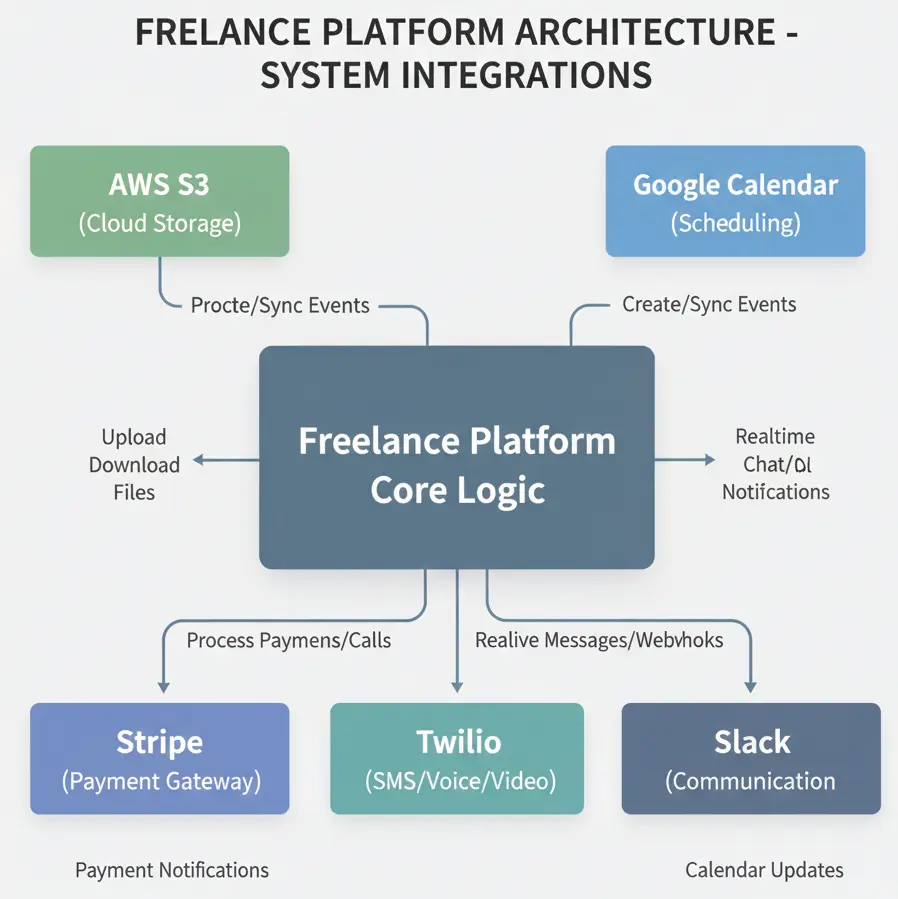
Modern freelancer productivity tools don’t exist in isolation—they connect with the broader ecosystem of business software that freelancers and clients use daily. Strategic integrations multiply platform value by enabling workflows that span multiple tools.
Payment processing integration is foundational for any freelance marketplace handling transactions. Partnerships with payment providers like Stripe ↗ and PayPal ↗ enable these integrations without requiring marketplaces to build payment infrastructure from scratch.
Best Practices for Implementation
For Marketplace Owners
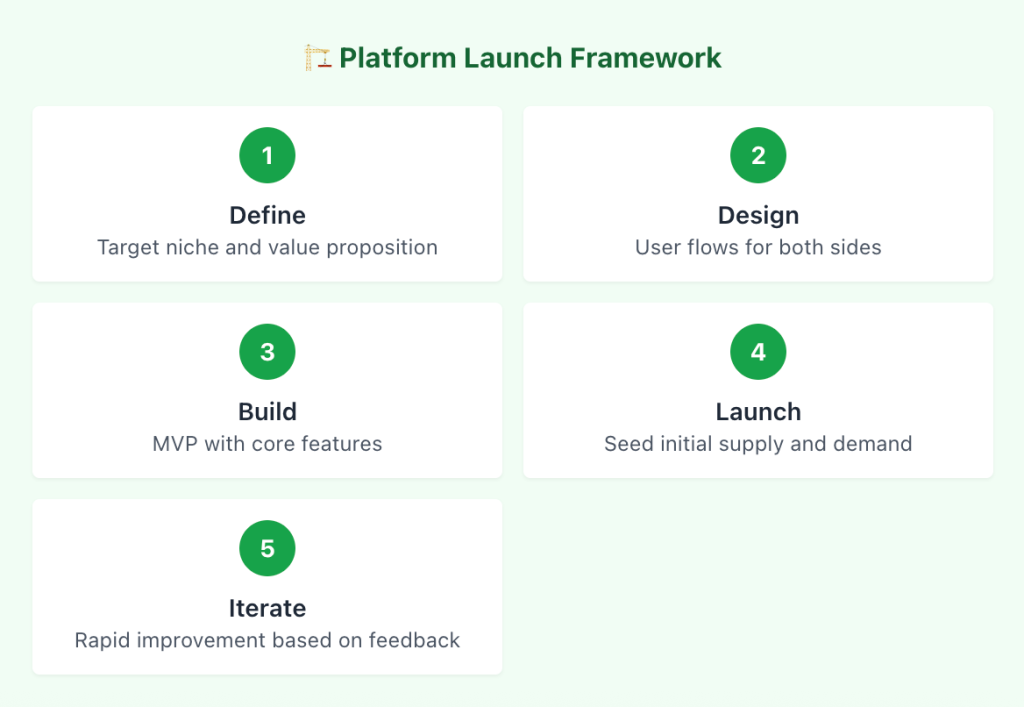
Building a successful freelancer marketplace platform requires strategic decisions at every level, from business model selection to technical architecture.
For Freelancers Using Marketplaces
Freelancer Success Tips
Track your time on every project, even fixed-price ones the data will transform your pricing strategy. Respond to client messages within a few hours during business hours; response time significantly impacts hiring decisions. Build a review acquisition strategy: politely request reviews from satisfied clients, as profile strength compounds over time.
“The best client relationships feel like partnerships, not transactions. When clients invest in clear communication and reasonable expectations, freelancers deliver their best work.” Industry insight from Freelancers Union
Future Trends in Freelance Marketplace Technology
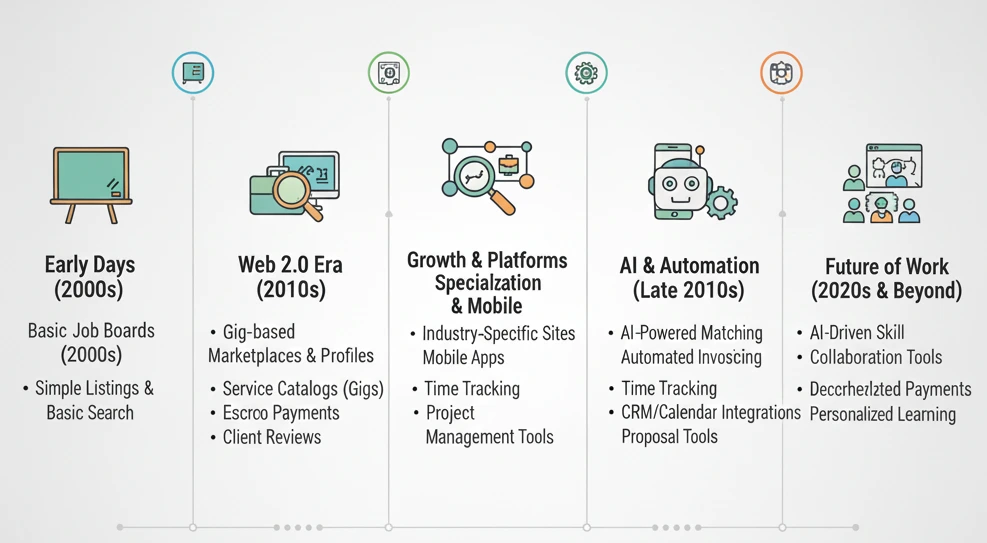
The freelance marketplace industry continues evolving rapidly, with emerging technologies poised to transform how platforms operate and how work gets done.
| Technology Trend | Current State | 2027 Projection | Impact |
|---|---|---|---|
| AI Project Matching | Basic implementations | Multi-factor matching | High |
| Blockchain Payments | Early adopter phase | Growing international adoption | Medium |
| Predictive Analytics | Emerging capabilities | Standard platform feature | High |
| VR/AR Collaboration | Experimental | Niche creative adoption | Low |
| Automated Contracts | Basic templates | AI-generated contextual contracts | Medium-High |
Conclusion: Building for the Future of Freelance Work
The convergence of time tracking for freelancers and project management for freelancers within marketplace environments represents more than technological convenience—it’s the infrastructure enabling the future of work. As the freelance marketplace ecosystem approaches its projected $9.5 billion valuation, the platforms and tools that effectively integrate these capabilities will capture disproportionate value for their users and operators alike.
For freelancers, adopting systematic approaches to billable hours tracking and project milestone management transforms business operations from chaotic to scalable. The data generated by consistent tracking enables better pricing decisions, improved productivity, and the evidence needed to build premium client relationships.
For marketplace operators, the implementation lessons from industry leaders provide a roadmap for building trusted platforms. Payment protection through verified time tracking, sophisticated freelance workflow automation, and AI-powered matching all contribute to the user experience that drives platform growth.
Whether you’re a freelancer optimizing your workflow, a client seeking transparency in remote engagements, or an entrepreneur building the next great freelancer marketplace platform with solutions like Xilancer, the principles and practices covered in this guide provide a foundation for success. The freelance economy is growing, the tools are maturing, and the opportunities for those who embrace systematic approaches to time tracking and project management have never been greater.
Frequently Asked Questions
What is the best time tracking software for freelancers?
The best time tracking for freelancers depends on your specific workflow. For Upwork freelancers, the built-in Work Diary is required for hourly contracts. For platform-independent tracking, TopTracker offers comprehensive features at no cost. For those building custom marketplaces, Xilancer provides integrated time tracking with project management and invoicing.
How do freelance marketplaces handle payment protection?
Major freelance marketplace platforms implement payment protection through escrow systems and time tracking verification. Client funds are held by the platform until work is verified: for hourly contracts, this means time logged through approved tracking tools; for fixed-price work, it means milestone approval by the client.
What features should I look for in project management software for freelancers?
Essential features include: milestone and task management, time tracking integration, client portals, file sharing tools, built-in invoicing, and mobile access. Advanced features like Kanban boards, resource allocation, and team management become important as you scale.
What commission rates do freelance marketplaces typically charge?
Freelance marketplace commission rates typically range from 5% to 20% of transaction value. Upwork charges 10%. Fiverr takes 20% from sellers. Many platforms offer reduced fees for high-volume relationships or premium subscription tiers.
How do I handle time tracking for fixed-price freelance projects?
While fixed-price projects don’t require time tracking for billing, tracking your time remains valuable for understanding true profitability. Compare tracked time against project revenue to calculate effective hourly rates and inform future pricing.
Can I build my own freelance marketplace platform?
Yes! Solutions like Xilancer provide complete freelancer marketplace scripts with built-in time tracking, project management, escrow payments, and admin panels. This allows entrepreneurs to launch feature-rich platforms without building from scratch.
What security features should freelance platforms have?
Critical security features include: AES-256 encryption for data at rest, TLS encryption for data in transit, two-factor authentication, PCI compliance for payment processing, and regular security audits. For enterprise clients, look for SOC 2 compliance certification.
How do AI tools impact freelance marketplaces?
AI is transforming freelancer marketplace operations through improved matching algorithms, automated proposal assistance, content moderation, and predictive analytics. Platforms benefiting most are those integrating AI to improve user experience rather than replace human work.
What’s the difference between Upwork and Fiverr models?
Upwork uses a proposal-based model where freelancers bid on client job posts, suited for complex custom projects. Fiverr uses a gig-based model where freelancers create service packages clients purchase directly, suited for standardized services. Hybrid platforms like those built on Xilancer support both models.
How can marketplace operators monetize their platforms?
Common monetization strategies include: transaction fees (5-20%), subscription tiers for premium features, promoted listings/advertising, payment processing fees, and featured profile placements. Diversifying revenue streams provides stability.