



An ecommerce marketing strategy is the plan that turns an online store from a website nobody visits into one that reliably brings in traffic, orders, and repeat customers. Tactics on their own do not do much; what works is choosing the right channels for your store, your margins, and your customers, then executing them consistently.
This guide walks through 13 proven ecommerce marketing tactics for 2026, how each one works, and how to combine them into a plan you can actually run.
TL;DR: A strong ecommerce marketing strategy in 2026 is built on a few channels done well, not all of them done poorly. SEO and content bring in traffic that compounds over time; email and SMS are cost-effective for reaching existing customers; paid ads and social buy reach fast; and retargeting plus abandoned-cart recovery win back the sales you have almost made. Start with the two or three that fit your margins and audience, measure what each one earns, and reinvest in the winners. The 13 tactics below, with a plan to combine them, are in the rest of this guide.
What is ecommerce marketing?
Ecommerce marketing is the use of promotional tactics to drive traffic to an online store, convert that traffic into paying customers, and turn those customers into repeat buyers. It spans search engine optimization, content, email and SMS, social media, paid advertising, influencers, and on-site tactics like retargeting and cart recovery.
It helps to think of the whole effort in three stages:
- Attract. Get the right people to your store through SEO, content, social, and ads.
- Convert. Turn visitors into buyers with strong product pages, a smooth checkout, and timely offers.
- Retain. Bring customers back with email, SMS, loyalty, and good post-purchase communication, because a repeat customer costs far less than a new one.
Table of Contents
Why your online store needs an ecommerce marketing strategy
Running ads or posting on social without a plan burns budget and time. A clear ecommerce marketing strategy matters because:
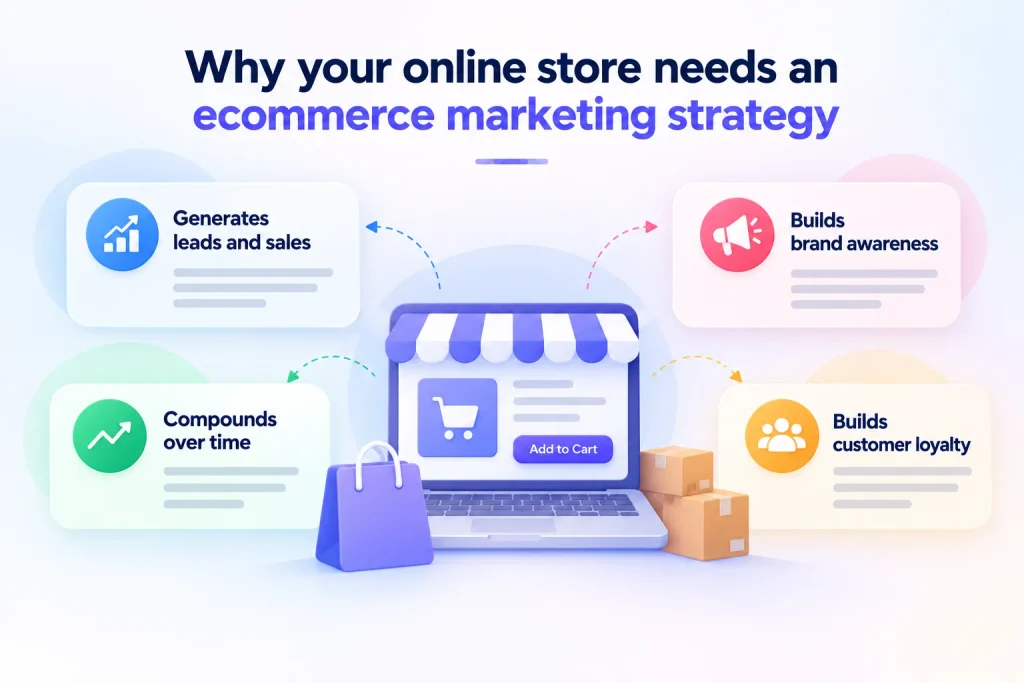
- It generates leads and sales. Every ecommerce marketing tactic below exists to move someone from stranger to customer. Without a plan, traffic rarely turns into revenue.
- It builds brand awareness. Showing up across search, social, and email, the backbone of ecommerce marketing, makes your store familiar, and familiarity is what earns the click and the purchase.
- It compounds over time. SEO, content, and an email list keep paying back long after the work is done, unlike a paid ad that stops the moment you stop paying.
- It builds customer loyalty. A strategy that includes retention turns one-time buyers into repeat customers who cost nothing to reacquire and often spend more.
If you are still deciding whether an online store is worth building in the first place, our guide on the reasons your business needs an ecommerce website makes the case in detail.
13 ecommerce marketing tactics worth testing in 2026
Here is the shortlist, then the detail on each. Pick the few ecommerce marketing tactics that fit your store rather than trying to run all 13 at once.
| # | Tactic | Best for | Cost | Payback speed |
|---|---|---|---|---|
| 1 | SEO | Long-term organic traffic | Low (time) | Slow, compounding |
| 2 | Content marketing | Trust and organic reach | Low to medium | Slow, compounding |
| 3 | Email marketing | Repeat sales and customer retention | Low to medium | Often fast |
| 4 | SMS marketing | Time-sensitive offers | Low | Fast |
| 5 | Social media marketing | Brand and community | Low to medium | Medium |
| 6 | PPC advertising | Fast, targeted traffic | Medium to high | Fast |
| 7 | Influencer marketing | Reach and social proof | Medium | Medium |
| 8 | Retargeting | Recovering warm visitors | Medium | Fast |
| 9 | Abandoned cart recovery | Near-won sales | Low | Fast |
| 10 | Video and YouTube | Product explanation, trust | Medium | Medium |
| 11 | User-generated content | Social proof, conversions | Low | Medium |
| 12 | Affiliate marketing | Pay-for-performance reach | Low (commission) | Medium |
| 13 | Live chat and chatbots | On-site conversion | Low | Fast |
Cost and payback speed are general guidance, not guarantees; results depend on your store, margins, and execution.
A quick example: three channels for a small store
Before the detail, here is how a small store might combine just three of these tactics rather than chasing all 13:
- SEO on product and category pages to earn steady, free traffic for the terms buyers search. Measure qualified organic traffic and the revenue from organic landing pages.
- Email for a welcome series, abandoned-cart recovery, and post-purchase follow-up, the sequence that drives most repeat sales. Measure revenue per recipient, conversion rate, and unsubscribes.
- One paid channel (say Meta or Google Shopping) to test demand for a single product with healthy margins. Measure customer acquisition cost and contribution margin, not just sales.
That is a complete starting strategy: one channel to attract, one to retain, one to test and scale. Add more only once these are working.
1. Search engine optimization (SEO)
SEO ranks your store and its pages in search engines so you earn organic traffic without paying per click. It is slow to build, but for many stores it compounds into one of the most cost-effective channels over time, though how well it pays off depends on your competition and how much you invest.
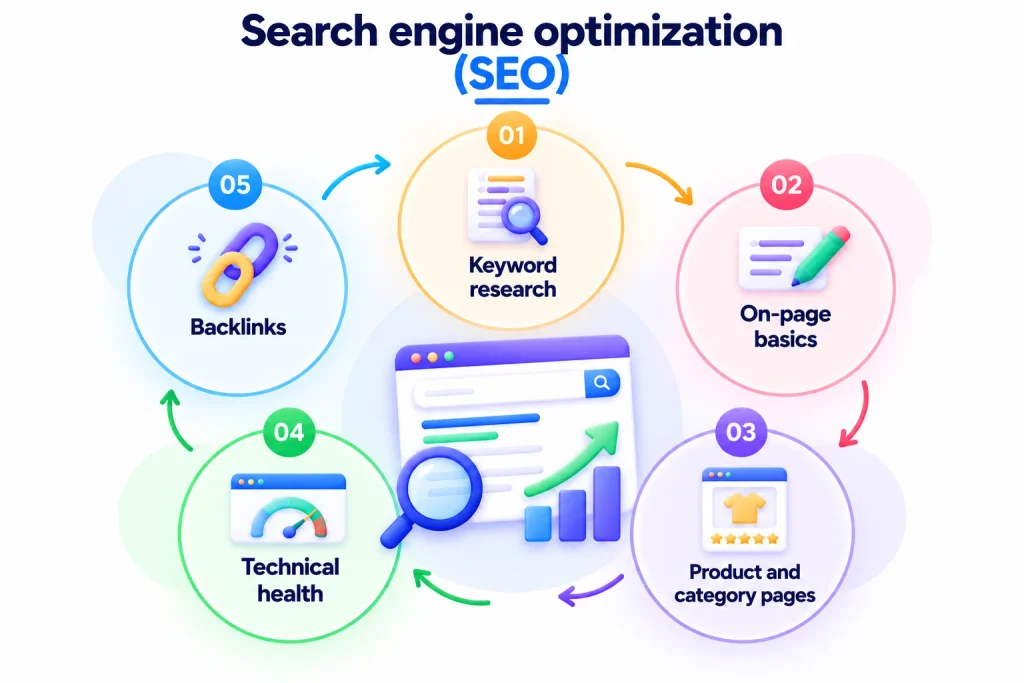
Focus on:
- Keyword research. Target what buyers actually search, using tools like Ahrefs, Semrush, or Google Keyword Planner, and map each keyword to a page.
- On-page basics. Put keywords in titles, product descriptions, URLs, and image alt text, written for people first.
- Product and category pages. These are your money pages, so optimize them with unique descriptions, clear images, and reviews.
- Technical health. Fast load times, mobile-friendliness, and clean site structure all help rankings.
- Backlinks. Earn links from relevant sites to build authority.
2. Content marketing
Content marketing uses blog posts, guides, videos, and newsletters to attract and educate buyers before they are ready to purchase. It feeds your SEO, gives social and email something to share, and builds the trust that converts, which makes it one of the most durable ecommerce marketing channels.
- Write genuinely useful posts that answer real buyer questions.
- Target keywords naturally and link to your product and category pages.
- Repurpose one piece into social posts, an email, and a short video.
- Think long-term: content you publish today can bring traffic for years.
3. Email marketing
Email is one of the most cost-effective channels, especially for existing customers, because it reaches people who already chose to hear from you. It is where repeat sales live, though results depend on your list quality and how well you execute.
- Welcome series. Greet new subscribers and introduce your brand and best products.
- Product recommendations. Suggest items based on what someone viewed or bought.
- Promotions. Send coupons, promo codes, and gift-card offers to drive action.
- Transactional and post-purchase. Order confirmations, shipping updates, and thank-you emails keep customers informed and coming back.
- Newsletters. A regular newsletter keeps your brand top of mind.
4. SMS marketing
Text messaging reaches customers instantly and is ideal for time-sensitive offers, restock alerts, and order updates. Open rates are far higher than email, so use it sparingly and only with clear consent.
- Collect opt-ins at checkout and in your email sign-up.
- Reserve SMS for things that are genuinely timely: a flash sale, a back-in-stock alert, a shipping notice.
- Keep messages short, with one clear action and an easy way to opt out.
5. Social media marketing
Social platforms connect you to potential customers where they already spend time and let you build a community around your brand. Facebook, Instagram, Pinterest, and TikTok tend to work best for ecommerce marketing.
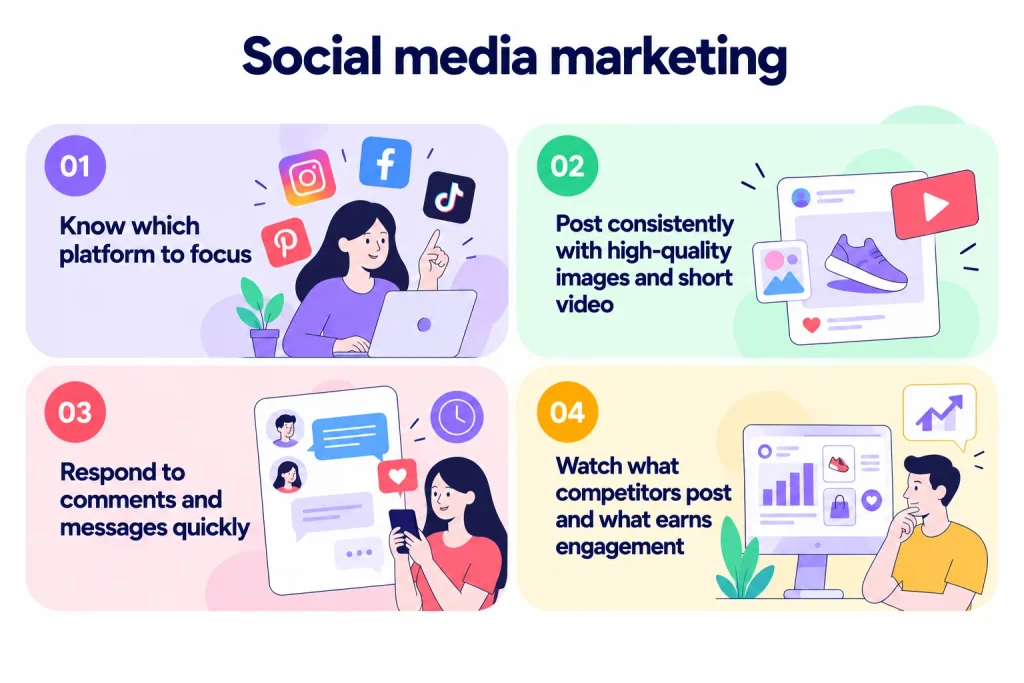
- Know which platform your audience actually uses, and focus there rather than spreading thin.
- Post consistently with high-quality images and short video, and use relevant hashtags.
- Respond to comments and messages quickly, since social is a two-way channel.
- Watch what competitors post and what earns engagement.
6. PPC advertising (pay-per-click)
Paid search and social ads buy targeted traffic fast, which makes them a quick lever in ecommerce marketing for launches, promotions, and scaling a proven offer. Most search and social campaigns charge per click, though some ad models bill by impressions or conversions instead, and you control exactly who sees the ad.
- Start on the platforms where your buyers are: Google Shopping, Meta, Pinterest, or TikTok.
- Target tightly by keyword, interest, or audience to avoid wasted spend.
- Track return on ad spend and cut what does not pay back.
- Send clicks to a focused landing page, not a generic homepage.
7. Influencer marketing
Partnering with creators who already have your audience’s trust puts your products in front of a warm crowd, a social-proof play in your ecommerce marketing mix. Micro-influencers with engaged, niche followings often outperform big names for ecommerce.
- Pick creators whose audience matches your target customer.
- Agree on clear deliverables and a trackable link or code.
- Favor authentic, demonstration-style content over a scripted ad read.
8. Retargeting
Most first-time visitors leave without buying. Retargeting shows paid ads to people who already visited your store or viewed a product, bringing warm prospects back to finish the purchase. This is distinct from email remarketing, which follows up with subscribers or past customers by email; the two work well together but are not the same thing.
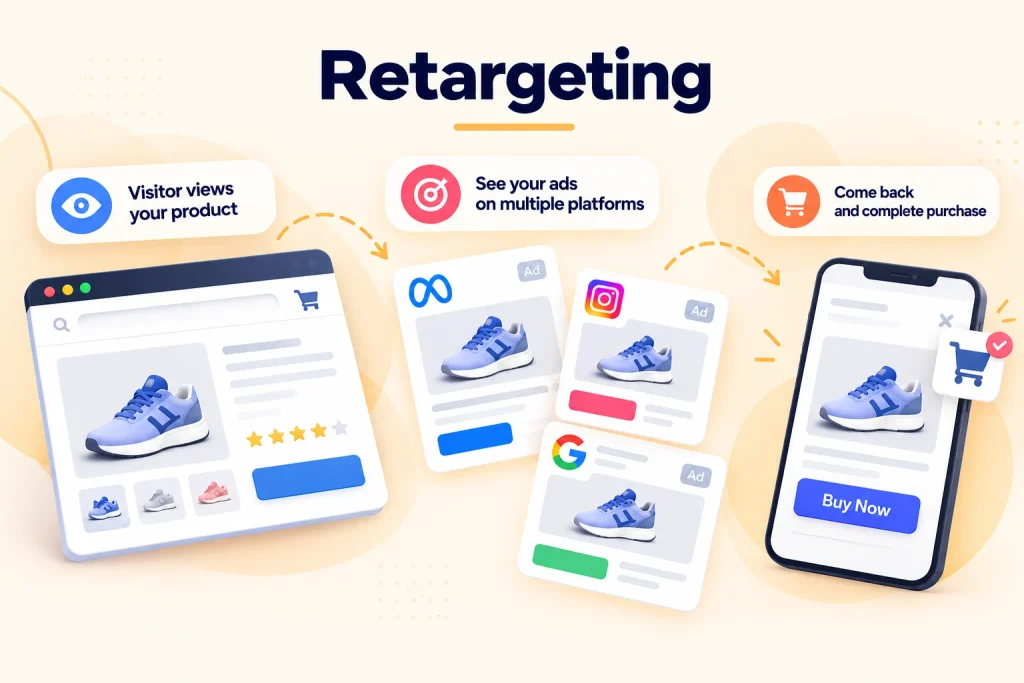
- Run display and social retargeting through Meta and Google, and pair it with email remarketing to the people on your list.
- Segment by behavior: a product viewer needs a different nudge than a cart abandoner.
- Cap how often ads show so you remind without annoying.
9. Abandoned cart recovery
The Baymard Institute puts the average documented cart abandonment rate at around 70 percent, which means the sale was almost made. A simple recovery sequence wins back a meaningful share of that lost revenue.
- Trigger an email within an hour of abandonment, then a follow-up a day later.
- Remind the shopper what they left, and remove friction like unexpected shipping cost.
- Add an SMS reminder for opted-in customers, and a small incentive if margins allow.
10. Video and YouTube marketing
Video explains a product faster than text and builds trust, and YouTube is also a major destination for product research, tutorials, and how-to searches. Product demos, how-to videos, and unboxings all convert.
- Make short demo videos showing the product in use and the problem it solves.
- Optimize YouTube titles and descriptions with the terms buyers search.
- Reuse the same footage on your product pages, social, and ads.
11. User-generated content
Content your customers create, reviews, photos, testimonials, and social posts, is powerful social proof because shoppers trust other shoppers more than brands, which makes it some of the most persuasive ecommerce marketing you can get.
- Ask for reviews after delivery and make leaving one easy.
- Feature customer photos on product pages and in ads.
- Encourage a branded hashtag so customers tag your store.
12. Affiliate marketing
Affiliate marketing commonly pays partners a commission when they generate a qualifying sale or action. It can reduce upfront advertising costs, but commissions, tracking, refunds, and program management still affect profitability. It also expands brand awareness as affiliates promote you across their channels.
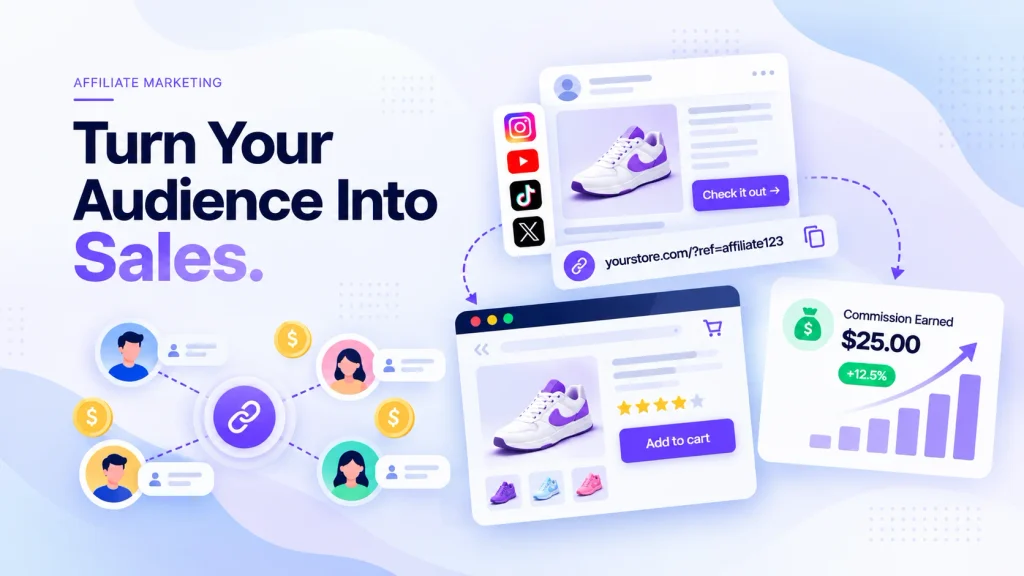
- Set a commission rate that still protects your margin.
- Give affiliates good creative, clear terms, and reliable tracking.
- Recruit affiliates whose audience fits your products.
13. Live chat and chatbots
Live chat and AI chatbots engage visitors in real time, answer questions, and recommend products. They can help answer purchase questions and reduce friction during checkout, which recovers some visitors who would otherwise leave, making them a useful on-site ecommerce marketing tool.
- Use a chatbot to handle common questions instantly, with a human for complex ones.
- Trigger a proactive message on high-intent pages like the cart or checkout.
- Capture email or SMS opt-ins inside the chat for later follow-up.
How to build an ecommerce marketing strategy that works
Knowing the tactics is not the same as having a strategy. These steps turn the list above into a plan.
Step 1: Set clear, measurable goals
Decide what you are actually trying to achieve, in numbers: revenue, new customers, average order value, or return on ad spend. A specific goal tells you which tactics to pick and how to judge them. Set the goal before you choose a single channel.
Step 2: Know your target audience
You cannot market to everyone. Define who your customer is: their age, location, interests, budget, and where they spend time online. The clearer the picture, the sharper every message and the less budget you waste.
Step 3: Study your competitors
Look at what similar stores do: the channels they use, the content they publish, the offers they run, and the keywords they rank for. Competitor analysis shows you both the proven ecommerce marketing plays and the gaps you can own.
Step 4: Choose the right channels for your store
Match ecommerce marketing tactics to your margins, product, and audience rather than chasing every channel. A high-margin product can afford paid ads; a low-margin one leans on SEO, email, and content. Start with two or three channels you can run well.
Step 5: Price and position for your market
Research what competitors charge and position your pricing so a shopper does not leave to buy the same thing cheaper elsewhere. Marketing brings people to the page; price and value close the sale. Avoiding the pricing and trust errors in our guide to common ecommerce mistakes protects every marketing dollar you spend.
Step 6: Measure, then double down on what works
Track the return of each channel and each campaign, and measure the right thing for each one:
- SEO: qualified organic traffic and revenue from organic landing pages.
- Email: revenue per recipient, conversion rate, and unsubscribes.
- Paid ads: customer acquisition cost, conversion rate, and contribution margin.
- Retention: repeat purchase rate and time between purchases.
Revenue alone is not enough. A campaign can generate sales and still lose money once you subtract product cost, shipping, discounts, and ad spend, so judge each channel on what it earns after costs. Keep what pays back, cut what does not, and reinvest in the winners. An ecommerce marketing strategy is never finished; it is a loop of test, measure, and adjust as trends and costs change.
Don’t forget mobile and the on-site experience
Mobile is now an essential channel to optimize: a large and growing share of ecommerce traffic comes from phones, so a slow or clunky mobile experience quietly kills the sales your marketing worked to earn. Make sure your store loads fast, fits the screen, and offers a short checkout with mobile payment options. If a dedicated app fits your business, our guide on the role of mobile apps for ecommerce businesses covers when it is worth building one.
Marketing works best when the store itself supports the campaign. Product landing pages, built-in analytics, mobile checkout, promotional pricing, and clean customer data all decide whether the traffic you earn actually converts, so the platform underneath your store is part of the strategy, not separate from it. If you are choosing or rebuilding your store, a flexible, self-hosted option gives you control over speed, SEO, and checkout. Our comparison of ecommerce PHP scripts covers store software you own outright, and Nazmart is our own multi-tenancy ecommerce platform for launching one or many stores with those pieces built in.
Ecommerce marketing tools to make it easier
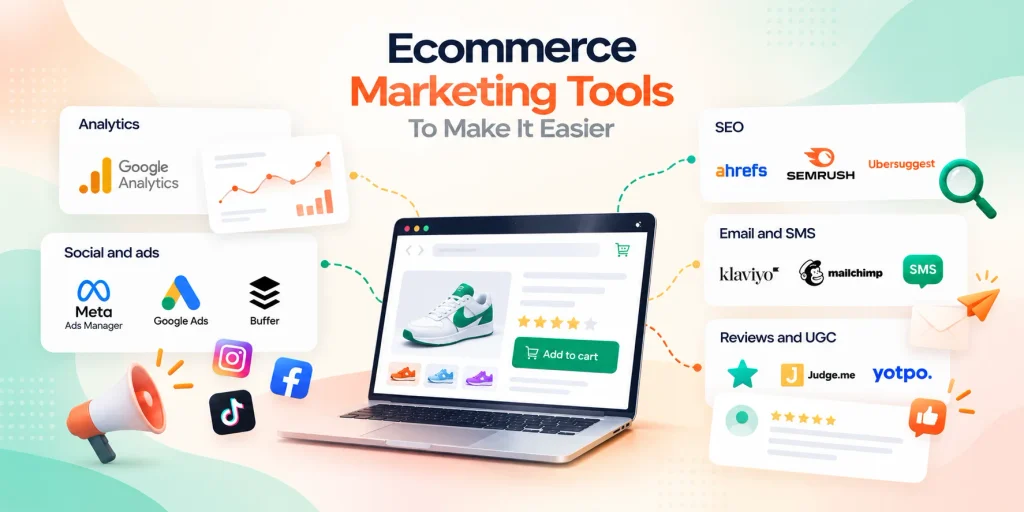
You do not need every tool, but a few make ecommerce marketing faster:
- Analytics: Google Analytics and your platform’s built-in reports show what is working.
- SEO: Ahrefs, Semrush, or Ubersuggest for keywords and backlinks.
- Email and SMS: Klaviyo, Mailchimp, or your platform’s native tools for automation.
- Social and ads: Meta Ads Manager, Google Ads, and a scheduler for organic posts.
- Reviews and UGC: A reviews app to collect and display social proof automatically.
Common ecommerce marketing mistakes to avoid
Even a solid ecommerce marketing plan gets undone by a few avoidable errors:
- Spreading too thin. Running every channel badly beats nothing, but loses to running two channels well. Focus first.
- Ignoring retention. Chasing only new customers while neglecting email and repeat buyers leaves easy revenue on the table.
- Not measuring. If you cannot say what each channel earns, you cannot improve it. Track from day one.
- A weak mobile or checkout experience. Marketing brings the click; a slow site or long checkout loses the sale. Fix the basics before you scale spend.
- Guessing instead of testing. Assumptions about audience, price, and creative are cheap to test and expensive to get wrong.
The Bottom Line
The best ecommerce marketing strategy is not the one with the most tactics; it is the one you can execute consistently and measure honestly. Start with the two or three channels that fit your store, your margins, and your customers, usually some mix of SEO, email, and one paid or social channel. Build the on-site and mobile experience so those visitors can actually buy. Then measure what each channel earns, cut what does not pay back, and reinvest in what does. Do that for a few quarters and the compounding channels, SEO, content, and your email list, start carrying the store while paid spend becomes a choice rather than a dependency.
Frequently asked questions
What is an ecommerce marketing strategy?
An ecommerce marketing strategy is a plan for attracting visitors to an online store, converting them into customers, and keeping them coming back, using channels like SEO, content, email, SMS, social media, and paid ads. The strategy decides which channels to use, in what mix, and how to measure them, rather than running tactics at random.
Which ecommerce marketing channel has the best ROI?
It depends on your store, but email is often among the most cost-effective because it reaches people who already opted in and drives repeat sales at low cost. SEO and content tend to compound over time, while paid ads deliver the fastest but most expensive traffic. There is no single best channel; the right mix depends on your margins, audience, and how well you execute.
How much should I spend on ecommerce marketing?
There is no universal figure. Marketing budgets vary widely by industry, margins, and business stage, and new or fast-growing stores typically spend a larger share of revenue than established ones with strong organic traffic. More important than any benchmark is tracking the return on each channel and shifting budget toward what pays back after costs.
How long does ecommerce marketing take to work?
Paid ads and email can drive sales within days. SEO and content often take several months to build momentum and then compound, and the timeline depends on competition, site quality, publishing consistency, and how established the store is. A healthy strategy runs both: fast channels for immediate revenue and compounding channels for long-term, lower-cost traffic.
What is the first thing a new online store should do?
Set a clear, measurable goal, define your target customer, and make sure your store and checkout work well on mobile. Then pick two or three channels that fit your product and margins, usually SEO, email, and one paid or social channel, and run them consistently before adding more.