




The freelance marketplace industry is experiencing unprecedented growth. With the gig economy projected to reach $455 billion by 2028 and over 1.56 billion freelancers expected to join the global workforce by 2027, building a freelancer hiring marketplace has never been more lucrative.
But here’s the reality: 90% of marketplace startups fail within the first two years. Not because the market isn’t there, but because founders skip critical steps in the freelance marketplace development process.
Whether you’re an entrepreneur looking to create the next Upwork, a development agency building for clients, or a SaaS founder expanding your product suite, this comprehensive freelancer marketplace development checklist will guide you through every phase, from initial concept to successful launch and beyond.
In this guide, you’ll discover:
- The exact features your freelance marketplace needs to compete
- A proven decision framework for choosing your marketplace type
- Technical architecture recommendations from real-world implementations
- Step-by-step checklists for each development phase
- Common pitfalls that sink freelance platforms (and how to avoid them)
- Cost estimates and timeline projections for different approaches
Let’s build your freelancer hiring marketplace the right way.
What is a Freelancer Hiring Marketplace?
A freelancer hiring marketplace is a two-sided digital platform that connects businesses seeking talent with independent professionals offering their services. These platforms serve as intermediaries, facilitating everything from job discovery and hiring to payment processing and dispute resolution.
The freelance marketplace development model has proven incredibly successful. Consider these industry leaders:
- Upwork: Generated $618 million in revenue (2023), hosting over 18 million registered freelancers
- Fiverr: Over $361 million in annual revenue with 4+ million active buyers
- Freelancer.com: 65+ million registered users across 247 countries
- Toptal: Specializes in top 3% talent, commanding premium rates
What makes freelance marketplace development attractive is the network effect as more freelancers join, more clients come, which attracts more freelancers. Once established, these platforms become incredibly difficult to displace.
The question isn’t whether there’s opportunity in freelance marketplace development. The question is: how do you build one that succeeds?
That’s exactly what this freelancer hiring marketplace development checklist answers.

Types of Freelance Marketplaces: Decision Framework
Before diving into freelance marketplace development, you must decide what type of platform to build. This decision impacts everything your features, monetization, target audience, and technical requirements.
Decision Framework: Choosing Your Marketplace Model
Use this framework to determine the right freelance marketplace type for your business:
| Factor | Traditional (Gig-Based) | Reverse (Job Posting) | Niche/Vertical | Hybrid |
|---|---|---|---|---|
| Best For | Standardized services | Complex projects | Specific industries | Maximum flexibility |
| Example | Fiverr | Upwork | 99designs, Toptal | Freelancer.com |
| Pricing Model | Fixed packages | Hourly/project bids | Premium rates | Multiple options |
| Development Complexity | Medium | High | Medium | Very High |
| Time to Market | 3-4 months | 5-7 months | 3-5 months | 6-12 months |
| Initial Investment | $30K-$60K | $50K-$100K | $40K-$80K | $80K-$200K |
| Competition Level | Very High | High | Medium | High |
| Monetization Potential | Medium | High | Very High | High |
Type 1: Traditional Model (Gig-Based Marketplace)
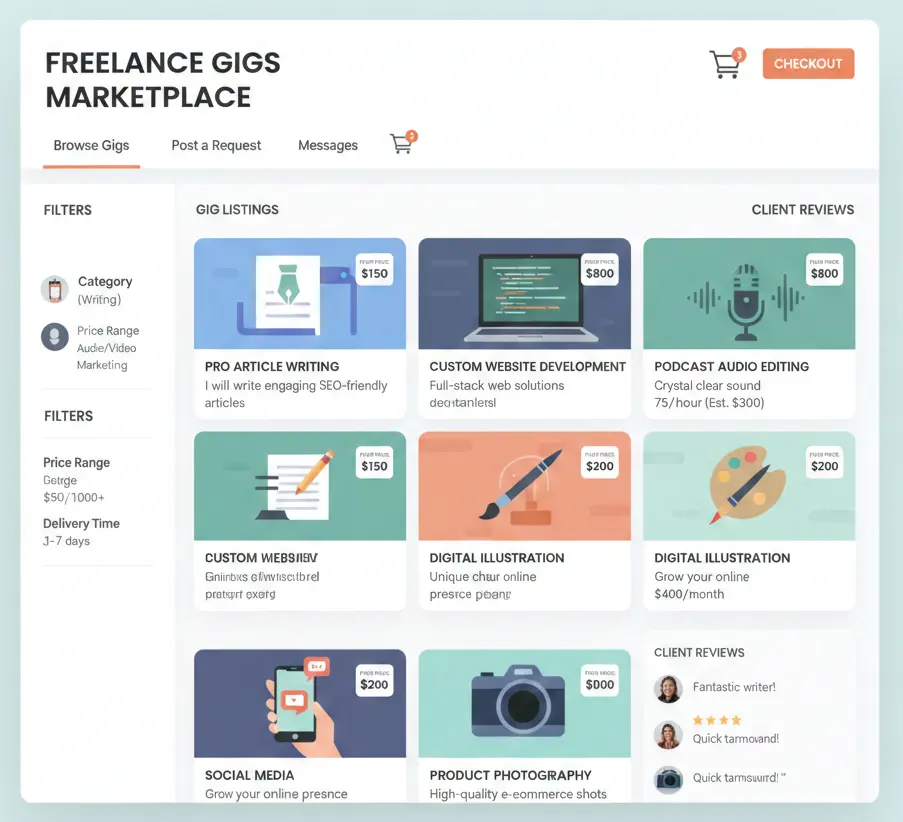
In the traditional freelance marketplace model, freelancers create detailed service listings—often called “gigs” that showcase their offerings at fixed prices. Clients browse these listings and purchase services directly, similar to an e-commerce experience.
How it works:
- Freelancers create service packages with clear deliverables
- Clients search, compare, and purchase services
- Work is delivered according to package specifications
- Payment releases upon completion
Best suited for:
- Logo design and branding
- Content writing and copywriting
- Video editing and production
- Social media management
- Simple web development tasks
- Virtual assistance
Advantages:
- Simpler freelance marketplace development process
- Clear pricing eliminates negotiation friction
- Faster transactions and higher volume
- Easier for new freelancers to get started
Challenges:
- Difficult to accommodate complex projects
- Race to the bottom on pricing
- Limited customization options
If you’re building a Fiverr-like platform, consider exploring ready-made solutions like Xilancer Freelancer Marketplace Platform which provides pre-built gig management functionality.
Type 2: Reverse Model (Job Posting Marketplace)
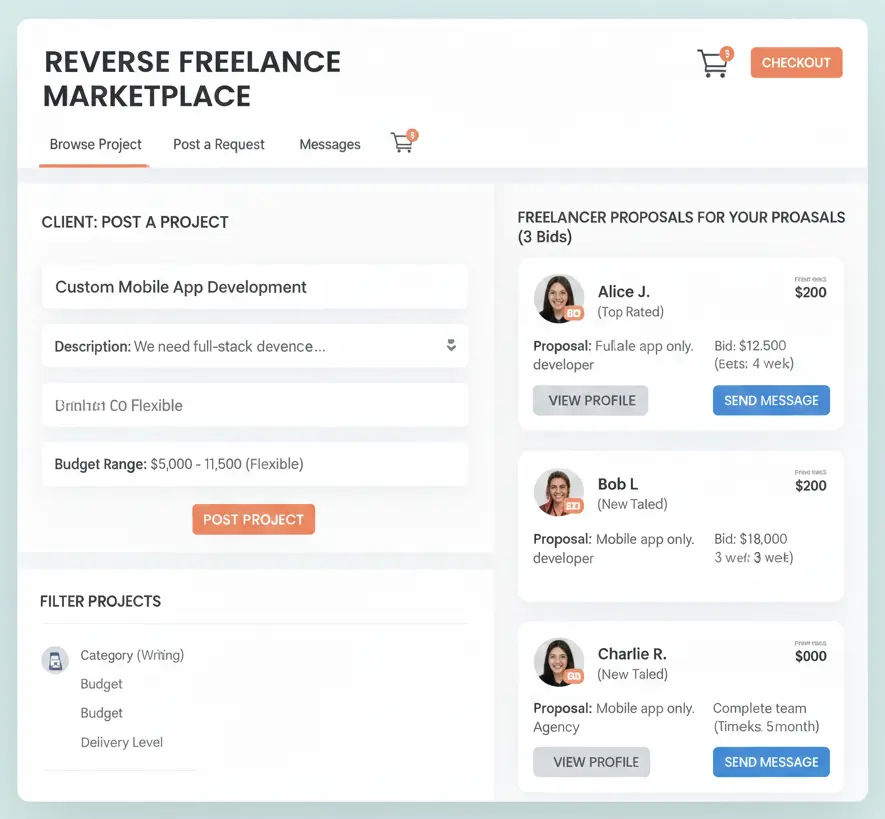
The reverse freelance marketplace model flips the dynamic. Clients post detailed job requirements, and freelancers submit proposals or bids. This model dominates the market for complex, customized projects.
How it works:
- Clients post jobs with requirements, budget, and timeline
- Freelancers review jobs and submit proposals
- Clients evaluate proposals and interview candidates
- Work begins after mutual agreement
- Milestone-based or hourly payments process through escrow
Best suited for:
- Software development projects
- Marketing campaigns
- Business consulting
- Long-term contracts
- Enterprise solutions
- Complex creative projects
Advantages:
- Handles complex, multi-phase projects
- Clients control the hiring process
- Higher average transaction values
- Attracts professional-grade freelancers
Challenges:
- Longer sales cycle
- Higher freelance marketplace development complexity
- Requires robust proposal management system
Type 3: Niche/Vertical Marketplace
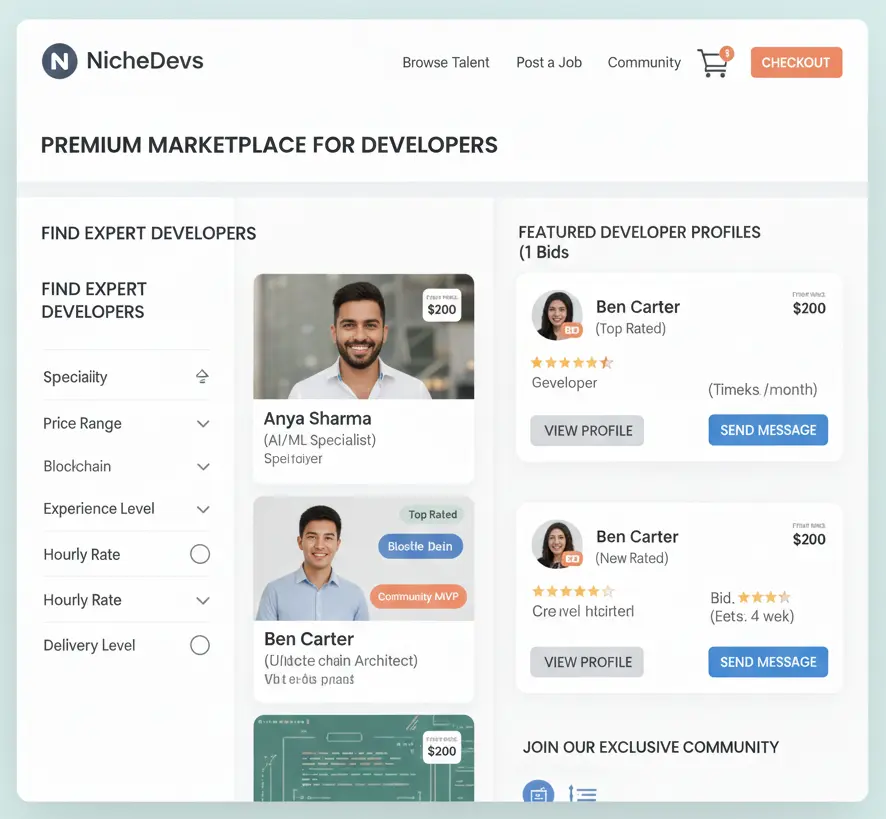
Niche freelance marketplaces focus on specific industries, skill sets, or service types. By narrowing focus, these platforms can deliver superior matching, command premium prices, and build stronger communities.
Successful niche examples:
- 99designs: Design-only marketplace
- Toptal: Top 3% developers and designers
- Contently: Premium content creators
- Catalant: Business consultants
- Gun.io: Vetted software developers
Why niche freelance marketplace development works:
- Less competition from giants like Upwork
- Higher trust and credibility within the niche
- Premium pricing justification
- Easier to build community and loyalty
- More targeted marketing opportunities
Choosing your niche: Consider industries where you have expertise, networks, or unique insights. Successful niche marketplaces often emerge from founders who deeply understand their target market’s pain points.
Type 4: Hybrid Marketplace
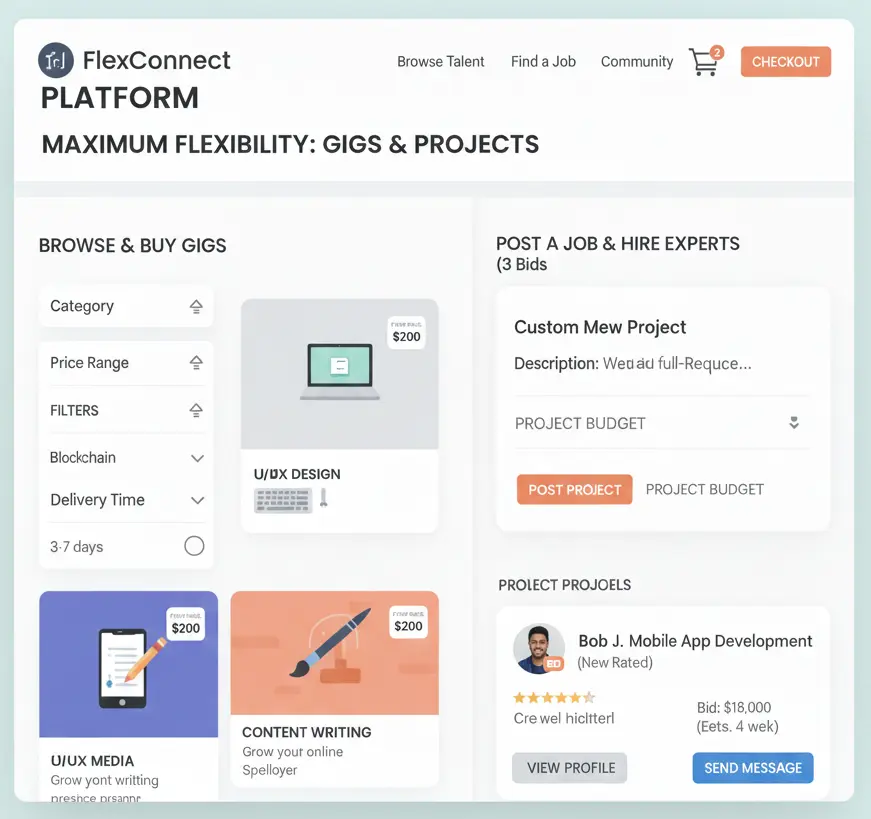
Hybrid platforms combine elements of multiple models, offering both gig-based services and job posting capabilities. While this approach provides maximum flexibility, it significantly increases freelance marketplace development complexity.
When to consider hybrid:
- You’re targeting diverse user segments
- You have substantial development resources
- Long-term platform vision requires flexibility
- You’re building on proven marketplace software
Pre-Development Planning Checklist
Successful freelance marketplace development starts long before writing any code. This phase determines whether your platform will find product-market fit or join the 90% that fail.
✅ Market Research & Validation Checklist
Before investing in freelance marketplace development, validate your concept:
Competitor Analysis:
- Identify top 10 competitors in your target space
- Document their strengths and weaknesses
- Analyze their pricing and commission structures
- Review user complaints and pain points (check G2, Capterra, Trustpilot)
- Identify gaps your platform can fill
- Study their user acquisition strategies
Target Audience Research:
- Define your ideal freelancer persona (skills, experience, location)
- Define your ideal client persona (company size, industry, budget)
- Conduct 20+ interviews with potential users (both sides)
- Survey potential users about feature priorities
- Identify where your target users currently find work/talent
Market Sizing:
- Calculate Total Addressable Market (TAM)
- Estimate Serviceable Addressable Market (SAM)
- Project realistic Serviceable Obtainable Market (SOM)
- Research market growth projections
Validation Activities:
- Create landing page to gauge interest
- Run small-scale ad campaigns to test demand
- Build waitlist and measure signup rates
- Test core value proposition messaging
Gig economy in the U.S. – statistics & facts
✅ Unique Value Proposition Development
Your freelance marketplace needs a compelling reason to exist. With Upwork and Fiverr dominating, “another freelance marketplace” isn’t enough.
UVP Development Questions:
- What specific problem does your platform solve better than alternatives?
- Who is underserved by existing platforms?
- What unique feature or approach differentiates you?
- Why would freelancers choose your platform over established alternatives?
- Why would clients trust a new platform with their projects?
Strong UVP Examples:
- “The only marketplace exclusively for blockchain developers” (niche)
- “Hire pre-vetted senior talent with 24-hour delivery guarantee” (quality + speed)
- “Zero commission for the first year” (pricing disruption)
- “AI-powered matching with 95% satisfaction rate” (technology)
- “Local freelancers in your timezone, your language” (geographic)
Document your UVP clearly, it will guide every subsequent freelance marketplace development decision.
✅ Business Model Selection
Your monetization strategy impacts platform design, user experience, and long-term viability. Choose carefully.
Commission-Based Model: The most common approach for freelance marketplace development. The platform takes a percentage of each transaction.
| Platform | Commission Structure |
|---|---|
| Upwork | 10% (was tiered up to 20%) |
| Fiverr | 20% from sellers |
| Freelancer.com | 10% or $5 minimum |
| Toptal | ~30-50% markup |
Pros: Aligned incentives, scales with growth, low barrier to entry Cons: Requires transaction volume, users may go off-platform
Subscription Model: Users pay monthly/annual fees for platform access or premium features.
Subscription Tiers Example:
- Free: Basic profile, limited proposals/month
- Professional ($29/mo): Unlimited proposals, analytics, priority support
- Business ($99/mo): Team features, API access, dedicated manager
Pros: Predictable revenue, higher user commitment Cons: Higher barrier to entry, requires strong value delivery
Freemium Model: Basic functionality free, premium features paid. Works well for freelance marketplace development when combined with commission.
Featured Listing/Advertising: Freelancers pay for visibility boosts, featured placement, or promotional tools.
Hybrid Approach (Recommended): Most successful platforms combine multiple revenue streams:
- Commission on transactions (primary)
- Premium subscriptions for power users
- Featured listings and promotions
- Enterprise/team plans
✅ Legal & Compliance Checklist
Freelance marketplace development requires careful attention to legal requirements:
Documentation Required:
- Terms of Service agreement
- Privacy Policy (GDPR, CCPA compliant)
- Freelancer agreement/terms
- Client agreement/terms
- Intellectual property transfer terms
- Refund and dispute policies
- Cookie policy
- Acceptable use policy
Payment Compliance:
- Payment processor requirements (Stripe, PayPal)
- KYC (Know Your Customer) procedures
- AML (Anti-Money Laundering) compliance
- PCI DSS compliance for card data
- International payment regulations
Tax Considerations:
- 1099 reporting requirements (US)
- VAT/GST handling for international transactions
- Tax withholding requirements by jurisdiction
- Tax documentation for freelancers
Intellectual Property:
- Work product ownership transfer
- Platform content licensing
- User-generated content rights
- Trademark protection for platform name
10 Legal Considerations To Make When You Start Your First Business – Fobes
Core Features Checklist for Freelance Marketplace Development
This section details every feature you need to consider for comprehensive freelance marketplace development. Not all features are required for MVP we’ll prioritize later.
User Registration & Profile Management
Your registration system is the gateway to your platform. Make it frictionless while collecting necessary information.
Freelancer Registration Features:
- Email registration with verification
- Social login integration (Google, LinkedIn, GitHub, Apple)
- Phone number verification option
- Multi-step onboarding wizard
- Profile completeness indicator
- Skills and expertise selection (from predefined taxonomy)
- Custom skill addition capability
- Experience level indication (Entry/Intermediate/Expert)
- Hourly rate or project rate setting
- Portfolio upload (images, documents, links)
- Video introduction upload
- Work sample showcase
- Education and certification entry
- Language proficiency settings
- Timezone and availability configuration
- Professional headline/tagline
- Detailed bio/description
- Employment history
- External portfolio links (Behance, GitHub, Dribbble)
- Identity verification badge system
- Background check integration option
Client Registration Features:
- Email and social registration options
- Company profile creation
- Industry and company size selection
- Team member invitation system
- Role-based permissions (Admin, Manager, Viewer)
- Payment method storage (securely)
- Billing address management
- Company verification badge
- Project history display
- Preferred freelancer list (favorites)
Profile Management:
- Easy profile editing interface
- Profile preview (as others see it)
- Profile visibility settings (public/private/searchable)
- Profile analytics (views, search appearances)
- Profile strength recommendations
Search & Discovery System
The search system is critical for freelance marketplace development success. Users must quickly find what they need.
Search Functionality:
- Keyword search with autocomplete
- Category and subcategory navigation
- Advanced filter panel
- Filter by skills
- Filter by hourly rate range
- Filter by experience level
- Filter by location/timezone
- Filter by rating/reviews
- Filter by availability
- Filter by language
- Filter by job success rate
- Filter by verification status
- Sort options (relevance, rating, price, newest)
- Save search functionality
- Search alerts/notifications
- Recent searches history
Discovery Features:
- Featured freelancers section
- Top-rated in category showcases
- “Rising talent” or new freelancer highlights
- Recommended freelancers (based on history)
- Similar freelancers suggestions
- Category browsing pages
- Trending services display
AI-Powered Matching (Advanced):
- Intelligent job-to-freelancer matching
- Skill compatibility scoring
- Success prediction algorithms
- Personalized recommendations
- Natural language job matching
Job Posting & Proposal System
The job posting system is the heart of reverse-model freelance marketplace development.
Job Posting Features:
- Guided job posting wizard
- Job title and description fields
- Rich text editor for descriptions
- Category and subcategory selection
- Required skills specification
- Experience level requirement
- Budget type selection (Fixed/Hourly/Range)
- Budget amount or range entry
- Project duration/timeline setting
- Deadline specification
- File attachment support
- Screening questions (custom)
- Preferred qualifications
- Job visibility settings (public/invite-only)
- Job posting templates
- Draft saving functionality
- Job preview before posting
- Edit posted jobs capability
- Close/reopen job functionality
- Duplicate job feature
Proposal/Bidding Features:
- Cover letter submission
- Proposed rate (hourly or fixed)
- Estimated timeline/delivery
- Portfolio samples attachment
- Screening question responses
- Proposal templates for freelancers
- Proposal tracking dashboard
- Proposal status updates
- Proposal withdrawal option
- Counter-offer capability
- Proposal comparison view (for clients)
- Bulk proposal actions
- Interview request from proposals
Gig/Service Listing Features (Traditional Model):
- Service title and description
- Package tiers (Basic/Standard/Premium)
- Pricing per package
- Delivery time per package
- Revision limits per package
- Add-on services (extras)
- Service images/gallery
- Service video
- FAQ section
- Requirements gathering form
- Service categories and tags
For a complete gig-based solution, Xilancer offers pre-built service listing functionality that accelerates freelance marketplace development.
Communication & Collaboration Tools
Effective communication features reduce off-platform interactions and improve user experience.
Messaging System:
- Real-time chat functionality
- Message threading
- File sharing in chat
- Image sharing and preview
- Voice message support
- Read receipts
- Typing indicators
- Message search
- Message archiving
- Conversation organization/folders
- Automated message templates
- Quick response suggestions
- Message translation (optional)
- Chat history preservation
- Mobile push notifications
- Email notifications for messages
- Do not disturb settings
- Block/report users
Video & Audio Communication:
- Built-in video calling
- Screen sharing capability
- Meeting scheduling
- Calendar integration
- Recording option (with consent)
- Virtual background support
Collaboration Features:
- Shared project workspace
- File storage and organization
- Version history for files
- Collaborative document editing
- Task assignment within projects
- Progress notes and updates
- @mentions for team members
Payment & Financial System
The payment system is arguably the most critical component of freelance marketplace development. Get this wrong, and users won’t trust your platform.
Escrow System (Essential):
- Secure escrow account management
- Fund holding until work approval
- Automatic release upon milestone completion
- Dispute-triggered fund holds
- Partial release capability
- Escrow balance visibility
- Transaction history
- Escrow fee structure (if applicable)
Payment Processing:
- Multiple payment gateway integration
- Stripe
- PayPal
- Bank transfer/ACH
- Wire transfer
- Credit/debit cards
- Regional payment methods
- Multi-currency support
- Automatic currency conversion
- Exchange rate display
- Payment method management
- Saved payment methods
- One-click payments
- Recurring payment support
Milestone Payments:
- Milestone creation during contract setup
- Milestone amount allocation
- Milestone approval workflow
- Partial payment on milestones
- Milestone modification requests
- Automatic milestone reminders
Invoicing & Billing:
- Automatic invoice generation
- Custom invoice creation
- Invoice templates
- Invoice history and search
- PDF invoice download
- Invoice status tracking
- Payment reminders
- Late payment handling
Freelancer Payouts:
- Multiple withdrawal methods
- Withdrawal request system
- Minimum withdrawal thresholds
- Withdrawal fee transparency
- Processing time estimates
- Payout schedule options (instant, weekly, monthly)
- Payout history
- Tax document generation (1099, etc.)
Financial Reporting:
- Earnings dashboard for freelancers
- Spending dashboard for clients
- Transaction history with filters
- Export functionality (CSV, PDF)
- Tax summary reports
- Commission tracking (for admin)
Project Management Features
Robust project management improves completion rates and user satisfaction.
Contract Management:
- Contract creation from accepted proposals
- Contract terms documentation
- Digital signature capability
- NDA/additional agreement attachment
- Contract modification requests
- Contract history
- Contract templates
Milestone & Deliverable Tracking:
- Milestone creation and editing
- Milestone status tracking (Pending/In Progress/Submitted/Approved)
- Deliverable submission interface
- File upload for deliverables
- Revision request system
- Revision limit tracking
- Approval workflow
- Deadline tracking and reminders
Time Tracking (for hourly projects):
- Built-in time tracker
- Manual time entry option
- Screenshot capture (optional, privacy-conscious)
- Activity level monitoring
- Weekly time logs
- Time approval by client
- Time dispute handling
- Desktop app for tracking
Progress Management:
- Project status updates
- Progress percentage indicator
- Activity feed/timeline
- Task checklists
- Due date management
- Calendar view of deadlines
- Project completion confirmation
Rating & Review System
Trust is currency in freelance marketplace development. Your rating system builds that trust.
Review Features:
- Two-way reviews (client ↔ freelancer)
- Star rating (1-5 scale)
- Category-specific ratings (communication, quality, timeliness)
- Written review text
- Review submission deadline
- Review modification period
- Public vs. private feedback options
- Review response capability
- Review dispute process
- Review verification (only for completed projects)
- Review filtering and sorting
Reputation Metrics:
- Job Success Score calculation
- On-time delivery rate
- Response time tracking
- Repeat client percentage
- Profile ranking algorithm
- Rising Talent program
- Top Rated badges
- Verification badges
Trust Signals:
- Identity verification badges
- Payment verification
- Skill test scores
- Portfolio verification
- Education verification
- Background check badge
- Top performer rankings
Trust, Safety & Dispute Resolution
User safety directly impacts platform success and retention.
Identity Verification:
- Government ID verification
- Selfie matching
- Address verification
- Phone verification
- Email verification
- Social profile verification
- Professional certification verification
Fraud Prevention:
- Suspicious activity detection
- Multiple account detection
- Payment fraud monitoring
- Spam detection in messages
- Fake review detection
- Bot detection
- IP tracking and blocking
Content Moderation:
- Profile content review
- Job posting moderation
- Message content filtering
- Prohibited content detection
- Report/flag functionality
- User blocking capability
- Automated content scanning
Dispute Resolution:
- Dispute filing interface
- Evidence submission system
- Mediation workflow
- Arbitration for unresolved disputes
- Refund processing
- Partial refund capability
- Dispute history tracking
- Resolution timeline commitments
Account Actions:
- Warning system
- Temporary suspension
- Permanent ban capability
- Appeal process
- Account restriction options
Mobile Experience
Over 60% of users access marketplaces via mobile. Mobile optimization isn’t optional for freelance marketplace development.
Mobile App Features:
- iOS native app
- Android native app
- Push notification system
- Offline capability for viewing
- Mobile-optimized messaging
- Quick proposal submission
- Time tracking on mobile
- Camera integration for uploads
- Biometric authentication
- Mobile payment processing
Responsive Web:
- Mobile-responsive design throughout
- Touch-optimized interface
- Mobile-specific navigation
- Fast loading on mobile networks
- Progressive Web App (PWA) option
Admin Dashboard & Management
Platform operators need robust tools to manage the freelance marketplace.
User Management:
- User search and filtering
- User profile viewing/editing
- Account status management
- Verification approval workflow
- User communication tools
- Bulk user actions
Content Management:
- Category/subcategory management
- Skills taxonomy management
- Featured content curation
- Banner/promotion management
- FAQ and help content management
- Email template management
Financial Management:
- Transaction monitoring
- Commission tracking
- Payout management
- Refund processing
- Revenue reporting
- Financial reconciliation
Platform Analytics:
- User registration metrics
- Active user tracking
- Transaction volume and value
- Conversion funnel analysis
- User retention metrics
- Revenue dashboards
- Geographic distribution
- Category performance
Support Tools:
- Support ticket system
- Dispute management interface
- User impersonation (for support)
- Activity logs and audit trails
Technical Development Checklist
With features defined, let’s address the technical side of freelance marketplace development.
Technology Stack Recommendations
Recommended Stack for Freelance Marketplace Development:
Option 1: Laravel Stack (Recommended for Most Projects)
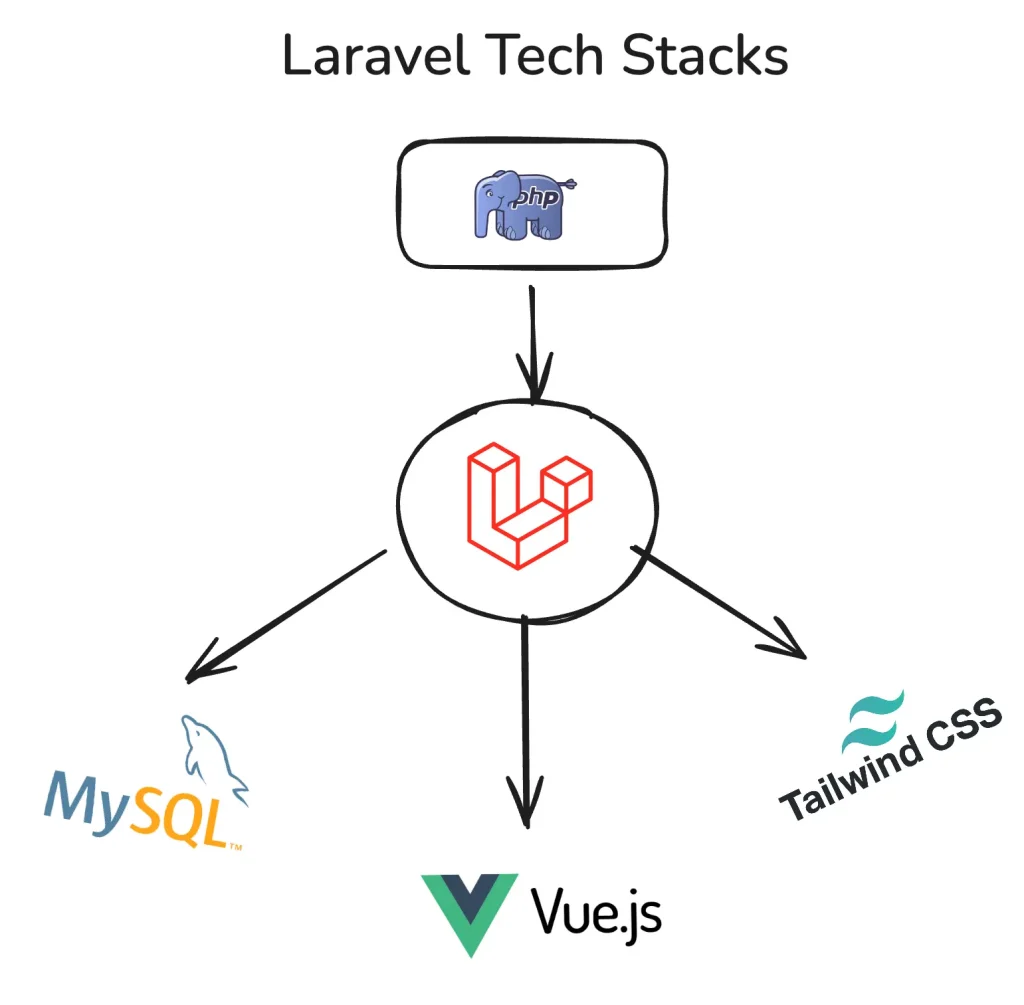
| Layer | Technology | Notes |
|---|---|---|
| Backend | Laravel (PHP 8.4+) | Robust, well-documented, great ecosystem |
| Frontend | Vue.js 3 or React or Nextjs | Component-based, reactive UI |
| Database | MySQL 8 or PostgreSQL | Reliable, scalable |
| Cache | Redis, Memcached | Session storage, queue management |
| Search | Elasticsearch or Algolia | Fast, relevant search results |
| Queue | Laravel Horizon + Redis | Background job processing |
| Real-time | Laravel Echo + Pusher/Socket.io | Chat and notifications |
| Storage | AWS S3 or DigitalOcean Spaces or Cloudflare R2 | File and media storage |
This stack powers platforms like Xilancer, providing proven reliability for freelance marketplace development.
Option 2: Node.js/MERN Stack
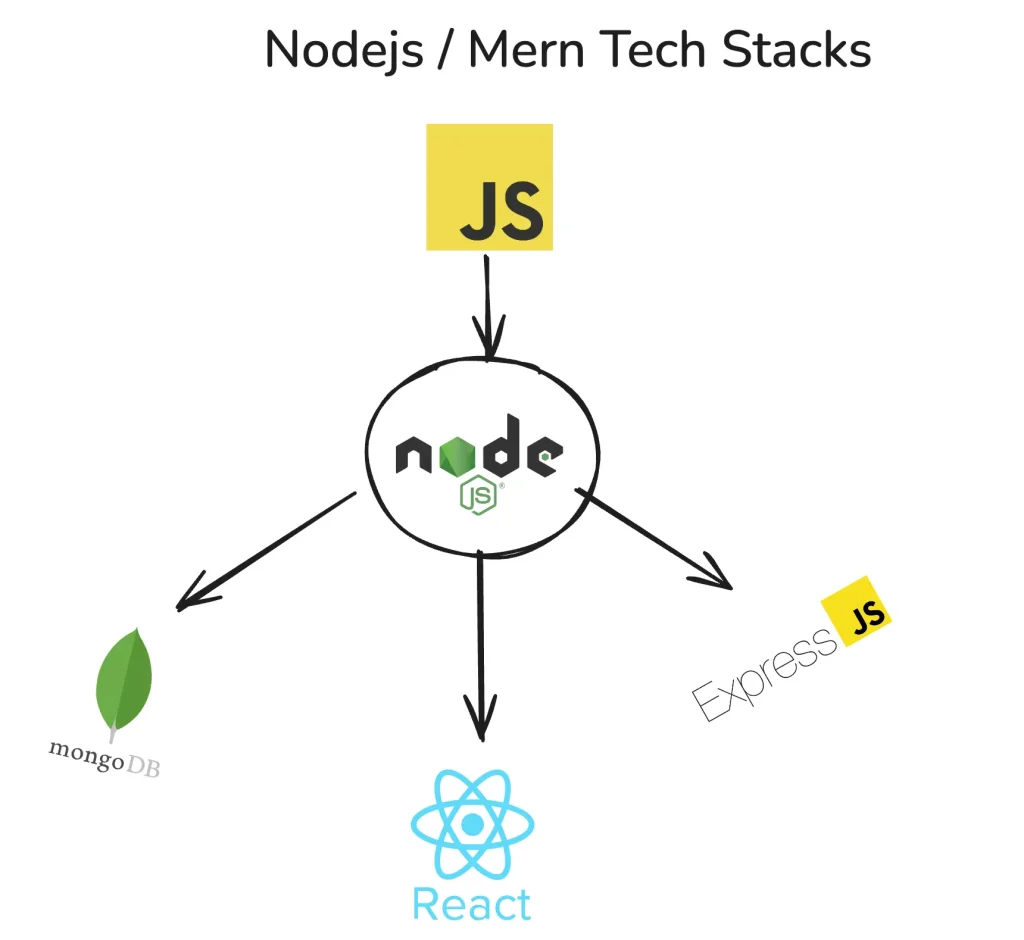
| Layer | Technology |
|---|---|
| Backend | Node.js + Express.js |
| Frontend | React or Next.js |
| Database | MongoDB |
| Real-time | Socket.io |
| Cache | Redis |
Best for: Real-time heavy applications, JavaScript-focused teams
Option 3: Python/Django Stack
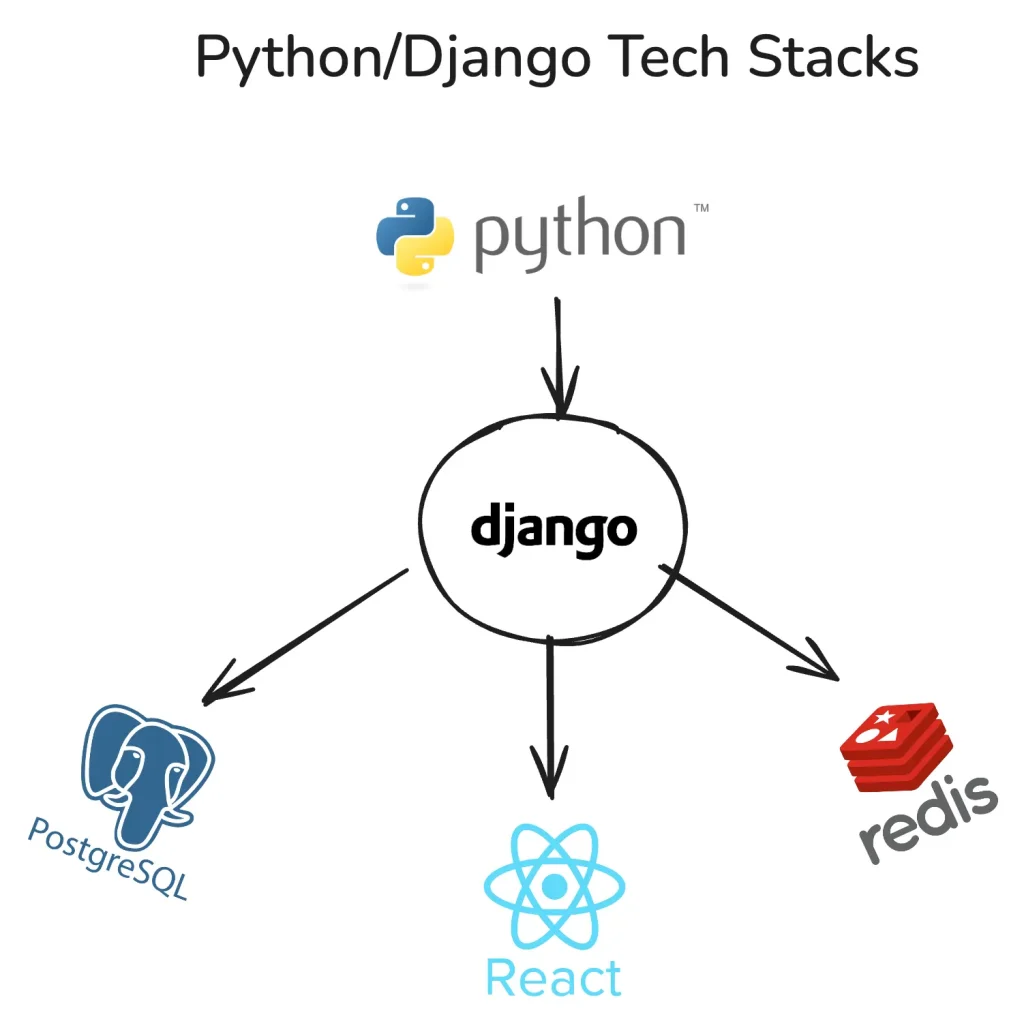
| Layer | Technology |
|---|---|
| Backend | Django or FastAPI |
| Frontend | React or Vue.js |
| Database | PostgreSQL |
| Cache | Redis |
| Queue | Celery |
Best for: AI/ML integrations, data-heavy platforms
✅ Infrastructure Checklist
Hosting & Servers:
- Cloud hosting setup (AWS, DigitalOcean, or similar)
- Production server configuration
- Staging environment setup
- Development environment
- Load balancer configuration
- Auto-scaling rules
- CDN setup for static assets
- Database server (separate from application)
- Redis server for caching/queues
- Elasticsearch cluster (if using)
Domain & SSL:
- Domain name registration
- DNS configuration
- SSL certificate installation (Let’s Encrypt or commercial)
- HTTPS enforcement
- Subdomain setup (api., cdn., etc.)
Database:
- Database server setup
- Database optimization and indexing
- Read replicas for scaling
- Automated backup configuration
- Point-in-time recovery setup
- Database monitoring
DevOps:
- CI/CD pipeline configuration
- Automated testing in pipeline
- Docker containerization
- Container orchestration (if needed)
- Infrastructure as Code (Terraform, etc.)
- Environment variable management
- Secret management
For WordPress-based solutions or integration, Xgenious WordPress Development services can help establish robust infrastructure.
✅ Security Implementation Checklist
Security is non-negotiable in freelance marketplace development where money and sensitive data flow.
Application Security:
- HTTPS everywhere (no mixed content)
- SQL injection prevention (parameterized queries)
- XSS protection (output encoding)
- CSRF token implementation
- Input validation on all forms
- File upload validation and scanning
- Rate limiting implementation
- API authentication (OAuth 2.0, JWT)
- Session management best practices
- Password hashing (bcrypt, Argon2)
- Two-factor authentication
- Account lockout policies
- Secure password reset flow
Infrastructure Security:
- Firewall configuration
- DDoS protection
- Intrusion detection
- Regular security updates
- Vulnerability scanning
- Penetration testing
- Security headers implementation
- Web Application Firewall (WAF)
Data Security:
- Data encryption at rest
- Data encryption in transit
- PCI DSS compliance (for payment data)
- GDPR compliance measures
- Data retention policies
- Right to deletion implementation
- Data access logging
- Backup encryption
Payment Security:
- PCI DSS compliance
- Tokenized payment storage
- Fraud detection integration
- Secure payment pages
- 3D Secure implementation
✅ Performance Optimization Checklist
Fast platforms win. Slow platforms lose users.
Backend Optimization:
- Database query optimization
- N+1 query elimination
- Proper indexing strategy
- Query caching (Redis)
- API response caching
- Background job queuing
- Connection pooling
- Lazy loading implementation
Frontend Optimization:
- Code minification (JS, CSS)
- Image optimization and compression
- Lazy loading for images
- Code splitting
- Tree shaking
- Bundle size optimization
- Critical CSS extraction
- Preloading critical resources
Infrastructure Optimization:
- CDN for static assets
- Gzip/Brotli compression
- HTTP/2 or HTTP/3 support
- Browser caching headers
- Server-side caching
- Database read replicas
- Geographic distribution
Performance Monitoring:
- Application Performance Monitoring (APM)
- Real User Monitoring (RUM)
- Server resource monitoring
- Database performance monitoring
- Error tracking (Sentry, etc.)
- Uptime monitoring
- Performance alerting
Target Metrics:
- Page load time: < 3 seconds
- Time to First Byte: < 200ms
- First Contentful Paint: < 1.5 seconds
- Core Web Vitals: Pass
MVP Development Strategy
Building everything at once is a recipe for failure. Smart freelance marketplace development follows MVP principles.
MVP Feature Priority Framework for freelancer hriring marketplace
Use this framework to prioritize features for your initial launch:
Priority 1: Must-Have for Launch (MVP Core)
| Feature | Why Essential |
|---|---|
| User registration (both sides) | Platform access |
| Basic profiles | Identity establishment |
| Job posting OR gig creation | Core transaction enabler |
| Proposal/bidding OR direct purchase | Transaction initiation |
| Messaging | Communication channel |
| Escrow payment | Trust establishment |
| Basic reviews | Social proof |
| Admin dashboard | Platform management |
Priority 2: Early Post-Launch (Weeks 2-8)
| Feature | Why Important |
|---|---|
| Advanced search filters | Discovery improvement |
| Milestone payments | Project management |
| Email notifications | Engagement retention |
| Portfolio showcase | Better matching |
| Category browsing | Navigation improvement |
| Basic analytics | User insights |
Priority 3: Growth Phase (Months 2-4)
| Feature | Why Important |
|---|---|
| Mobile apps | Access expansion |
| Video calling | Communication enhancement |
| AI matching | Efficiency improvement |
| Advanced analytics | Data-driven decisions |
| API for integrations | Ecosystem building |
| Multi-language support | Market expansion |
Priority 4: Scale Phase (Months 4+)
| Feature | Why Important |
|---|---|
| Enterprise features | Revenue expansion |
| Advanced fraud detection | Risk reduction |
| White-label options | B2B revenue |
| API marketplace | Ecosystem monetization |
Development Timeline Estimates
| Approach | Timeline | Team Size | Budget Range |
|---|---|---|---|
| MVP (Custom) | 3-4 months | 3-5 devs | $40,000-$80,000 |
| Full Platform (Custom) | 8-12 months | 5-10 devs | $150,000-$350,000 |
| Ready-Made Solution | 4-8 weeks | 1-2 devs | $5,000-$25,000 |
| No-Code Platform | 2-4 weeks | 1 person | $500-$3,000/month |
Build vs. Buy Decision Framework
Build Custom When:
- You have unique features that don’t exist in any solution
- Long-term platform differentiation is critical
- You have substantial development resources
- Timeline flexibility exists (6+ months acceptable)
- Budget exceeds $100,000
Use Ready-Made Solution When:
- Speed to market is critical
- Budget is limited ($10,000-$50,000)
- Core features align with available solutions
- Customization needs are moderate
- Focus should be on business, not technology
Ready-made solutions like Xilancer Freelancer Marketplace Platform provide 80%+ of needed functionality out-of-the-box, dramatically accelerating freelance marketplace development timelines.
Launch Strategy & User Acquisition Checklist
Building the platform is only half the battle. Launching successfully requires strategic user acquisition.
✅ Pre-Launch Checklist
Technical Readiness:
- Complete QA testing (all user flows)
- Security audit completed
- Performance testing (load testing)
- Payment flow testing (real transactions)
- Mobile responsiveness verified
- Cross-browser testing completed
- Error monitoring configured
- Backup systems tested
- Disaster recovery plan documented
Content & SEO:
- All pages SEO optimized
- Meta tags configured
- Structured data implemented
- Sitemap generated
- robots.txt configured
- Help documentation written
- FAQ section populated
- Blog/content section ready
- Legal pages published
Analytics & Tracking:
- Google Analytics configured
- Conversion tracking setup
- Event tracking implemented
- Heatmap tools installed
- User session recording configured
- Marketing attribution setup
Support Infrastructure:
- Support email configured
- Help desk system ready
- Knowledge base published
- Chatbot or live chat setup
- Escalation procedures documented
- Support team trained
Solving the Chicken-and-Egg Problem
Every two-sided marketplace faces this challenge: you need freelancers to attract clients, but freelancers want clients before joining. Here’s how to solve it:
Strategy 1: Supply-First Approach (Recommended)
Focus on recruiting freelancers before seeking clients:
- Identify 100+ target freelancers in your niche
- Personal outreach via LinkedIn, Twitter, professional communities
- Offer early adopter incentives (reduced/zero commission, badges)
- Partner with freelancer communities, Slack groups, Discord servers
- Host webinars or workshops for target freelancers
- Create valuable content that attracts freelancers organically
- Import/sync profiles from existing portfolios (Behance, GitHub, etc.)
- Guarantee minimum earnings for first projects
Strategy 2: Demand-First Approach
In some niches, securing clients first makes more sense:
- Leverage personal/professional network for initial clients
- Partner with agencies who need overflow capacity
- Offer first project free or heavily discounted
- Target small businesses with clear pain points
- Use LinkedIn Sales Navigator for B2B outreach
Strategy 3: Single Player Mode
Make the platform valuable even without the other side:
- Portfolio hosting for freelancers
- Skills assessment and certification
- Learning resources and community
- Job board aggregation
- Proposal/contract templates
✅ Marketing & Growth Checklist
Content Marketing:
- Blog content calendar created
- SEO keyword strategy documented
- Guest posting opportunities identified
- Video content plan (YouTube, TikTok)
- Podcast appearances scheduled
- Case studies and success stories
- Industry reports or original research
Paid Acquisition:
- Google Ads campaigns (search + display)
- LinkedIn Ads (for B2B/professional)
- Facebook/Instagram Ads
- Retargeting campaigns configured
- Budget allocation by channel
- A/B testing framework
Organic Growth:
- SEO optimization ongoing
- Social media presence (LinkedIn, Twitter, etc.)
- Community building (Discord, Slack)
- Referral program launched
- Influencer/creator partnerships
- Press and PR outreach
Retention & Engagement:
- Onboarding email sequences
- Re-engagement campaigns
- Feature announcement communications
- User milestone celebrations
- Loyalty/rewards program
- Community events and webinars
✅ Key Metrics to Track
User Metrics:
- Daily/Monthly Active Users (DAU/MAU)
- User registration rate
- Profile completion rate
- Freelancer-to-client ratio
- User retention (Day 1, 7, 30)
- Churn rate
Transaction Metrics:
- Jobs posted per day/week
- Proposals per job
- Proposal-to-hire conversion rate
- Average project value
- Gross Merchandise Value (GMV)
- Take rate (revenue/GMV)
- Repeat transaction rate
Quality Metrics:
- Average rating
- Dispute rate
- Project completion rate
- On-time delivery rate
- Customer satisfaction (NPS)
- Support ticket volume
Financial Metrics:
- Monthly Recurring Revenue (if subscription)
- Commission revenue
- Customer Acquisition Cost (CAC)
- Lifetime Value (LTV)
- LTV:CAC ratio
- Gross margin
Common Mistakes in Freelance Marketplace Development
Learn from others’ failures to ensure your success.
Mistakes to Avoid
1. Building Too Much Before Validation
Many founders spend 12+ months and hundreds of thousands of dollars building a “complete” platform—only to discover nobody wants it.
Instead: Launch MVP in 3-4 months, validate with real users, iterate based on feedback.
2. Ignoring the Chicken-and-Egg Problem
Building a platform and expecting users to magically appear doesn’t work. Two-sided marketplaces require deliberate supply/demand strategies.
Instead: Have a clear, executable user acquisition plan before development begins.
3. Weak or Non-Existent Escrow System
Without escrow, trust doesn’t exist. Users will avoid your platform or take transactions off-platform.
Instead: Make escrow payments a Day 1 feature, not a “nice to have.”
4. Poor Search and Discovery
If clients can’t find the right freelancers quickly, they leave. If freelancers don’t get discovered, they leave.
Instead: Invest heavily in search UX, filters, and matching algorithms.
5. Neglecting Mobile Experience
Over 60% of users access marketplaces via mobile. A desktop-only approach loses the majority.
Instead: Mobile-first design or responsive at minimum; native apps for growth phase.
6. No Differentiation from Upwork/Fiverr
“Another general freelance marketplace” isn’t a business strategy. You can’t out-Upwork Upwork.
Instead: Find a niche, unique feature, or underserved market segment.
7. Underestimating Support Needs
Marketplace disputes, payment issues, and user questions multiply quickly. Inadequate support destroys trust.
Instead: Plan support infrastructure from Day 1, including self-service options.
8. Complex Commission Structures
Confusing fee structures frustrate users and create perception of overcharging.
Instead: Keep it simple. One clear percentage that users understand.
9. Ignoring Freelancer Experience
Many platforms optimize only for clients. Unhappy freelancers leave, then clients have no one to hire.
Instead: Balance both sides. Freelancer retention is as important as client acquisition.
10. No Clear Monetization from Day 1
“We’ll figure out monetization later” leads to platforms that can’t sustain operations.
Instead: Have a clear revenue model built into the platform from launch.
Conclusion: Your Freelance Marketplace Development Roadmap
Building a successful freelancer hiring marketplace is challenging but achievable. The gig economy’s explosive growth—projected to reach $455 billion by 2028—creates massive opportunity for entrepreneurs who execute well.
Here’s your action roadmap:
Phase 1: Validate (Weeks 1-4)
- Complete market research
- Define unique value proposition
- Validate concept with potential users
- Choose marketplace type and business model
Phase 2: Plan (Weeks 5-8)
- Finalize feature requirements (MVP scope)
- Select technology approach (build vs. buy)
- Establish budget and timeline
- Assemble team or select vendor
Phase 3: Build (Months 3-6)
- Develop core platform features
- Implement payment and escrow system
- Build admin tools
- Complete security implementation
Phase 4: Launch (Month 6-7)
- Recruit initial supply (freelancers)
- Beta test with real users
- Fix critical issues
- Execute launch marketing
Phase 5: Grow (Month 7+)
- Iterate based on user feedback
- Expand feature set
- Scale marketing efforts
- Optimize conversion and retention
Ready to start your freelance marketplace development journey? For a head start with proven technology, explore Xilancer Freelancer Marketplace Platform a complete solution that accelerates your path from concept to launch.
For custom development needs or WordPress-based solutions, Xgenious WordPress Development offers expert services to bring your marketplace vision to life.
The freelance economy is growing. The question is: will you build a platform to capture that growth?
Frequently Asked Questions
How much does it cost to build a freelance marketplace?
Freelance marketplace development costs vary significantly based on approach:
Custom MVP development: $40,000-$80,000 for a basic platform with core features, taking 3-4 months with a small team.
Full custom development: $150,000-$350,000+ for a comprehensive platform with advanced features, requiring 8-12 months.
Ready-made solutions: $5,000-$25,000 for platforms like Xilancer, deployable in 4-8 weeks with customization.
No-code platforms: $500-$3,000/month using tools like Sharetribe, suitable for validation.
The right choice depends on your budget, timeline, technical capabilities, and differentiation needs.
How long does freelance marketplace development take?
Timeline depends on complexity and approach:
No-code MVP: 2-4 weeks
Ready-made solution customization: 4-8 weeks
Custom MVP: 3-4 months
Full-featured custom platform: 8-12 months
Enterprise-grade platform: 12-18 months
Most successful marketplaces recommend starting with MVP, launching quickly, and iterating based on user feedback rather than building everything upfront.
What are the essential features for a freelance marketplace?
Absolute essentials for launch:
User registration for both freelancers and clients
Profile creation with skills/portfolio
Job posting or service listing capability
Proposal/bidding or direct purchase system
Messaging between users
Escrow payment system
Basic rating and review system
Admin management dashboard
Everything else can be added post-launch based on user needs.
How do freelance marketplaces make money?
Primary revenue models:
Transaction commission: 10-20% of each transaction (most common)
Subscription fees: Monthly plans for premium features
Featured listings: Fees for promoted visibility
Premium services: Verification badges, skill tests, priority support
Enterprise plans: Custom solutions for large organizations
Most successful platforms combine commission with premium subscriptions for diversified revenue.
Should I build a niche or general freelance marketplace?
For new entrants, niche is almost always better:
Less competition from established giants
Easier to achieve product-market fit
Higher trust within specific community
Premium pricing justification
Focused marketing and messaging
Faster path to critical mass
General marketplaces require massive investment to compete with Upwork and Fiverr. Niche platforms can dominate their segment with far fewer resources.
What tech stack should I use for freelance marketplace development?
Recommended stacks:
For most projects: Laravel (PHP) + Vue.js/React + MySQL/PostgreSQL + Redis
For real-time heavy applications: Node.js + React + MongoDB + Socket.io
For AI-integrated platforms: Python/Django + React + PostgreSQL
The Laravel stack offers the best balance of development speed, scalability, documentation, and available talent for freelance marketplace development.
How do I solve the chicken-and-egg problem?
Proven strategies:
Supply-first: Recruit 100+ freelancers before seeking clients through personal outreach, community partnerships, and incentives.
Demand-first: Secure initial clients through your network, then recruit freelancers to serve them.
Single-player mode: Provide value to one side independent of the other (portfolio hosting, job board aggregation).
Constrained launch: Start in one geographic area or niche to achieve local network effects.
Subsidize one side: Offer zero commission to freelancers initially to build supply.