





Finding the right freelancer shouldn’t feel like searching for a needle in a haystack.
Yet most freelancer marketplaces struggle with this exact problem. Clients post projects and receive dozens of proposals from mismatched candidates. Freelancers waste hours applying to jobs they’ll never land.
Skill-based matching systems for freelancer marketplaces solve this frustration.
These intelligent skill-based matching systems analyze freelancer capabilities against project requirements. They create connections that actually make sense—saving time for everyone in the freelancer marketplace.
The numbers tell the story:
| Traditional Matching | AI-Powered Skill-Based Matching |
|---|---|
| 15-20 proposals reviewed per hire | 3-5 highly relevant matches |
| 40% project completion rate | 78% project completion rate |
| 2-3 weeks average hiring time | 2-3 days average hiring time |
| High client churn | Strong retention rates |
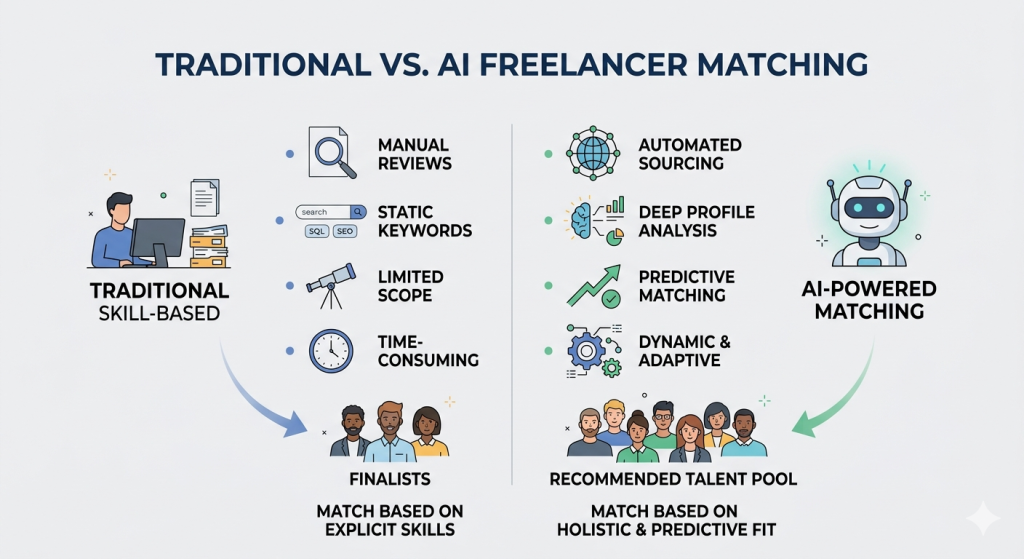
Modern talent matching algorithms in freelancer marketplaces do more than keyword matching. They understand context, evaluate skill depth, and predict successful collaborations before they happen.

What makes AI freelancer matching different in skill-based matching systems?
Traditional search relies on self-reported skills and basic filters. Intelligent skill-based matching systems verify abilities, analyze work history patterns, and learn from every successful (and unsuccessful) pairing.
This comprehensive guide walks you through building skill-based matching systems for freelancer marketplaces that actually work. You’ll learn assessment frameworks, algorithm approaches, and fairness considerations that separate amateur freelancer marketplaces from industry leaders.
Whether you’re building a new freelancer marketplace or upgrading an existing one, these skill-based matching strategies will transform how talent meets opportunity on your platform.
Chapter 1: Building Skill-Based Matching Frameworks for Freelancer Marketplaces
Every effective skill-based matching system starts with understanding what freelancers can actually do. In freelancer marketplaces, accurate skill assessment forms the foundation of successful matches.
How Skill Category Architecture Powers Skill-Based Matching
Organize skills into a hierarchical structure that supports accurate automated matching in your freelancer marketplace.
Three-tier skill taxonomy for skill-based matching systems:
| Level | Description | Example |
|---|---|---|
| Domain | Broad professional category | Web Development |
| Specialty | Focused expertise area | Frontend Development |
| Skill | Specific capability | React.js, Vue.js, TypeScript |
This structure enables granular skill-based matching while maintaining organizational clarity across your freelancer marketplace.
Assessment Methods for Skill-Based Matching in Freelancer Marketplaces
1. Portfolio Analysis
Evaluate actual work samples rather than claimed abilities. Your skill-based matching system should look for:
- Project complexity indicators
- Technology stack evidence
- Design quality signals
- Code quality (for technical roles)
2. Skills Testing in Freelancer Marketplaces
Implement timed assessments for objective measurement within your skill-based matching system:
- Technical coding challenges
- Design exercises
- Writing samples
- Problem-solving scenarios
3. Certification Verification
Validate credentials through your skill-based matching system:
- Direct API verification with issuing bodies
- Document authentication
- Expiration tracking
- Continuing education requirements
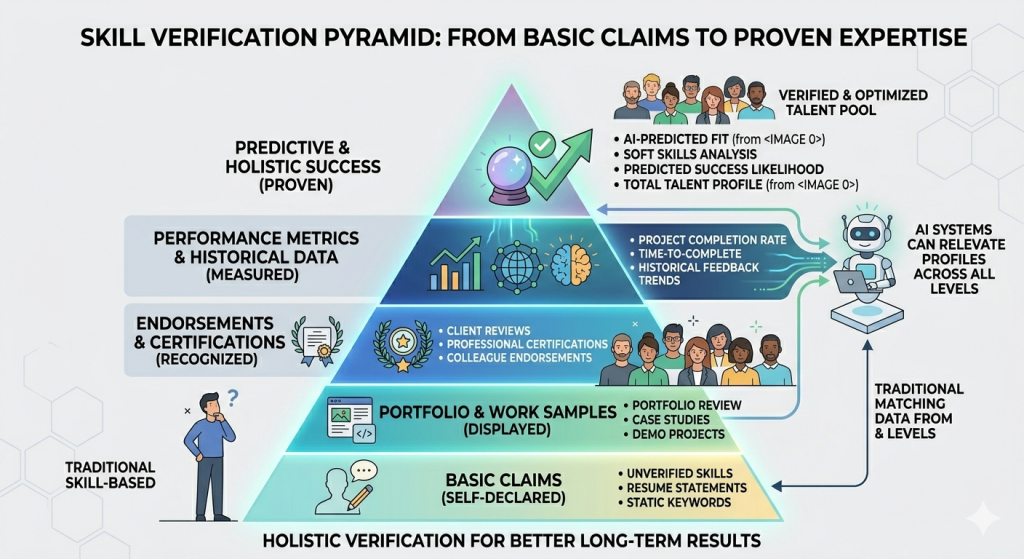
The Skill Verification Framework for Freelancer Marketplaces
| Verification Level | Method | Trust Score Impact |
|---|---|---|
| Self-declared | None | Low (+5 points) |
| Portfolio evidence | Manual/AI review | Medium (+15 points) |
| Test validated | Platform assessment | High (+25 points) |
| Certified | Third-party verification | Highest (+35 points) |
Your skill-based matching system should weight verified skills higher in matching algorithms. This approach separates serious freelancer marketplaces from basic job boards.
Pro tip: Combine multiple verification methods for the same skill. A developer claiming React expertise who has portfolio projects, passed your assessment, AND holds relevant certifications should rank significantly higher in your skill-based matching system than someone with only self-declared skills.
Building Trust Scores in Skill-Based Matching Systems
Trust scores amplify skill-based matching accuracy in freelancer marketplaces. Calculate composite scores using:
| Factor | Weight | Data Source |
|---|---|---|
| Skill verification level | 30% | Assessment results |
| Project completion rate | 25% | Historical data |
| Client ratings | 20% | Review system |
| Response time | 15% | Platform analytics |
| Profile completeness | 10% | Profile data |
Higher trust scores should boost visibility in your skill-based matching results for freelancer marketplaces.
Chapter 2: AI Algorithms Powering Skill-Based Matching in Freelancer Marketplaces
The brain of any skill-based matching system in freelancer marketplaces lies in its machine learning models. Choosing the right talent matching algorithm determines your platform’s success.
Core Algorithm Approaches for Skill-Based Matching Systems
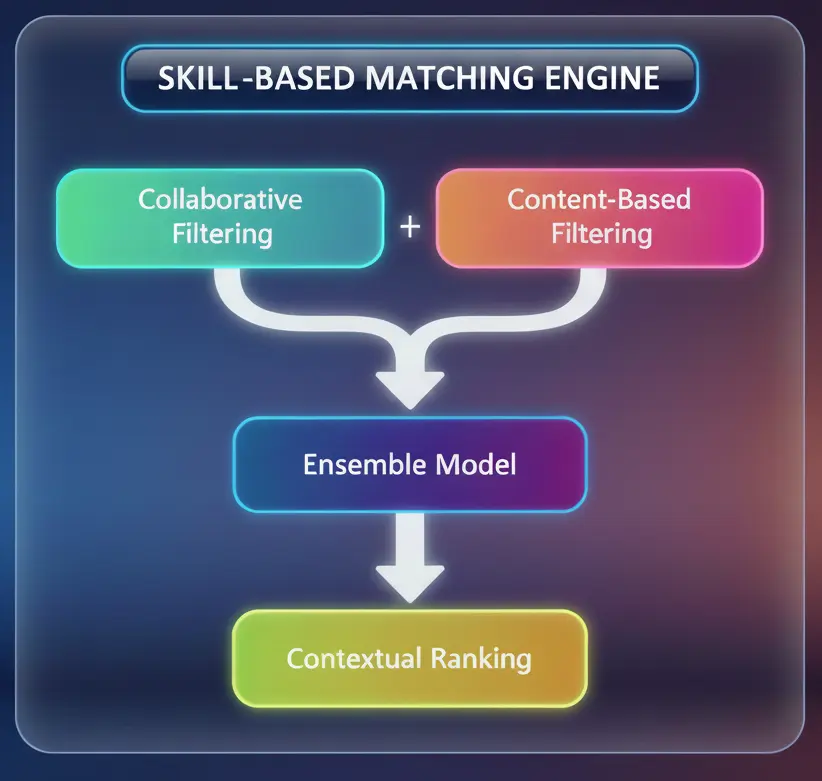
Collaborative Filtering in Freelancer Marketplaces
This approach finds patterns in successful matches to predict new ones within your skill-based matching system.
How collaborative filtering works:
- Analyzes historical hiring decisions
- Identifies clients with similar preferences
- Recommends freelancers hired by similar clients
- Improves skill-based matching accuracy over time
Content-Based Filtering for Skill-Based Matching
Matches project requirements directly against freelancer profiles in your freelancer marketplace.
Key factors analyzed by skill-based matching systems:
- Skill overlap percentage
- Experience level alignment
- Industry background relevance
- Budget-rate compatibility
Hybrid Recommendation Engine Architecture for Skill-Based Matching
The most effective skill-based matching systems in freelancer marketplaces combine multiple approaches. This hybrid model powers top freelancer recommendation systems worldwide.
Machine Learning Models for Skill-Based Matching in Freelancer Marketplaces
| Model Type | Best For | Complexity | Use in Skill-Based Matching |
|---|---|---|---|
| Random Forest | Initial implementation | Low | Basic skill matching |
| Gradient Boosting | Balanced accuracy/speed | Medium | Multi-factor scoring |
| Neural Networks | Large datasets | High | Complex pattern recognition |
| Transformer Models | NLP requirements | Very High | Job description analysis |
Start with simpler models for your skill-based matching system. Upgrade as your freelancer marketplace data grows and patterns emerge.
Natural Language Processing in Skill-Based Matching Systems
Modern skill-based matching systems for freelancer marketplaces use NLP to understand project requirements beyond keywords.
NLP capabilities for skill-based matching:
- Extract implicit skill requirements from job descriptions
- Match similar terms (JavaScript ↔ JS ↔ ECMAScript)
- Understand experience level language
- Identify project complexity signals
Critical insight: Your skill-based matching system for freelancer marketplaces is only as good as your training data. Prioritize collecting feedback on every match successful and unsuccessful.
Chapter 3: Profile Optimization for Skill-Based Matching in Freelancer Marketplaces
Skill-based matching systems need quality input data. In freelancer marketplaces, helping freelancers create optimized profiles enables accurate talent discovery and better matching results.
Essential Profile Components for Skill-Based Matching
Structured Data Fields for Freelancer Marketplaces
Your skill-based matching system should capture:
- Primary skill categories (max 5)
- Years of experience per skill
- Hourly rate range
- Availability status
- Timezone and working hours
- Languages spoken
Unstructured Content for Skill-Based Matching Analysis
- Professional summary (150-300 words)
- Portfolio descriptions
- Client testimonials
- Case study narratives
Keyword Optimization Strategy for Skill-Based Matching Systems
Guide freelancers toward searchable profiles without gaming your freelancer marketplace system.
| Do | Don’t |
|---|---|
| Use industry-standard skill names | Stuff keywords unnaturally |
| Include tool and technology names | List skills you can’t demonstrate |
| Describe project outcomes | Write vague generalizations |
| Update regularly | Let profiles go stale |
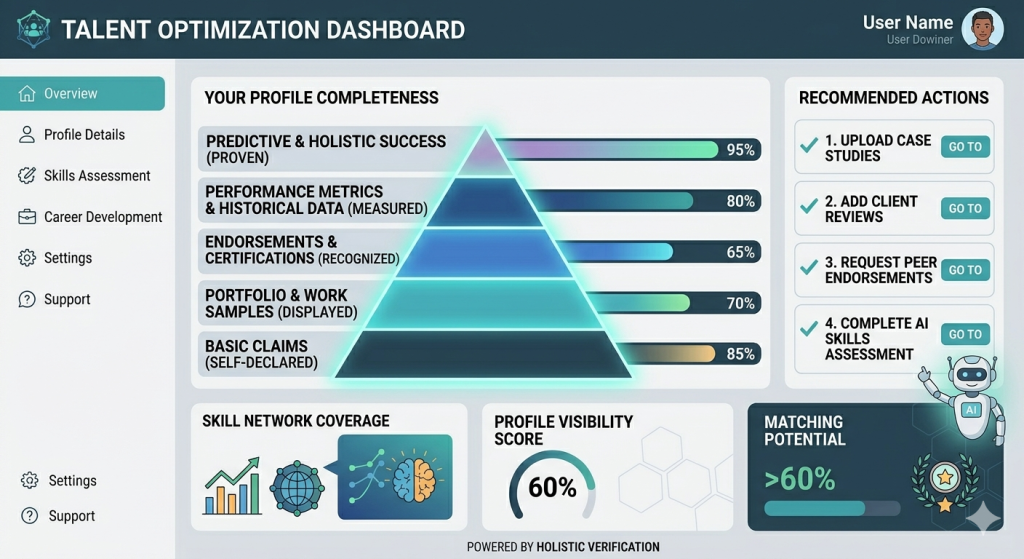
Profile Completeness Scoring in Freelancer Marketplaces
Implement a visible completeness metric that encourages thorough profiles for better skill-based matching.
Scoring breakdown for skill-based matching systems:
- Basic info: 10%
- Skills section: 20%
- Portfolio items (min 3): 25%
- Work history: 15%
- Verified credentials: 20%
- Client reviews: 10%
Profiles below 70% completeness should receive reduced visibility in your skill-based matching algorithms until improved.
Portfolio Quality Signals for Skill-Based Matching
Your freelancer marketplace’s skill-based matching system should evaluate portfolio quality:
| Signal | Weight | Impact on Skill-Based Matching |
|---|---|---|
| Project recency | High | Recent work ranked higher |
| Client diversity | Medium | Shows adaptability |
| Complexity level | High | Demonstrates capability |
| Visual presentation | Medium | Indicates professionalism |
| Case study depth | High | Shows problem-solving |
Chapter 4: Project-Freelancer Matching Logic in Skill-Based Matching Systems
When clients post projects in freelancer marketplaces, your skill-based matching system must translate requirements into matchable criteria effectively.
Requirement Analysis Pipeline for Skill-Based Matching
Step 1: Extract explicit requirements in your freelancer marketplace
Your skill-based matching system should identify:
- Listed skills
- Budget range
- Timeline expectations
- Experience level preferences
Step 2: Infer implicit requirements through skill-based matching
Advanced skill-based matching systems detect:
- Industry context clues
- Project complexity signals
- Communication style indicators
- Similar successful projects
Step 3: Weight requirement importance in skill-based matching
Not all requirements matter equally in freelancer marketplaces. Use this framework:
| Requirement Type | Default Weight | Adjustable |
|---|---|---|
| Core skills | 40% | Yes |
| Experience level | 20% | Yes |
| Budget fit | 15% | Limited |
| Availability | 15% | No |
| Soft factors | 10% | Yes |
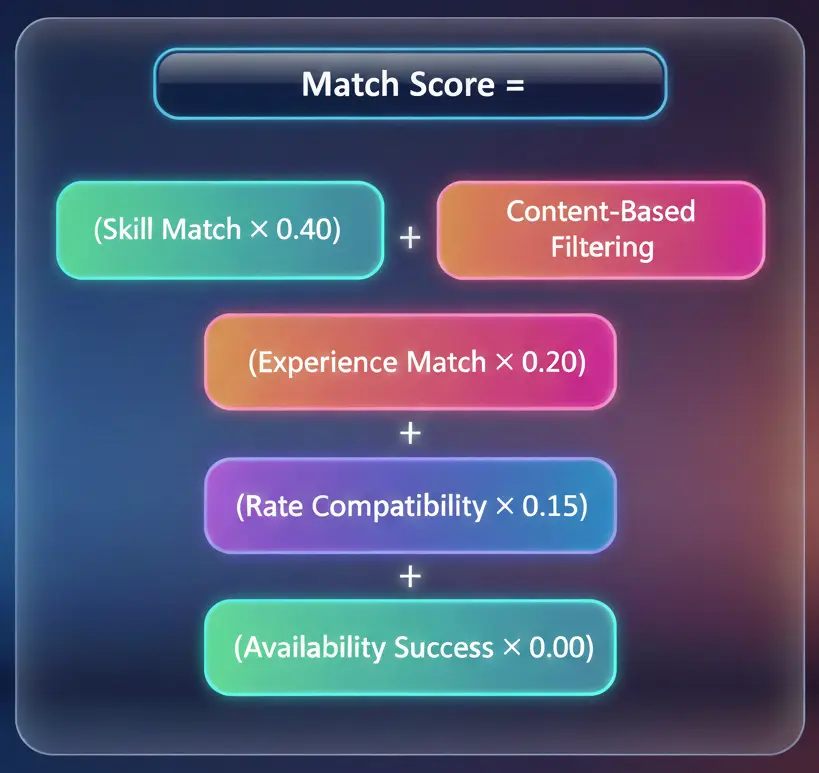
Compatibility Scoring Model for Skill-Based Matching in Freelancer Marketplaces
Calculate match scores using weighted factors in your skill-based matching system.
Formula framework for skill-based matching:
Match Confidence Levels in Skill-Based Matching Systems
Present matches with confidence indicators in your freelancer marketplace:
| Score Range | Confidence | Display Treatment |
|---|---|---|
| 90-100 | Excellent | Featured, top of list |
| 75-89 | Strong | Standard display |
| 60-74 | Moderate | Include with caveats |
| Below 60 | Weak | Exclude or bottom |
Only surface matches above your quality threshold. Showing poor matches damages freelancer marketplace trust and reduces confidence in your skill-based matching system.
Real-Time Matching Updates in Freelancer Marketplaces
Modern skill-based matching systems should update results dynamically:
- When freelancer availability changes
- After new reviews are posted
- When skills are verified
- As project requirements evolve
Learn how leading freelancer marketplaces handle project management
Chapter 5: Continuous Learning in Skill-Based Matching Systems for Freelancer Marketplaces
Static algorithms become obsolete. Build skill-based matching systems that improve automatically in your freelancer marketplace.
Feedback Loop Architecture for Skill-Based Matching
Implicit feedback signals in freelancer marketplaces:
- Proposal acceptance rates
- Message response times
- Project completion rates
- Repeat hiring behavior
- Contract extensions
Explicit feedback collection for skill-based matching:
- Post-project ratings
- Skill endorsements
- Match quality surveys
- Dispute analysis
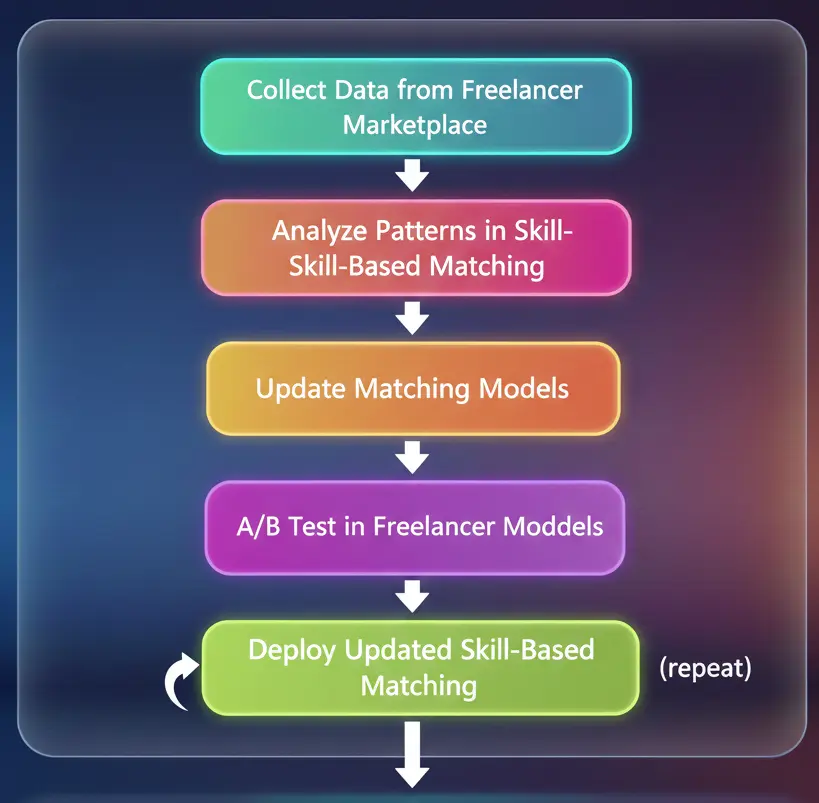
Algorithm Improvement Cycle for Skill-Based Matching Systems
Key Learning Metrics for Skill-Based Matching in Freelancer Marketplaces
Track these indicators to measure skill-based matching algorithm evolution:
- Model drift detection
- Prediction accuracy trends
- Feature importance shifts
- New pattern emergence
Update your skill-based matching models weekly at minimum. Major retraining should occur monthly with new freelancer marketplace data batches.
A/B Testing Skill-Based Matching Algorithms
Test variations in your freelancer marketplace systematically:
| Test Element | Variation A | Variation B | Metric |
|---|---|---|---|
| Skill weight | 40% | 50% | Acceptance rate |
| Experience factor | 20% | 15% | Completion rate |
| Rate matching | Strict | Flexible | Client satisfaction |
| New talent boost | 10% | 20% | New freelancer success |
Chapter 6: Bias Prevention in Skill-Based Matching for Freelancer Marketplaces
Your skill-based matching system for freelancer marketplaces must serve all users fairly. Algorithmic fairness builds trust and ensures long-term platform success.
Common Bias Sources in Skill-Based Matching Systems
| Bias Type | Cause | Impact on Freelancer Marketplace |
|---|---|---|
| Historical | Training on biased past decisions | Perpetuates discrimination |
| Popularity | Favoring established freelancers | New talent disadvantaged |
| Demographic | Proxy variables | Unfair exclusion |
| Geographic | Location-based assumptions | Regional discrimination |
Fairness Intervention Strategies for Skill-Based Matching
1. New Talent Boost in Freelancer Marketplaces
Give recently verified freelancers temporary visibility increases in your skill-based matching system to gather initial feedback data.
2. Blind Initial Matching
Remove identifying information from first-stage skill-based matching to prevent unconscious bias:
- Photo
- Name
- Location
- Educational institution names
3. Regular Audits of Skill-Based Matching Systems
Monthly analysis should check:
- Match distribution across demographics
- Success rate parity between groups
- Opportunity access equality
- Complaint pattern analysis
4. Diversity Promotion in Freelancer Marketplaces
When skill-based matching scores are similar, introduce controlled randomization to prevent winner-take-all dynamics.
Transparency Requirements for Skill-Based Matching in Freelancer Marketplaces
Document and publish:
- Factors used in skill-based matching
- How rankings are determined
- Ways freelancers can improve visibility
- Appeal processes for low visibility
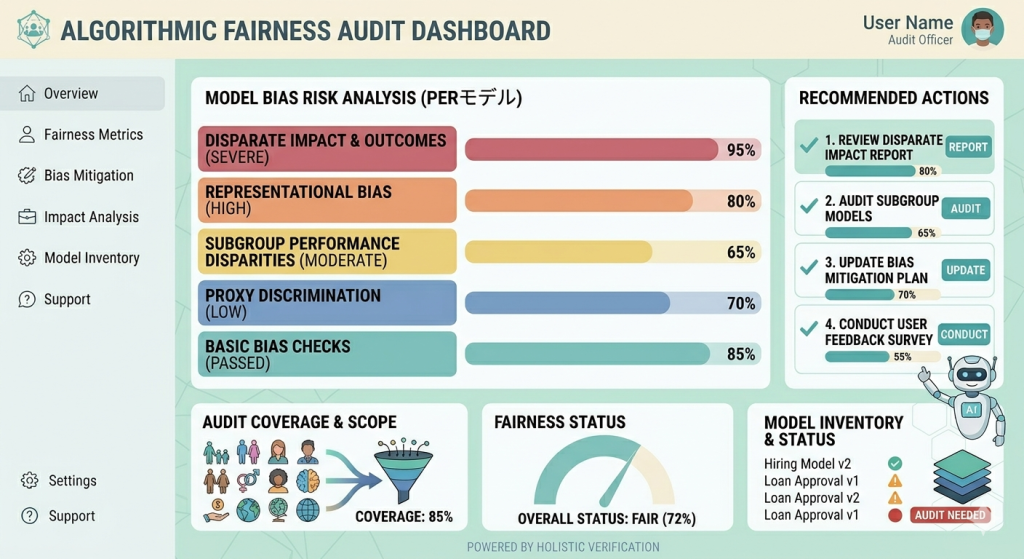
Audit Dashboard for Skill-Based Matching Fairness
| Metric | Target | Current | Status |
|---|---|---|---|
| Gender parity in matches | ±5% | ±3% | ✅ |
| Geographic distribution | Proportional | -8% emerging markets | ⚠️ |
| New vs established ratio | 20% new | 15% new | ⚠️ |
| Success rate parity | ±10% | ±7% | ✅ |
Chapter 7: Performance Metrics for Skill-Based Matching in Freelancer Marketplaces
Measure what actually indicates skill-based matching success in freelancer marketplaces.
Primary Success Metrics for Skill-Based Matching Systems
| Metric | Target | Measurement Method |
|---|---|---|
| Match acceptance rate | 35% | Proposals accepted / matches shown |
| Project completion rate | 85% | Completed / started projects |
| Repeat hire rate | 40% | Same client-freelancer pairs |
| Time to hire | <72 hours | Project post to contract signing |
| Client satisfaction | 4.5/5 | Post-project surveys |
Secondary Quality Indicators for Skill-Based Matching
- Average match score of accepted proposals
- Dispute rate per 100 matches
- Platform abandonment correlation
- Revenue per successful match
Benchmark Comparison for Skill-Based Matching in Freelancer Marketplaces
Compare your skill-based matching system against industry standards:
| Metric | Industry Average | Top Freelancer Marketplaces |
|---|---|---|
| Match acceptance | 15-20% | 40%+ |
| Completion rate | 70% | 90%+ |
| Time to hire | 7-14 days | 1-3 days |
| Repeat hiring | 25% | 50%+ |
ROI Calculation for Skill-Based Matching Systems
Measure the business impact of your skill-based matching investment:
| Metric | Before Skill-Based Matching | After Implementation |
|---|---|---|
| Average time to first hire | 14 days | 3 days |
| Client support tickets | 150/week | 45/week |
| Freelancer applications per job | 45 | 12 (relevant) |
| Platform transaction volume | Baseline | +67% |
Explore marketplace industry benchmarks from Statista
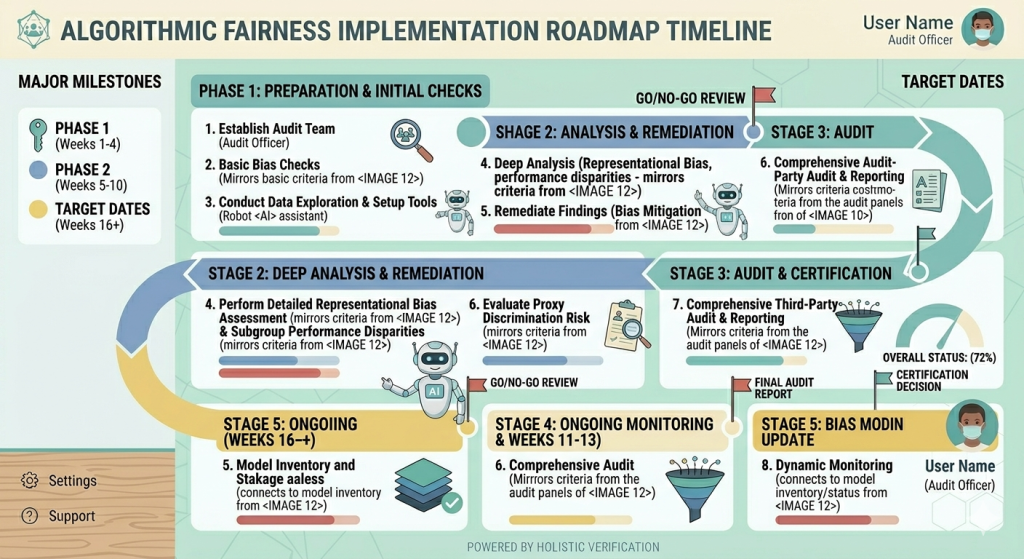
Chapter 8: Implementation Roadmap for Skill-Based Matching in Freelancer Marketplaces
Building skill-based matching systems requires phased execution. Follow this roadmap for your freelancer marketplace.
Phase 1: Foundation (Months 1-2)
Build core skill-based matching infrastructure:
- Design skill taxonomy
- Create an assessment framework
- Implement basic matching logic
- Deploy profile optimization tools
Phase 2: Intelligence (Months 3-4)
Add AI capabilities to your skill-based matching system:
- Train initial ML models
- Implement collaborative filtering
- Add NLP for job descriptions
- Deploy the recommendation engine
Phase 3: Optimization (Months 5-6)
Refine skill-based matching in your freelancer marketplace:
- Launch A/B testing framework
- Implement feedback loops
- Add bias detection
- Optimize algorithm weights
Phase 4: Scale (Months 7+)
Expand skill-based matching capabilities:
- Upgrade to neural networks
- Add real-time matching
- Implement predictive analytics
- Launch advanced personalization
Technology Stack for Skill-Based Matching Systems
| Component | Recommended Tools | Purpose |
|---|---|---|
| ML Framework | TensorFlow, PyTorch | Model training |
| Search Engine | Elasticsearch | Fast skill matching |
| Database | PostgreSQL + Redis | Data storage |
| Queue System | RabbitMQ | Async processing |
| Analytics | Mixpanel, Amplitude | Performance tracking |
Conclusion: Building Successful Skill-Based Matching for Freelancer Marketplaces
Building effective skill-based matching systems for freelancer marketplaces requires commitment across your entire platform.
Start with fundamentals:
- Design a clear skill taxonomy for your freelancer marketplace
- Implement verification methods in your skill-based matching system
- Choose appropriate algorithms for your scale
Then optimize continuously:
- Collect comprehensive feedback
- Audit for fairness regularly
- Test improvements systematically
The freelancer marketplaces that win are those where clients quickly find qualified talent and freelancers receive relevant opportunities through intelligent skill-based matching.
Your skill-based matching system is the engine driving these connections in your freelancer marketplace.
Implementation priority checklist:
- ☐ Build skill taxonomy and assessment framework
- ☐ Implement basic content-based skill-based matching
- ☐ Add collaborative filtering as data grows
- ☐ Deploy bias detection and fairness measures
- ☐ Create continuous learning feedback loops
- ☐ Establish performance monitoring dashboards
Review Google’s responsible AI practices for guidance
The future of freelancer marketplaces belongs to platforms with intelligent, fair, and continuously improving skill-based matching systems.
Start building your skill-based matching system for your freelancer marketplace today.
Frequently Asked Questions About Skill-Based Matching in Freelancer Marketplaces
What is skill-based matching in freelancer marketplaces?
Skill-based matching systems for freelancer marketplaces use algorithms to connect freelancers with projects based on verified abilities, experience levels, and project requirements. Unlike keyword search, these skill-based matching systems analyze multiple factors to predict successful collaborations in your freelancer marketplace.
How do AI matching algorithms improve freelancer discovery in freelancer marketplaces?
AI freelancer matching in skill-based matching systems analyzes patterns from thousands of successful hires. The system learns which skill combinations, experience levels, and working styles lead to positive outcomes—then applies these insights to new matches in the freelancer marketplace.
What’s the difference between content-based and collaborative filtering in skill-based matching systems?
Content-based filtering matches project requirements directly against freelancer profiles. Collaborative filtering finds patterns in similar users’ hiring decisions. Most effective skill-based matching systems in freelancer marketplaces combine both approaches for better accuracy.
How can freelancers improve their visibility in skill-based matching systems?
Complete all profile sections, verify skills through testing and certifications, maintain an updated portfolio, and respond quickly to matches. Freelancer marketplaces reward engaged freelancers with better visibility in skill-based matching recommendation systems.
What metrics indicate a successful skill-based matching system in freelancer marketplaces?
Key indicators include match acceptance rate (target 35%+), project completion rate (85%+), repeat hire rate (40%+), and average time to hire (under 72 hours). Track these alongside client and freelancer satisfaction scores in your freelancer marketplace.
How do freelancer marketplaces prevent bias in skill-based matching systems?
Effective bias prevention in skill-based matching systems includes blind initial matching, regular fairness audits, new talent visibility boosts, and transparent ranking factors. Freelancer marketplaces should monitor match distribution across demographics and investigate disparities.
What’s the best algorithm for a new freelancer marketplace’s skill-based matching system?
Start with content-based filtering using straightforward skill matching. Add collaborative filtering once your freelancer marketplace has sufficient historical data (typically 10,000+ completed projects). Upgrade to neural networks only when complexity justifies the investment in your skill-based matching system.
How long does it take to implement skill-based matching in a freelancer marketplace?
Basic skill-based matching systems can launch in 2-3 months. Full-featured implementations with AI, bias prevention, and continuous learning typically require 6-8 months. Start simple and iterate based on freelancer marketplace feedback.
What’s the ROI of skill-based matching for freelancer marketplaces?
Freelancer marketplaces with effective skill-based matching systems report 67% higher transaction volumes, 70% reduction in support tickets, and 3x faster hiring times. The investment typically pays back within 6-12 months through increased platform activity.
Can small freelancer marketplaces benefit from skill-based matching systems?
Yes. Start with rule-based skill-based matching before implementing ML models. Even basic skill verification and weighted matching significantly improve results over simple search in smaller freelancer marketplaces.